
The House as a New Beginning
Out Stealing HorsesThe repair of The Top makes Trond’s attempt at a new life concrete, while each domestic task reveals the limits of self-sufficiency.
increasing Bearing strength in each event
 decreasing
Bearing strength in each eventdecreasingBuying the Unwanted House

Buying the Unwanted House
A Place Others Avoid
Trond buys a neglected house that others have passed over because of the work it needs. He is pleased that he did not know how difficult it would be before purchasing it.
A Project with Time
He intends to repair it gradually, doing much of the work himself. The tasks give him a reason to stay and a way to mark the passing days.
The house is not simply shelter but a deliberate structure for his future. Its unfinished condition suits a man who wants to rebuild life without rushing toward an outcome.
Learning Through Memory
Learning Through Memory
An Imagined Demonstration
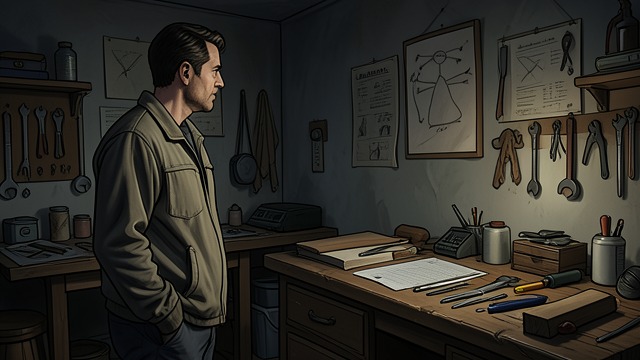
When practical work feels unfamiliar, Trond closes his eyes and pictures how his father would have done it. He then tries to reproduce the movements and discover the task’s rhythm.
The Father at Forty
The model in Trond’s mind is the practical man he knew as a boy, not the older father he never saw. Memory supplies instruction where direct guidance is impossible.
The method connects the house to Trond’s childhood while revealing how deeply he still depends on his absent father. Each repair is both practical work and an act of remembrance.
Preparing for Winter
Preparing for Winter
A List of Needs
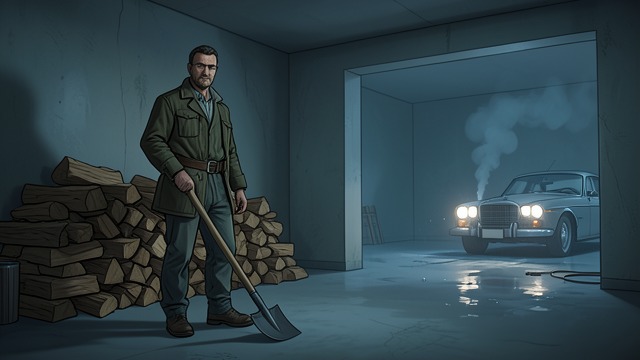
Trond worries about firewood, the car battery, and clearing the road. His back makes shoveling an unrealistic plan, and the nearest shop is several kilometres away.
Making Arrangements
He contacts a farmer who can plow the road and cuts a dead spruce into firewood. These measures make winter seem manageable, at least for the moment.
Preparation lets Trond feel capable, but each arrangement acknowledges dependence on tools, roads, and other people. His independence is practical rather than absolute.
A Domestic Meal for One

A Domestic Meal for One
Keeping a Ritual
Trond changes into a clean shirt, lays the table carefully, and cooks fish and potatoes. He believes a single person should not neglect supper or eat carelessly.
A Quiet Consolation
The meal gives form to the evening, but the blue hour outside makes him aware of his solitary life. He accepts the world’s apparent coherence even while doubting it.
Domestic order provides comfort without erasing loneliness. The rituals matter because Trond chooses to treat his own company as worth attending to.
A House Shared Briefly
A House Shared Briefly
A Daughter Takes Charge
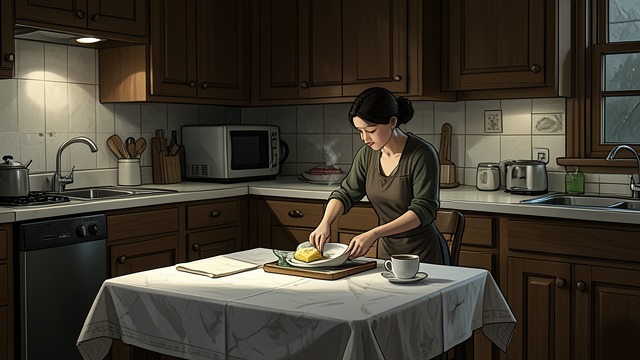
When coffee spills, Ellen quickly moves the dishes and washes the tablecloth. Her practical attention temporarily reorganizes the kitchen around another person’s needs.
The House Changes
Trond admits he has no washing machine and notices that Ellen’s visit has altered the atmosphere. After she leaves, the rooms feel less full than they did while she was there.
A house built for solitary routines proves able to hold family care. The brief domestic disruption becomes evidence that Trond’s new home need not exclude his past relationships.
Before the opening of the novel
Early November 1999
The weeks before the first snow
An evening before Lars’s visit
The afternoon Ellen visits
