
Choice Against Fate
Out Stealing HorsesRepeated images of accidents and crossroads challenge the idea that lives are predetermined and emphasize the consequences of human decisions.
increasing Bearing strength in each event
 decreasing
Bearing strength in each eventdecreasingThe Shot Was Not Destiny
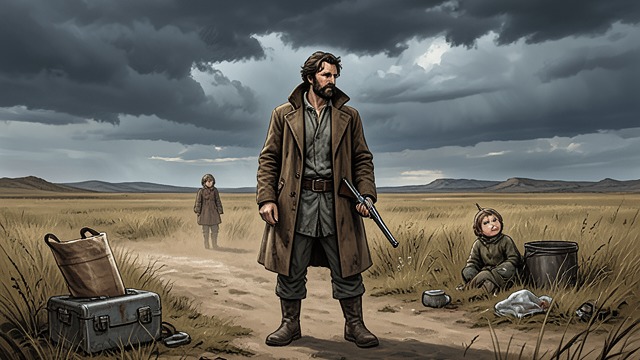
The Shot Was Not Destiny
A Tempting Explanation
Trond imagines how a western story might claim that Odd’s name was written on the cartridge or in the stars. Such a story would make the death feel ordained.
A Human Cause
He rejects that account: Jon’s gun was left loaded, and a child pulled the trigger. The church register records Odd’s death, but cannot make it inevitable.
The distinction matters because tragedy does not become harmless when it is called fate. Human actions and failures remain part of the story, even when no one intended the outcome.
Lars and the Gun
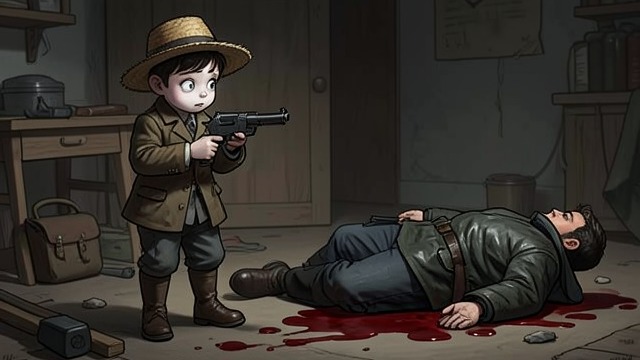
Lars and the Gun
Responsibility Without Intention
Lars Haug fires Jon’s gun without knowing it is loaded and kills Odd. He has not chosen his brother’s death, yet the result becomes part of his life.
A Childhood Consequence
The family must respond to an irreversible act committed by a child. Lars’s father leaves, his mother grieves, and Lars eventually abandons the farm.
The accident resists a simple moral verdict. Intent, responsibility, and consequence do not align neatly, and the people left behind must live with that imbalance.
The Road in Karlstad
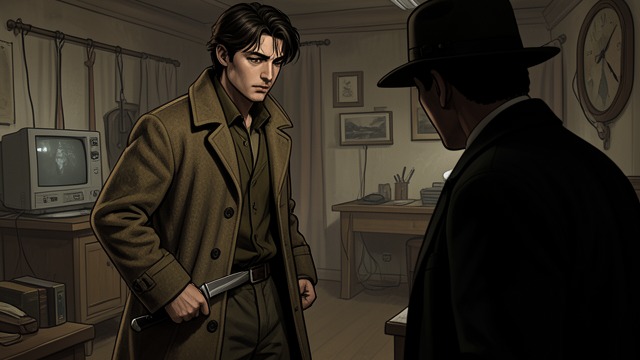
The Road in Karlstad
A Moment at the Crossroads
Trond threatens a stranger after being misunderstood. He imagines the consequences of striking him as a chain of events that cannot be reversed.
A Life Unchosen
He stops himself when his mother calls. Looking back, he refuses the comforting claim that his life would have turned out the same if he had hit the man.
The encounter gives Trond a concrete sense of agency. A life is shaped not only by major plans but by brief decisions made under pressure.
The Father’s Last Promise
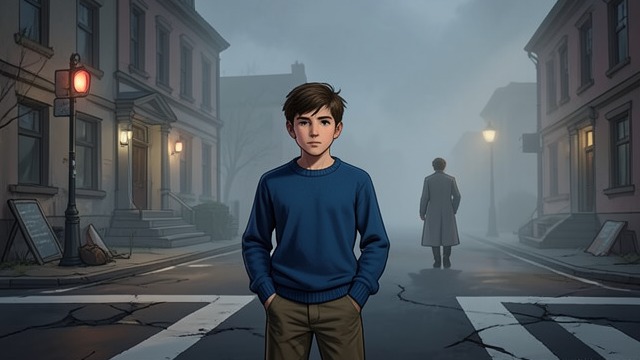
The Father’s Last Promise
A Future Offered
Trond’s father says he will come home after finishing his work. Trond must decide whether to trust the promise despite the uneasy feeling in his stomach.
A Choice Beyond the Boy
His father never returns, but the boy had no way to know what lay behind the goodbye. The adult Trond continues to ask whether the departure was already decided.
The memory holds agency and uncertainty together. Trond cannot reconstruct his father’s intentions, and refusing to invent certainty becomes part of his honesty about the past.
A Life Still Being Chosen
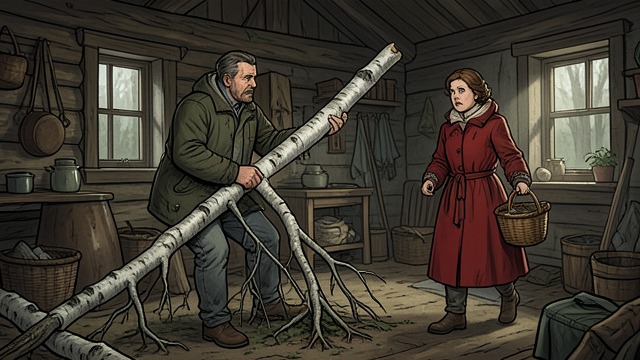
A Life Still Being Chosen
Solitude as a Decision
Trond moves to the forest because he feels he must change his life. He describes the house as a final home, yet remains unsure how long he can manage there.
Others Enter the Plan
Lars helps with the fallen birch, and Ellen finds the address Trond did not give her. Each arrival modifies the life he had imagined living alone.
The future is neither fully controlled nor simply imposed. Trond must keep choosing how much help, connection, and solitude he will allow.
After Odd’s death in 1948
The day of the accident
Autumn 1948
At the end of the summer of 1948
The winter after Trond’s move
