Barkald’s farm
Out Stealing HorsesBarkald’s farm stands within a landscape where concealment depends on making unusual journeys look ordinary. The surrounding fields, roads, bridge, and river connect it to the vacant summer cabin used by Trond Sander’s father and to the clandestine traffic across the border. The farm’s fence and gate are not merely boundaries: they become part of a route repeatedly traversed under occupation, first for resistance work and later in a sudden, destructive rush.
Setting, ownership, and repair
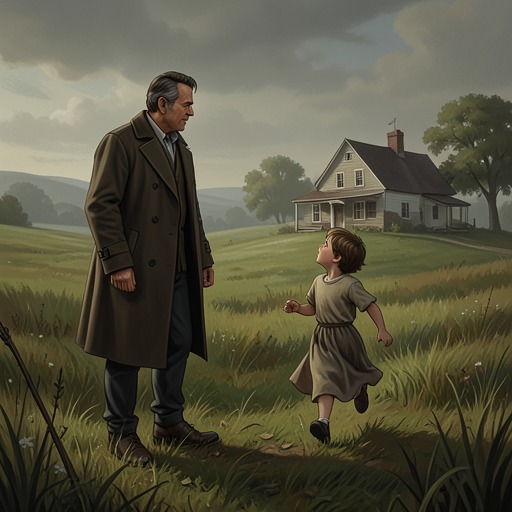
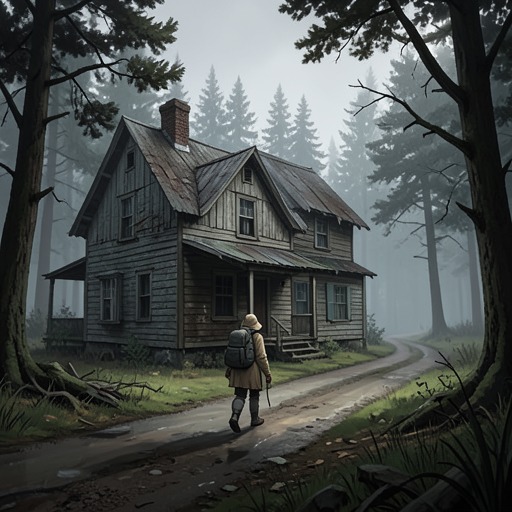
The summer cabin central to the farm’s wartime history belonged to a smallholding Barkald had bought cheaply after foreclosure. The cabin had been empty for four years. Barkald had little use for the property: its cow byre had collapsed, and there was no herd to occupy it. Trond Sander’s father, however, took to the place immediately. It stood on the river’s east bank, a twenty-minute walk from the nearest bridge, with no buildings beyond the farmsteads until well past the Swedish border. Its isolation made it useful as a hiding place and base, while its visible connection to Barkald’s property gave its occupation a plausible explanation.
The cabin also offered work that could pass as the reason for his repeated visits. He cut the grass, burned the remains of the byre, repaired roof tiles and the roof itself, cleared scrub from the riverbank, renewed the gable boards, and replaced broken windowpanes. He sealed the stove, swept the chimney, and made two chairs. These repairs restored a neglected holding, but they also made the father’s presence legible as ordinary labor. The farm and cabin could be seen as places where a man was putting a property back in order, not as a station in an underground route.
Occupation and a workable disguise
The broader district was under close, if often inattentive, occupation. A German patrol was stationed at the farm nearest the church and shop after requisitioning its farmhouse and forcing the family into an already crowded pensioner’s cottage. A guard was often posted on the gravel approach to the bridge. The contrast between military control and routine boredom mattered: the guard might sit smoking on a rock, his machine gun beside him, while the river rushed behind him and the war seemed to be happening elsewhere.
Trond Sander’s father crossed the bridge on his way to the cabin and made a point of talking with the guards. He spoke German and asked after their homes and interests, treating them with a consideration that other villagers generally withheld. The exchanges could last through a cigarette; then he crossed the bridge with his shabby bag and continued down the road. This friendliness did not make the crossing safe. The narrator’s account makes clear that a sudden run would have turned the conversation into a warning shout and a burst of gunfire. The father’s cover depended on sustaining the expected pattern of a harmless local man, not on escaping the possibility of scrutiny.
That appearance was reinforced by Barkald’s assignment and the father’s papers. German searchers had visited the cabin three times. They found tools and two books by Hamsun, Pan and Hunger, but nothing suspicious. To people who asked, he was the man repairing Barkald’s cabin, leaving the village by bus at intervals to work on similar projects elsewhere. His border-residency certificate and other documents were in order. At other times, he walked along the main road with a fuller bag, turned into the meadows beside Barkald’s fence, and rowed across the river. The farm’s ordinary business and the legitimacy attributed to his repair work helped make these movements pass without interruption.
The farm in the resistance route
For two years, through summer and winter, the cabin and its surrounding approaches supported a clandestine line to Sweden. When Trond Sander’s father was away, someone from the village completed the final leg across the border; Franz did so once or twice, and Jon’s mother went when she could. The danger lay partly in the community’s familiarity with itself. Everyone knew other people’s routines, and anything out of the ordinary could be noticed and entered into the informal record villagers kept of one another’s lives.
The secret was carefully divided. Trond Sander, his mother, and his sister were not supposed to know where his father went or where the route led. Sometimes the father collected the messages himself, from a bus or from the shop before or after closing. Sometimes Jon’s mother carried them when she rowed upriver with food for the handyman. Her visits could be explained as help with cooking, although the father was perfectly capable of preparing food. The pretext made a necessary courier’s journey look like the domestic assistance of a woman feeding a solitary repairman. Barkald’s property thus belonged to a network whose safety rested on small, credible acts: a repaired cabin, a bag carried openly, food delivered by boat, and neighbors who knew enough to sustain the cover but not enough to expose the whole operation.
A route recalled through danger
The farm’s field and gate reappear in a later scene of alarm. A German motorcyclist had ridden into a farmyard without an apparent reason, then stopped, paced, and went down to the river jetty. The narrative does not establish what prompted his sudden realization. Once it came, he hurried back to the motorcycle, struggled to start it, and raced toward the crossroads and bridge. The bridge was already wrecked; the guard lay in the snow, alive but unable to hear. The rider and guard then turned away from the patrol’s quarters and drove back along the road.
Passing Barkald’s farm, they left the road and drove across the snow-covered field toward the river, breaking through the gate instead of opening it. Their motorcycle jolted over the uneven ground along the path Trond Sander’s father had used to collect the messages. At the river, Jon’s mother had just brought a stranger ashore in her boat. The father rushed out of the cabin shed when he heard the motorcycle. In this convergence, the farm’s ordinary boundary becomes a point of collision between the resistance route and the occupation’s pursuit.
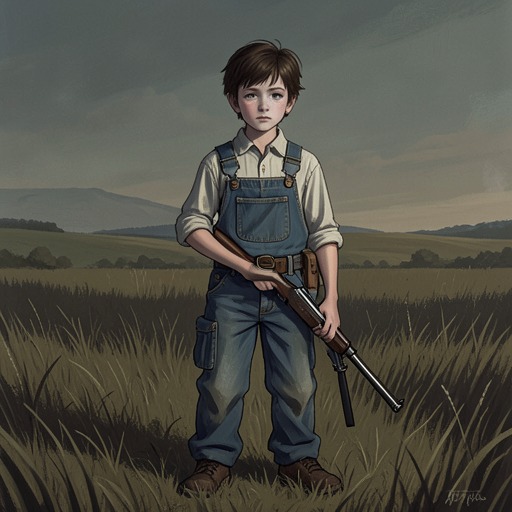
The narrator also remembers the same path in another summer, four years later, walking it with Jon. That later recollection associates the familiar approach with the sudden destruction of Jon’s life after one brother shot the other with a gun Jon had forgotten to unload. The farm’s routes therefore carry more than wartime geography: in retrospect, a path once used for secret messages becomes inseparable from a later loss. Its fields and river crossings hold together repeated movement, concealed danger, and the knowledge that an ordinary passage can become the setting for irreversible change.