Jon
Out Stealing HorsesJon is Trond’s closest companion during the summer of 1948: a boy who appears at the cabin for solitary adventures, yet whose family life is marked by grief, silence, and responsibilities that no child can carry easily. His story moves from the freedom of the river and forest to a sudden, accidental death in his household, then into years of absence at sea and a return to a farm whose future had been shaped by that loss.
Identity and Background
Jon is the same age as Trond, who is fifteen in the summer of 1948. Jon lives with his parents and his ten-year-old twin brothers, Lars and Odd, in a smallholding near the river. His family’s circumstances contrast with those of Barkald, the district’s largest landowner. Barkald keeps four horses in a large forest enclosure, while most families along the valley rely on their farms, dairy deliveries, and seasonal logging for a living. Jon and Trond dislike Barkald, though Trond cannot identify a specific wrong the landowner has done to them.
Jon’s parents respond differently to the family’s surroundings. Jon’s mother welcomes Trond warmly when he visits, while his father tends to withdraw—to the barn or the local paper. That difference becomes more consequential in the account of the wartime resistance route: Jon’s mother assists Trond’s father, while Jon’s father avoids involvement. The account establishes the adults’ choices around Jon, but does not make him a participant in the secret traffic.
The Summer Friendship
Jon comes to Trond’s cabin often and at all hours, approaching quietly from the river path rather than knocking. He waits at the door until Trond senses him there. The two boys share a private routine of excursions, and Jon wants Trond’s company in particular. Their friendship seems to belong to the summer: Trond is in Oslo for the rest of the year, and neither boy tells the other much about life apart.
Their escapades range across the landscape. They shoot hares, walk through moonlit forest to the ridge, fish for trout, and balance on floating logs in the river. The log rides begin nearly a kilometre downstream from the cabin; sometimes the boys travel so far that they must walk for an hour through the forest to return, wet and shivering. The dangers do not deter them, and Trond keeps their activities from his father.
One early-July morning, Jon arrives with the announcement that they are going to steal horses. In practice, the outing means the two boys together, as usual: Jon would otherwise have gone alone, and stealing horses alone would be impossible. Trond later recalls riding two of Barkald’s horses with Jon, although the excursion is brief and turns out badly for both boys. The same horses reappear when Trond’s father eventually proposes a three-day ride, tying the boys’ impulsive adventure to the father-and-son summer that follows.
The Nest in the Tree
A moment in the forest reveals a more volatile side of Jon. He leads Trond up a tree to a goldcrest’s nest, a tiny, suspended cup of moss and feathers. Jon identifies it as a second brood and reaches into it, bringing out one egg for Trond to see. Trond speaks in wonder about how something so small can become a bird and fly away. Jon’s face turns white; he drops the egg, tears the nest from its place, crushes it, and rubs the remaining fragments against the bark.
The destruction is abrupt and difficult for Trond to understand. Jon makes animal-like sounds, climbs down, and collapses on the ground, striking his forehead against it before walking away. Trond remains in the tree, unable to speak, and feels that he has caused what happened without knowing how. The memory preserves that uncertainty: Trond cannot tell whether his words or the egg provoked Jon, and he later acknowledges that some details may have been formed or filled in over time. The fragile nest and its destruction therefore remain less an explanation of Jon than a scene Trond cannot resolve.
Family Loss and the Gun
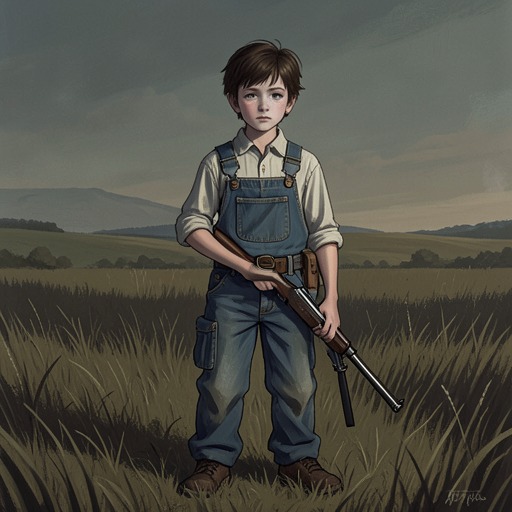
Jon’s gun is a prized possession given to him by his father for his twelfth birthday. Jon normally cares for it with exacting discipline: he puts it at half-cock, removes the cartridges, and hangs it high in the closet. On the day of the accident, however, he has come home and left the gun in the hall without completing that safety routine. He has rushed back after remembering that the twins are at home alone.
Lars and Odd have been playing in the basement with old clothes and shoes. They come upstairs laughing and see the gun. To the twins, Jon is a hero whose actions can be copied in play. Lars grabs the weapon, swings it around, and pulls the trigger. The shot kills Odd at close range. The account is emphatic that no destiny directed the gun: the death follows from an actual, preventable lapse, even as its consequences feel impossible to undo.
Jon’s role in the household changes at once. Their father has to leave to fetch their mother from Innbygda and tells Jon to look after Lars. Jon takes his surviving brother out by boat to fish. They are away for hours; Trond cannot know what they say, or whether they say anything. On returning, they wait in the barn rather than enter the house. When their mother’s cart finally approaches, the brothers hold hands for the first time since they were very small. The gesture makes visible the bond that remains between them after Odd’s death, without resolving what either boy can say about it.
Wartime Family History
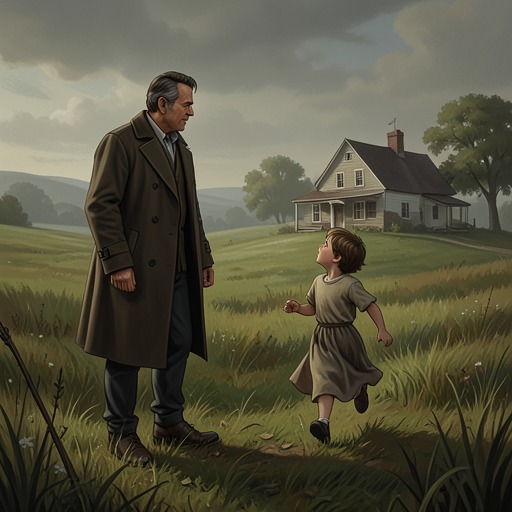
Jon’s childhood also unfolds beside a wartime history that Trond learns much later from Franz. In 1942, Trond’s father established himself at a derelict farmstead near the border as cover for the final link of a courier route to Sweden. Jon’s mother rowed upriver to bring him food and, at times, mail. She also helped a fugitive wait for darkness and cross the river. Jon’s father did not take part; when the secret activity passed through the farm, he looked away rather than comment.
In the winter of 1944, Jon is walking home from school with his books when a German motorcycle comes around a bend. He throws himself into a ditch to avoid being struck, and the fall breaks the buckle on his schoolbag, spilling his books into the snow. The rider speeds on. At the same time, Jon’s mother is rowing a man in a suit upriver to Trond’s father. Franz’s account follows the man, the pursuit, and the destruction of the wooden bridge by a hidden detonator. Trond’s father calls for the people by the water to run as soldiers approach. The attack and escape belong to the adults’ resistance story; Jon’s place in the scene is the child in the ditch, collecting books, unaware of the danger unfolding nearby.
Franz later explains that Trond’s father asked him to tell these stories when the opportunity arose. Trond’s father himself had never spoken to his son about the war. This delayed account gives Jon’s family a history shaped by concealment and unequal knowledge: his mother’s dangerous work, his father’s refusal to join it, and the children’s proximity to events they could not see in full.
Absence, Return, and Narrative Significance
After Odd’s death, Jon eventually goes to sea. Years later, Lars recounts that Jon returned at twenty-four and announced that he was ready to take over the farm, asserting that it was his right. Lars had worked there all his life and was the only son at home, but Jon had been away at sea and had returned to claim the place. Their mother did not object or speak up for Lars, though Lars remembers that she would not look directly at him. The episode reveals a family still divided by the consequences of Odd’s death: Jon’s departure left Lars with the daily labor, while Jon’s return reopened the question of inheritance and belonging.
Lars remembers Jon as thin, slouched, nervous, and irritable, and doubts that he is fit to run a farm. These are Lars’s judgments, not an independent account of Jon’s condition. Jon’s postcards from ports including Port Said, Aden, Karachi, and Madras mark the years of absence, but the evidence does not fill in his life at sea or explain what shaped his return.
For Trond, Jon disappears from his life after the shooting, leaving the summer’s intimate adventures beside the unanswerable rupture in the Haug family. The later narrative brings Jon into view through recollection, Franz’s testimony, and Lars’s account rather than through a sustained return to his perspective. His life thus connects two kinds of silence: the unspoken wartime past and the family’s inability to restore what was lost after Odd’s death. The boy who came quietly up the path to summon Trond remains vivid, but the story cannot make that summer’s companionship undo the consequences of what happened at home.