Lars’s estrangement from his family
Out Stealing HorsesLars’s estrangement from his family is a long, deliberate absence rooted in the loss of his place on the family farm. After a childhood and youth spent working there, he left on his twentieth birthday and never returned, eventually allowing even the question of whether his mother was alive to remain unanswered.
The farm and the succession
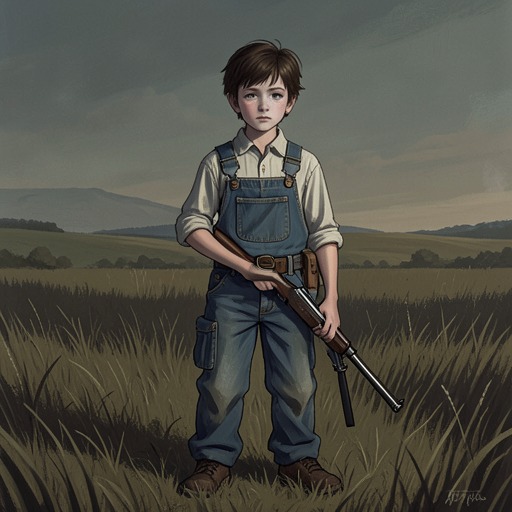
Lars presents the farm as the only work he had ever done and knew how to do. He had stayed at home while Jon was at sea and Odd was dead, working every day and never taking a holiday. Their father had been taken to the hospital in Innbygda in 1948 after breaking his leg and injuring his shoulder; no one knew what was wrong with him, and he never came back. The account leaves the father’s fate unresolved while making clear that his absence altered the family’s future.
Years later, Jon returned from the sea and announced that he was ready to take over the farm because he believed it was his right. He was twenty-four. Lars recalls their mother making no objection and not speaking up for him; what remains particularly vivid is that she did not look directly at him. In Lars’s telling, the farm was not merely property changing hands: it was the one life and occupation he knew, and the decision left him without a claim to either.
Lars remembers Jon’s years away through postcards bearing the names of distant ports, including Port Said, Aden, Karachi, and Madras. One ship was called M/S Tijuka, a name Lars recalls from the envelopes. He thought Jon looked unwell when he came home: thin, slouching, nervous, and irritable. Lars doubted that he could run a farm, but recognized that he had no power to contest Jon’s claim.
Leaving and severing contact
Lars says that he left on the day of his twentieth birthday. His departure became a permanent break: he had not been home since, not even for five minutes. The account establishes the finality of his absence but does not describe the journey away or identify a single motive for leaving. It sets his departure against the succession dispute, his father’s disappearance, and his mother’s failure to intervene, circumstances that together define the rupture without reducing it to one stated cause.
The separation extends beyond the farm. Lars says he has not seen his mother since he was twenty. When Trond asks whether she is still alive, Lars answers that he does not know and never tried to find out. His estrangement is therefore not simply a matter of living elsewhere: he has also refused, or remained unwilling, to learn what became of the person left behind. The narrative gives no reunion or later discovery to soften that uncertainty.
The disclosure to Trond
Lars reveals this history during a meal at Trond’s home, in response to Trond asking what he did after Jon took over. Before answering, Lars draws deeply on a cigarette and twists his face into an exaggerated grimace. Trond finds the display startling and compares its comic appearance to a silent-film performer, yet recognizes nothing funny in it. The performance briefly obscures Lars’s face; then his features relax, his eyes are moist, and he tells Trond that he left and never went home.
The disclosure is unusually extended for Lars, who falls silent afterward and returns to his food. Trond asks about his mother, and Lars’s admission that he has never sought news of her makes the break concrete: decades of estrangement have preserved not knowledge, but an unanswered question. In the present encounter, the story reaches Trond not as a resolved family history but as a past Lars has carried without returning to its source.