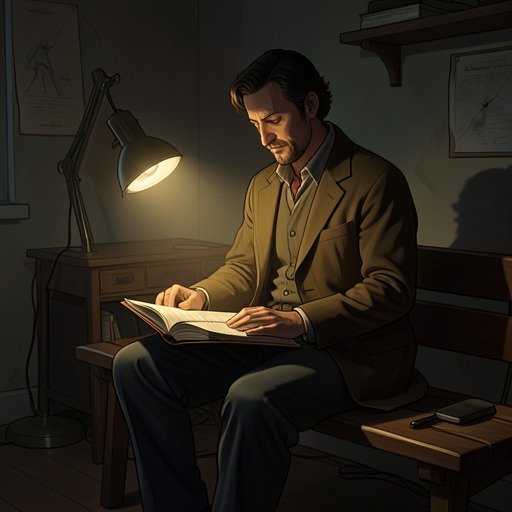
Magritte’s man who sees only the back of his head
Out Stealing HorsesMagritte’s man who sees only the back of his head gives the narrator’s deepest fear a visual form: being trapped in repeated self-confrontation without achieving self-recognition. The image emerges in a moment of weeping, when an expected arrival becomes an occasion to recognize what the narrator fears most.
The Mirror Image
The figure is defined by a reversal of the mirror’s usual promise. Instead of returning a recognizable face, the reflection shows only the back of the man’s head. The encounter repeats without change, making the mirror not a route to self-knowledge but an emblem of its continual deferral.
The Moment of Recognition
The narrator says that this day had been expected, then begins to weep and identifies the mirrored figure as the world’s greatest fear. The passage links anticipation to recognition: the arrival does not merely bring distress but makes a previously known fear explicit.
Narrative Significance
The image compresses fear of self-alienation into a single recurring scene. Its final emphasis on repetition suggests a condition with no clear point of escape or fuller view: the man meets himself again and again, but never face to face. The expression therefore marks the gap between confronting one’s reflection and truly seeing oneself.