Poker
Out Stealing HorsesPoker is Lars Haug’s border collie and an important presence in the encounters that begin to draw Trond Sander out of solitude. He repeatedly ranges away from Lars’s cottage by the river, returning to scenes in which his alertness, unease, and capacity for play complicate the human characters’ attempts to understand one another. Through Poker, the narrative makes neighborly contact physical and immediate: a whistle in the dark, a dog waiting in the yard, and a growl that interrupts a farewell.
Identity and Setting
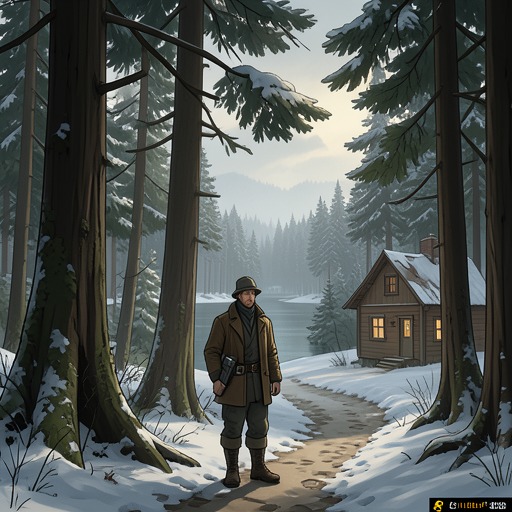
Lars lives in a cottage beside the river, about a hundred metres from its mouth at the lake; Poker is the dog who shares that home. From Trond’s house, the cottage is visible from the doorstep when its lights are on. The dog therefore belongs to the small landscape of Trond’s new life: a house, a river, a neighboring light, and a nearby animal whose movements repeatedly cross the distance between them.
Poker is identified as a border collie. Lars mentions that the breed is said to be the most intelligent in the world, an observation that introduces the dog through the owner’s pride in him. Yet the episodes that follow do not make Poker merely an illustration of intelligence. They emphasize distinct, sometimes difficult-to-read behavior: he disappears, returns stiff and watchful, plays with Lyra, and growls at Lars. Trond notices the dog’s bodily signals without claiming to know everything they mean.
The Night Search
Poker’s recurring absences first reach Trond as sound. One night, a loud, penetrating noise repeatedly breaks the silence outside his small house. Looking through a narrow opening in the window, Trond sees a torch moving uncertainly along the road by the river. Its holder is Lars, and the sound is a dog whistle. Lars calls for Poker, then explains that the dog has run off again. It happens, he says in effect, and Poker always comes back; even so, the disappearance makes sleep difficult, particularly because there are wolves in the forest. Lars cannot bring himself to keep the door shut.
Trond goes outside rather than returning to bed. The cold and darkness make the meeting unusual, but his attention is also drawn to the sight of Lars alone on the road, searching for a dog who should not, Trond feels, have to be alone. The men stand together with their torch beams directed toward the surrounding landscape. After Trond learns Lars’s name, the forest settles into an unnerving stillness. Lars points his torch beyond Trond, and Poker appears a few metres behind him, rigid and on guard.
The dog’s return does not immediately end the tension. Trond recognizes what he reads as guilt in Poker’s posture, while Lars addresses him in a childlike, scolding tone that sits oddly beside his lined, weather-beaten face. When Lars steps toward him, Poker flattens his ears and growls low in his throat. Lars stops, lowers the torch toward the ground, and changes his manner. The exchange presents Poker not as a simple, obedient extension of his owner but as an animal whose stance affects what Lars can do next.
A Neighborly Household Crossing
On another visit, Lars arrives at Trond’s door in the blue light of late afternoon, with Poker sitting motionless in the yard behind him. The dog appears as still as a model, sharing the stiffness Trond senses in Lars. Lars says little about why he has come, but the visit leads to a proper dinner at Trond’s table. Poker waits outside while the two men eat. Lars leaves contented after thanking Trond for the meal, and Poker trots after him toward the bridge and their cottage. Trond watches the neighbor’s light appear across the darkness; the episode leaves him feeling that his solitude has been invaded, though not by just anyone.
Poker also helps turn practical work into shared time. When Lars is in Trond’s yard with a chainsaw, holding a birch branch that needs to be dealt with, Poker and Lyra play around the obstruction. They chase one another and tumble in a mock fight behind the shed, growling and whining as they roll on the grass. The dogs’ noisy play contrasts with the formality that still marks the men’s exchanges. Lars and Trond can work together on the tree even when conversation remains awkward; Poker and Lyra establish their own more fluent companionship through movement.
Conflict at the Farewell
After the birch has been dealt with, Lars and Trond part outside Trond’s house. Lars says that they have done a good job and that they will take care of the root with chains the following day. Poker pushes between the men, sits, fixes his attention on Lars, and growls. This time Lars turns his back without looking down or addressing him, walks past, and heads across the yard toward the cottage.
Poker is left momentarily confused, his tongue hanging out as he looks up at Trond, who does not give a command. The dog then lowers his head and follows Lars with unwilling, shuffling steps. The scene reverses the earlier search: instead of Lars calling a missing Poker back, Poker is present but appears reluctant to go with him. The narrative does not explain the cause of the growling, and Trond does not intervene. The unexplained behavior remains part of the relationship rather than being resolved into a clear lesson about either animal or owner.
Narrative Role
Poker’s appearances give the present-day story a recurring point of contact between two men who live close to one another but have not yet become at ease. His first disappearance brings Trond out into the night; his presence accompanies Lars’s visit and the shared dinner; his play with Lyra sits alongside the men’s work; and his final growl unsettles a departure that might otherwise seem merely routine. The dog’s movements repeatedly turn the boundary between the two homes into a place of encounter.
The episodes also preserve Poker as a creature with behavior that exceeds the human characters’ interpretations. Trond reads guilt in his stillness, but Poker’s flattened ears, growling, play, and hesitation are presented as observable actions, not as definitive access to his thoughts. He can be missing and returned, watchful and playful, obedient at one moment and resistant at another. That variation lends weight to his role: Poker is not only a sign of Lars’s loneliness or a device for bringing Trond into the open, but a living presence whose choices and reactions shape the rhythm of their shared landscape.