The forest as a place of belonging
Out Stealing HorsesThe forest as a place of belonging is not merely the setting of Trond Sander’s retreat: it is a refuge he has desired since childhood, a landscape that becomes part of his body through work, and the place he seeks again after bereavement. Its meaning changes with time. In memory it is immense and faintly dangerous; in labor it is close, resistant, and tangible; in later life it is the answer to a silence that has emptied ordinary social life of its appeal.
Solitude and the imagined refuge
Trond Sander says that he has longed all his life to be alone in a place like the one where he now lives. The desire is not presented as a response only to unhappiness. Even when life was often going well, and even in the middle of an embrace with someone saying words he wanted to hear, he could feel a sudden longing for silence. Years might pass without his thinking about it, but the longing remained. His eventual home in the forest therefore fulfils an old wish rather than marking a wholly new impulse. He finds it almost exactly as he had imagined it.
That distinction makes solitude a chosen form of belonging, not simply exclusion from other people. Trond Sander acknowledges that he has been lucky, but luck has not erased his need to withdraw. The forest offers a life organized around quiet and tangible activity rather than the continual presence of conversation. Its attraction lies in the possibility of being alone without being nowhere: the trees, the ground, and the work give that solitude a material shape.
Childhood encounter with the forest
An early memory gives the forest both its scale and its unsettling pull. With Jon, Trond Sander walks beyond Barkald’s house and through spruce woods whose moss yields underfoot. The route opens onto a cleared area bordered by barbed wire, with young pines and birches standing exposed among the stumps. Horses are visible beyond the bushes. The scene is specific and bounded, but the forest around it seems almost without limit: it extends north toward Sweden, Finland, and Siberia. Trond Sander imagines that a person could disappear there so completely that even a hundred searchers might fail to find him.
The thought carries an attraction as well as a threat. He wonders why getting lost there would necessarily be so bad, while recognizing in retrospect that he did not then understand the seriousness of the idea. The forest is thus not a soft, reassuring refuge from the outset. Its immensity promises escape from the human world, but also makes disappearance imaginable. That childhood impression gives later solitude a shadow: belonging to the forest means entering a place that does not promise to return anyone safely to familiar life.
The forest as work and lived time
The forest is also a workplace shaped by practical needs. When Trond Sander’s father buys land beside the river, the property includes trees and pasture, a cottage and shed, and woodland running down to the water. Trond Sander later wonders whether his father’s decision to cut down a dense stand of trees and sell the timber was connected to the shade cast over the cottage at midday. He is certain the money was needed, though he had not understood how urgently. He also thinks his father needed time and peace to plan a different life, away from Oslo. His father calls their situation a crossroads, and Trond Sander is the only child allowed to accompany him; his older sister stays in town with their mother.
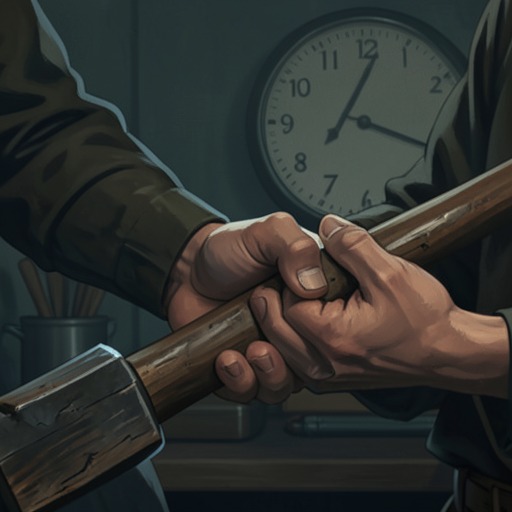
Years later, Trond Sander’s remembered labor makes the forest intimate through exertion rather than ownership. He works among felled spruce, cutting branches close to the trunks with a hatchet, following the method his father taught him. The close trimming matters: branches left protruding could snag the shaving tool or injure a man running along the logs when floating timber jammed the river. Resin covers his clothes, hair, and skin; the smell follows him into bed and remains through the day. He swings the heavy hatchet in a rhythm and keeps working after others have to take him by the shoulders, sit him on a stump, and insist that he rest. The forest is not passive scenery here. Timber, river, tools, bodily fatigue, and the danger of a log jam connect its physical substance to human livelihood.
The work also offers a way of measuring time by what the body does. In later life, Trond Sander tries to put his house and grounds in order himself, though he could afford to hire a carpenter. The work would go too quickly if someone else did it. He wants time to be something he can live inside and fill with physical activities, making its passage distinct rather than letting it vanish unnoticed. This present-day practice echoes the older labor: in both, work makes time tangible and binds him to a place.
Return after loss
The forest’s later importance becomes clear after Trond Sander’s wife and sister die within the course of one month. His sister’s death follows a cancer diagnosis made too late for treatment. She and his wife had become close, often speaking on the telephone and teasing him as the boy with the golden trousers. After both are gone, he loses interest in talking to people and cannot say what he would talk to them about. He gives this as one reason for living in his wooded home; another is simply proximity to the forest.
That return is a recovery of a connection interrupted for a long time. The forest had once been part of his life in a way nothing that followed could match, then was absent. When everything around him suddenly became silent, he understood how much he had missed it. He felt that, if he too was not to die at that particular point, he had to go back to the forest. The simplicity of that felt necessity is central: the forest does not undo grief or replace the dead, but it gives him a place in which to continue living after their loss. His belonging there is at once chosen and remembered, grounded in solitude, labor, and the recognition of what absence has made him need.