Trond Sander
Out Stealing HorsesTrond Sander is a sixty-seven-year-old man living in a small house in eastern Norway, where the solitude he has long imagined has become his daily life. The quiet is not an escape from memory: an encounter with his neighbor Lars Haug brings him back to the summer of 1948, when Trond was fifteen, Lars was ten, and a shot in a small house began to unsettle Trond’s trust in what his father said and what had happened.
Identity and Present Circumstances
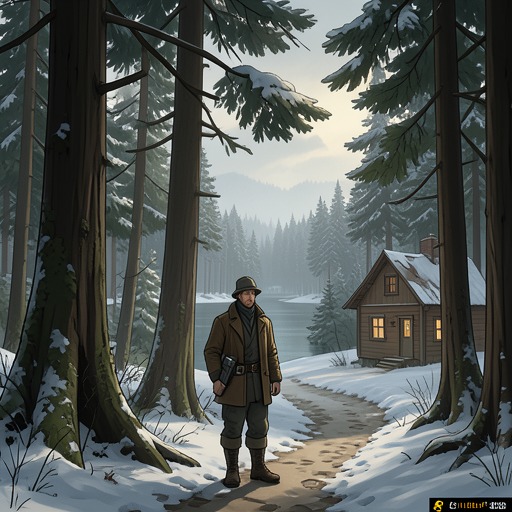
In early November, Trond watches titmice strike the window of his house as snow falls over the forest. At nine in the evening, a reddish light lies above the trees by the lake, and he can see the wind moving across the water. These details establish the habits of a man who attends closely to his surroundings: the lake’s changing surface, the birds’ repeated collisions, the weather turning and the light fading. His account locates him not in a named town but in a remote rural setting in Norway, with a river entering the lake a hundred metres from his home.
At sixty-seven, he says that he feels spry, though he recognizes that age is changing his relation to the world. He still listens to the news, often with the radio on through the day, but it no longer shapes his view as it once did. The British Broadcasting Corporation’s World Service has a particular appeal because its reports make the news feel foreign: they discuss places such as Jamaica, Pakistan, India and Sri Lanka, and a cricket match he has never seen and does not intend to watch. He takes pleasure in hearing England repeatedly lose. His attention to world events remains, but his distance from them has grown.
A Chosen Solitude, Made Through Daily Work
Trond describes solitude as a longing that persisted even when life was going well. It could arise in the middle of an embrace, while someone said words he wanted to hear; then he might suddenly wish to be somewhere with nothing but silence. The desire could disappear from his thoughts for years without disappearing altogether. Now he believes he is in almost exactly the place he had imagined. His chosen isolation is therefore not simply a condition imposed on him: it is the fulfillment of a longstanding wish, even as the memories he carries make solitude more complicated than mere quiet.
His days are built from small, repeatable tasks. He rises before daylight, tends the fire, walks around the property, reads the previous day’s paper, washes the dishes and listens to the radio. He watches birds arrive at a feeding table in the yard and has counted eight species there. He owns a dog, Lyra, whose breed he does not specify. They have already walked together along the lake on a dark, snowy morning; the thin ice gathers at the bank among yellowed rushes, and the falling snow delights Lyra enough to make her sneeze. When they return, she sleeps beside the stove.
The house and grounds need repair, and Trond is pleased to have bought them without much competition. Though he could afford to hire a carpenter, he prefers to do most of the work himself. He wants the work to take time. Rather than wishing for time to speed up or slow down, he wants to inhabit it, filling it with physical activity and dividing it into distinct stretches that will not simply vanish unnoticed. Manual labor gives his solitude a structure: the days pass through tasks he can see and complete.
Lars Haug and the Recognition
The cottage by the river belongs to Lars Haug, an older neighbor with a border collie. Trond first gives his own name when the two men have not properly introduced themselves. In the dark, he raises his hand so Lars can see it in the torchlight, and Lars changes the torch to his left hand before taking Trond’s right. He gives his name as Lars Haug, specifying the spelling of his surname. Trond’s formal greeting feels strangely out of place in the field at night, but Lars appears not to notice its awkwardness.
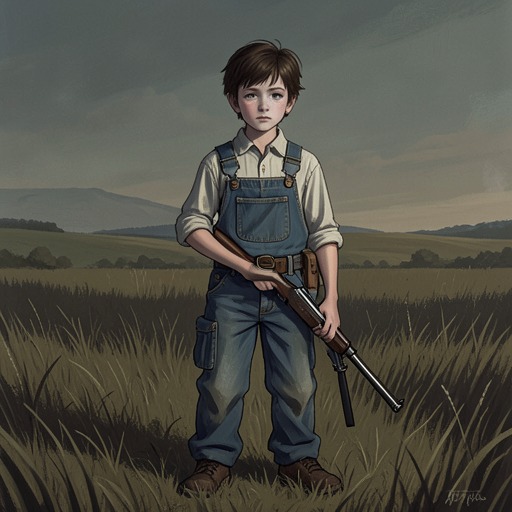
The encounter acquires a different weight when Trond realizes that Lars has recognized him from their childhood. More than fifty years have passed since they were boys: Lars was ten and Trond fifteen. Trond first wonders whether Lars could have seen a widely published photograph of him taken after the car crash that killed his wife. The photograph showed Trond standing in icy rain beside the wrecked blue Audi, blood and water on his face and shirt, his wife on a stretcher, and emergency vehicles at the roadside. A photographer who had been caught in the traffic won a prize for the image. But Trond understands that the photograph is not the reason for Lars’s recognition. Lars remembers him from 1948.
The Summer of 1948 and Its Return
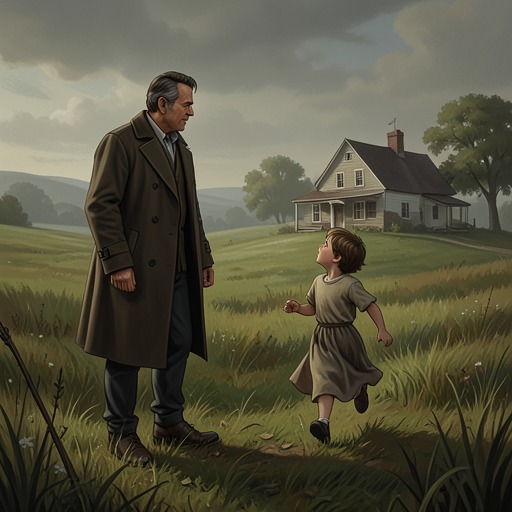
Trond recalls running from a bedroom with his clothes in his hand on a summer night in 1948. He was frightened and did not understand everything happening around him, though he felt that he was close enough to reach out and perhaps grasp its meaning. Then he suddenly panicked at the possibility that his father’s words and the actual state of affairs were not the same. That discrepancy makes the world feel unstable to him, as if a void has opened that he cannot see across.
In the same recollection, Trond places Lars perhaps a kilometre downriver, alone and awake in bed. He imagines that the shot in the small house has filled every measure of the air, so that Lars can hear nothing else, even when people speak to him. Trond does not claim to know exactly what Lars experienced; the memory preserves his uncertainty through the possibility that Lars was lying awake. But the shot’s reverberation becomes a measure of how an event can continue beyond its instant, shaping what can be heard and understood afterward.
At the later meeting, Lars sits opposite Trond at the table and knows who he is. Trond feels that the recognition resembles an accusation, while also insisting to himself that it is not one and that it requires no answer. Yet silence between them would become difficult, so the old scene exerts pressure on the present before either man needs to explain it. Trond’s character is marked by that tension: he has achieved the quiet he wanted, but recognition makes clear that the past can cross it. The remembered summer does not arrive as a settled explanation; it returns through a name, a shared history and the knowledge that what a father says may not be identical with what is true.