Trond Sander and Lars Haug
Out Stealing HorsesTrond Sander and Lars Haug’s reunion turns a chance encounter between elderly neighbors into a quiet confrontation with a shared past. They first meet in the darkness of 1948, when Trond is fifteen and Lars is ten; more than fifty years later, they find one another again without at first recognizing what the other means. The decisive moment is not a confession or an accusation but mutual acknowledgment: Lars wants Trond to confirm that he remembers him, and Trond does. Their restraint gives the encounter its force, making recognition itself the event that joins the men’s present to a childhood shaped by violence and bewilderment.
First Meeting and Delayed Recognition
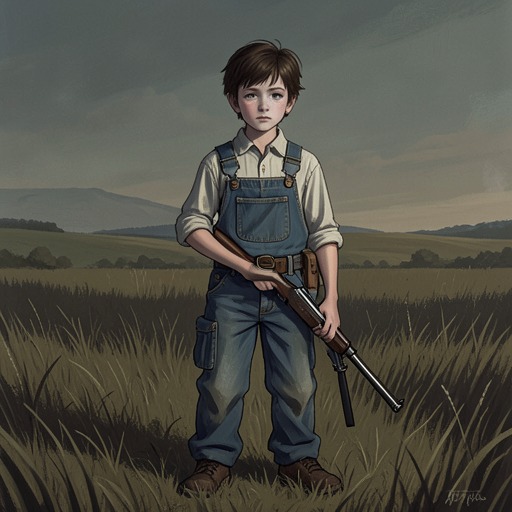
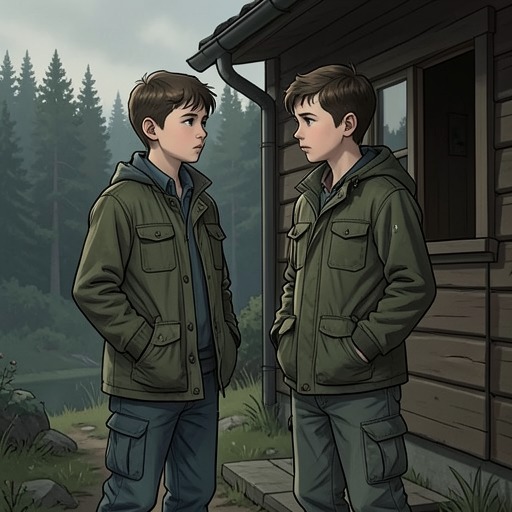
The relationship begins when Trond and Lars introduce themselves in a dark field, each holding a torch. Trond offers his name, and the exchange is awkward enough that his formal greeting sounds as strangely out of place as his father’s word of condolence at a forest funeral. Lars gives his name as “Lars. Lars Haug. With a g.” Trond remembers the gesture of making himself visible by raising his hand into the torchlight, and the practical difficulty of the handshake as Lars shifts his torch to his left hand.
At the time, the names do not carry their later weight. Lars is a child in the same summer that leaves Trond frightened and unsure of what is happening around him. The two boys are not shown becoming confidants; their connection instead rests on their proximity to a traumatic event and on Trond’s awareness that Lars, downriver, may be suffering through its aftermath alone. The shot that Trond cannot fully understand is, for Lars, an inescapable sound: it seems to fill the small house, drowning out whatever people say to him.
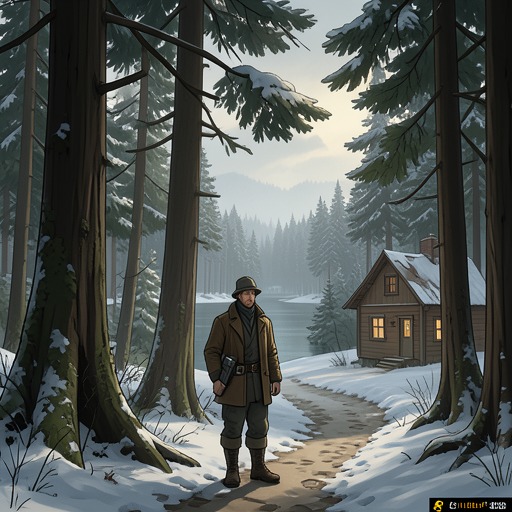
Decades later, Trond sees Lars around the forest settlement without recognizing him. He nods when passing with Lyra and sees the older man stacking firewood beneath the eaves of his cabin. Even when Lars gives his name, it does not immediately awaken the memory. Only after going to bed does Trond connect the man’s face, seen in the wavering light of their torches, with the ten-year-old boy from 1948. Lars is now past sixty; the former fifteen-year-old Trond has also grown old. What makes the recognition unsettling is its ordinariness: the past returns through a neighbor encountered on the road, not through a deliberately sought reunion.
Recognition at the Supper Table
The first clear sign that the past has entered the present comes when Lars knocks at Trond’s door. Trond has begun supper alone, following the careful routine he considers important: potatoes, sauce and vegetables, a clean glass, a napkin, candles, and a change from work clothes. There is no car or light to announce a visitor. Lars stands outside with Poker sitting unusually still in the yard. In the blue evening light, both man and dog appear stiff, and Lars avoids looking Trond directly in the eye.
Lars says little about why he has come. Trond initially has to consider whether Lars might be thinking of the widely published photograph of him after the car crash that killed his wife. That possibility is not the explanation. As Trond understands it, Lars has recognized the boy he knew more than fifty years earlier, just as Trond has now recognized Lars. The meal becomes the setting for a recognition neither man can easily approach: Lars’s silence leaves Trond unsure how to help, while Trond’s awareness that the encounter was not of his making makes him feel trapped and ill at ease.
Trond finally tells Lars that he knows who he is. Lars nods, says he thought so, and resumes eating. His satisfaction makes the purpose of the visit legible without turning it into a demand for explanation: he wanted his recognition confirmed, and has received that confirmation. The two men exchange few words for the rest of the meal. Their conversation turns to the quickly darkening season, an ordinary topic that lets them remain together without attempting to resolve the past aloud.
A Shared Past Without Reconciliation
The reunion connects Trond’s present-day isolation to the summer when he first encountered Lars, but it does not produce a conventional reconciliation. Lars finishes the food on his plate and thanks Trond for a proper dinner. He leaves with a light step, without his torch; Poker follows him toward the bridge and their small cabin, and both disappear into the night. Trond, by contrast, feels heavier after the visit. The difference between Lars’s apparent ease at departure and Trond’s burdened response leaves the meeting emotionally unresolved rather than falsely healed.
The encounter also unsettles Trond’s insistence that people shape their own lives instead of submitting them to fate. He rejects the neat coincidences of older fiction and says he takes responsibility for the life he has made; nevertheless, of all the places he might have moved, he has ended up precisely beside the boy from that summer. He insists that the discovery does not change his plan for the place or his feeling about living there, and would prefer Lars not to recognize him. Yet it makes some difference all the same. Their reunion gives that contradiction a human shape: a past can return without becoming destiny, and acknowledgment can matter even when neither man offers a full account of what happened.