Trond Sander's chosen solitude
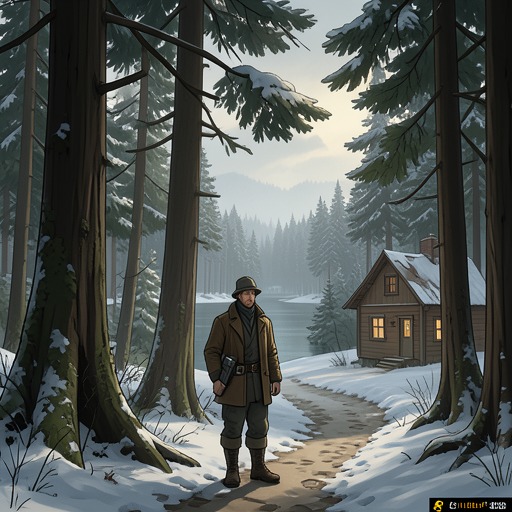
Out Stealing HorsesTrond Sander’s chosen solitude is not simply the condition of living alone after bereavement; it is the fulfillment of a desire he remembers having even when his life was going well. In his woodland home, distance from other people becomes a way to recover silence, attend to physical tasks, and inhabit time deliberately. The arrangement offers refuge, but it also draws a firm boundary between what the village knows about him and what remains inwardly his own.
A Long-Standing Desire and Its Aftermath
Trond describes the wish to be alone in a place like his present home as something that has accompanied him throughout his life. It could surface even in the middle of an embrace, when someone was saying words he wanted to hear: alongside intimacy, he felt a sudden longing for silence. The desire might disappear from his thoughts for years, but its absence from attention did not mean it had gone away. His current life therefore answers an old inclination rather than expressing only a reaction to recent grief. He says that the place is almost exactly as he had imagined it, joining the remembered longing to the landscape and domestic life he now inhabits.
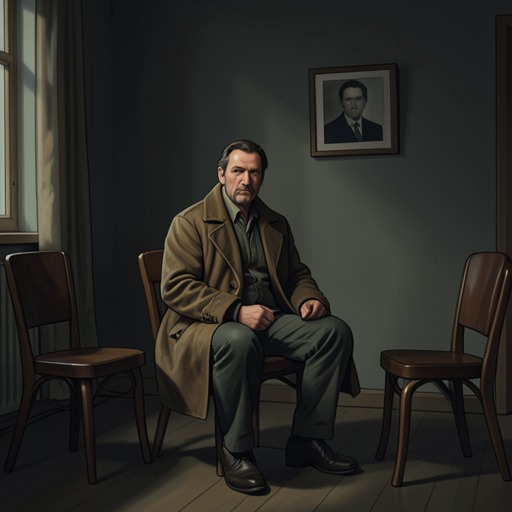
Bereavement nevertheless gives that choice its immediate force. Trond’s wife and sister both died within the same month, three years earlier. His sister had been diagnosed with cancer too late for anything to be done. In time, she and his wife had become close friends, often speaking on the telephone in the evenings about world affairs; sometimes they made Trond the subject of their affectionate teasing. After both women were gone, he lost interest in talking to people and could not identify what he wanted to discuss with them. Their deaths did not create his longing for solitude, but they left an absence that made the forest and a life apart feel necessary. He recalls realizing, when everything around him had suddenly gone silent, how much he had missed the forest and that he had to return to it if he was not himself to die at that point.
Making Solitude a Daily Practice
The solitude is sustained through chosen habits, not an escape from activity. Trond spends his days putting the house and grounds in order, doing much of the work himself although he could afford to hire a carpenter. The work takes longer that way, and its duration matters to him: he wants time to be something he lives inside, filled with physical tasks that make its passage distinct rather than allowing it to vanish unnoticed. Solitude, in this sense, is actively made. Repair and maintenance provide a structure for days that might otherwise seem empty, while allowing him to remain at home on his own terms.
Lyra, his dog, is part of this quiet routine. Trond takes her out along a familiar path by the lake, and in the evening her pale coat guides him through the dark. On another walk, he watches the lighted windows of Lars’s cabin and sees Lars sitting before the television, watching the news. Trond has no television at his own home. He sometimes regrets its absence when evenings grow long, but fears becoming attached to the flickering images and the chair where a viewer can sit late into the night while other people do the moving. He chooses instead to keep himself company. The contrast makes clear that being alone is not merely an absence of company: it is also a refusal to hand over the movement and shape of his time.
The Boundary Between Knowing and Being Known
Trond is not unknown to the people in the village. They have gradually learned that he has settled there, rather than arriving as a holiday visitor, and he has told them about his working life, his age, his wives, and his children and grandchildren. He has also explained that after his wife died in an accident he had barely survived, he did not want to continue working, retired, and began looking for a completely new place to live. When he found his present house, he was happy with it. The locals tell him that others had admired its situation but avoided buying it because so much work was needed. Trond replies that ignorance of the house’s condition was fortunate: had he known, he might not have bought it. He can live there by asking little of it at once and proceeding one step at a time; he has time and is not going anywhere.
This exchange does not mean the villagers have access to his inner life. Trond distinguishes between knowing facts about someone and knowing their feelings, opinions, or the way past events and decisions have made them who they are. People fill in what they do not know with their own assumptions and feelings, constructing a version of another person’s life that may have little to do with the person himself. That projection, he recognizes, can leave him alone in a protective sense: others may talk about him, but they cannot reach him unless he allows it. Politeness and a smile help maintain the boundary, as does accepting that village gossip is inevitable and that he too would speculate about others.
The gap between public information and private experience becomes visible in the smallness of his shopping. He needs little beyond bread and something to put on it, and is surprised by how few things he requires when alone. At the checkout, a sudden melancholy comes over him as he looks for his money. He imagines that the cashier sees only the widower and accepts that other people do not understand, adding that this may be just as well. His solitude thus protects more than his physical privacy: it limits the demands and misunderstandings that come with being interpreted by other people.
Time, Ritual, and the Approaching Millennium
Near the end of 1999, Trond looks ahead to the turn of the millennium and imagines spending it at home with Lyra rather than joining the parish festivities and fireworks. He may walk down to the lake to see whether the ice will bear his weight, then stoke the fire, play a record on his old gramophone, drink a bottle he has kept in the cupboard, and go to bed. The plan includes a memory of hearing Billie Holiday at the Oslo Colosseum sometime in the 1950s: her voice was nearly burned out, yet still magical. A particular night and a remembered performance enter his solitary ritual, but the public occasion itself does not acquire significance for him. He looks forward to waking in the new millennium and not letting the date mean anything.
That intention accords with the way he understands time in his house. He wants neither to hurry its passage nor slow it down, but to live within it and mark it by the activities he undertakes. The approaching calendar change might invite collective celebration and a grand sense of historical transition; Trond plans instead for an ordinary sequence of walking, tending the fire, listening, drinking, and sleeping. His preferred solitude is therefore not defined by inert withdrawal. It gives him control over the scale of experience, making room for personal memory and tangible routines without requiring a public event to tell him what the moment means.