Trond’s rural isolation
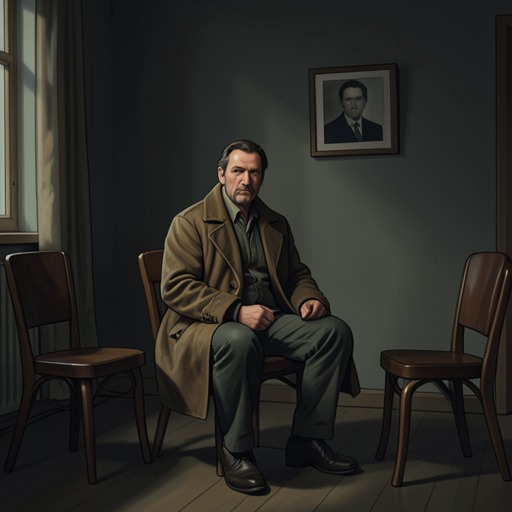
Out Stealing HorsesTrond’s rural isolation is both a refuge he has chosen and a condition he is still learning to inhabit. He comes to live in the country because his former life has become impossible to continue, and he wants the quiet to let him solve problems at his own pace. Yet the novel makes that solitude more complicated than withdrawal: it brings relief, demands self-reliance, and is repeatedly tested by the people who find their way into his yard and home.
A Solitude Chosen After a Necessary Break
Trond describes his move as a decisive break with a life that could not go on. He has sold what remained of the firm and come out to this place because, as he explains to Ellen, he had to change his life or things would have turned out badly. The move is therefore neither an uncomplicated preference for country living nor simply a retreat from other people. It is a response to a limit: the old arrangement has become unsustainable, and isolation offers the possibility of beginning again.
That beginning is accompanied by a strong idea of what living alone should make possible. Trond wants to take on one daily task at a time, think clearly, use his hands, and finish work whose boundaries he can see. He imagines his father working in this way at the cabin: assessing a job, laying out the necessary tools in a deliberate order, and proceeding from one end to the other. The model is practical as well as emotional. A task with a beginning and an end can be managed; a day shaped by such work can leave him pleasantly tired rather than exhausted. Solitude is valuable to Trond partly because he hopes it will restore this legible measure of effort and rest.
The Rhythm He Hopes to Make
His imagined routine is precise. He would wake rested, brew coffee, light the stove, and watch the pink light come over the forest towards the lake. He would dress, walk the paths with Lyra, and then turn to the work he had chosen for that day. These details give his wish for peace a material form: warmth from the stove, a familiar walk, tools in hand, and a manageable list of tasks. He does not describe isolation as empty stillness, but as space in which ordinary actions can regain their order and completion.
At one point, sitting on a bench and looking across the lake, Trond feels a sudden release. His nausea has gone, his thoughts are clear, and he feels weightless, as though saved from shipwreck, obsession, or evil spirits. The passage moves from physical and mental distress towards the modest prospect of a future: he thinks of music and considers buying a CD player. The imagined purchase matters in its smallness. A future begins not with a grand plan but with the expectation that there may be time and interest for music again.
Still, the ideal of independence is not secure. Trond recognizes that his wish to solve problems alone is something he believes he can do, not something he has effortlessly achieved. He longs for rest after having seen and been part of so much, and remembers that those who loved him once called him “the boy with the golden trousers,” a figure associated with an apparently inexhaustible supply of shining coins. Against that former image of abundance, his present hope is quieter: to know what is in his pockets, what the day requires, and when the work is done.
Solitude Tested by Lars
Lars’s arrival makes Trond’s carefully imagined independence harder to maintain. When Trond returns from the bridge, Lars is in the yard with a chainsaw, gripping a birch branch and rocking the tree. His help turns a difficult job into shared physical work. Later, as snow falls, they have stacked piles of wood against the outhouse wall and cleared the yard, leaving a large root to be pulled away the following morning with chains and a car. Trond is tired, hungry, and aware that his back still hurts, but the bodily fatigue feels pleasant. He also knows he could not simply have left Lars to clear the yard alone.
The encounter has an emotional consequence as well as a practical one. Lars’s attitude is contagious, and Trond finds himself willing to continue. That response pleases him but also worries him: he is surprised that another person’s presence can supply the strength to undertake a necessary job. He reads this dependence as part of a change already under way, perhaps for three years, from the familiar self he once relied on towards someone less familiar, uncertain even about what he carries within him. The episode exposes the tension at the heart of his solitude. He wants control over his work and his days, yet companionship can make action easier and even make the day feel more alive.
Trond’s reaction to Lars is not simple resentment at an intrusion. He admits that he probably cannot avoid liking him, while also recognizing that Lars seems more at ease outdoors with an axe or saw than inside the house. Their shared work provides a form of contact that fits Trond’s preferred world of practical tasks, but it also unsettles his plan to be alone. The problem is not that the work has gone badly: Lars has helped, and the yard is in better order. The difficulty is that the success makes Trond’s solitary ideal seem less self-sufficient than he had wanted it to be.
Ellen’s Visit and the Meaning of Peace
Ellen’s early-morning visit brings the question of isolation directly into the house. She has driven from Maridalen, on the outskirts of Oslo, along dark roads through several counties to find out where her father lives. Trond realizes that he may never have told her, or even thought to tell her. His solitary arrangement has therefore involved not only distance from company but a failure to make his location known to his daughter. He likes her, but notices that his explanation of life with Lyra—that the dog makes living alone easier—sounds self-pitying and as though he were defending a choice that needs no defence.
Ellen asks, “Would you rather I hadn’t come?” She then wonders whether he moved there because he wanted peace and whether her arrival has disturbed him. The question catches the ambiguity Trond has avoided stating plainly. His isolation is real, and he wants it respected; at the same time, he does not tell Ellen that she should leave. Instead, he explains that he changed his life because he could not continue as before. The distinction matters: the country home represents a necessary alteration of his circumstances, not proof that he rejects his daughter.
Trond’s rural isolation consequently remains a negotiated state rather than a sealed-off existence. He seeks a life in which solitude can support clear thought, useful labor, and rest. The lake, the paths, the stove, and the unfinished work make that hope tangible. But Lars’s help and Ellen’s arrival show that this new life is still connected to other people—and that the companionship he both welcomes and finds unsettling can expose needs his plan for independence cannot entirely contain.