Genevieve’s family crisis
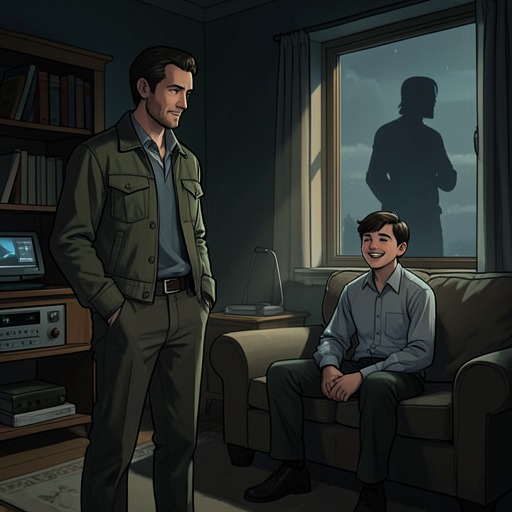
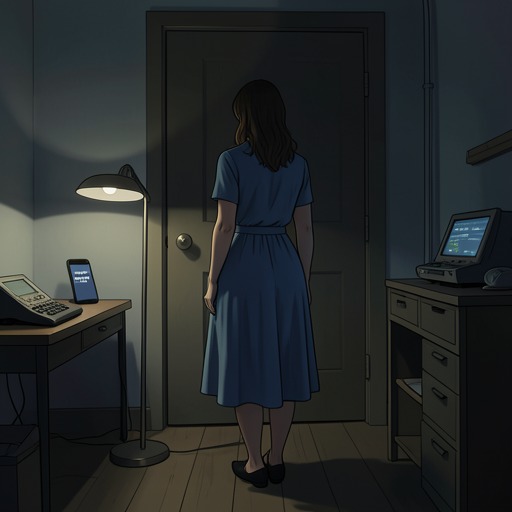
P.S. I Still Love YouGenevieve’s family crisis comes into view when Lara Jean, following Genevieve during the Assassins game, witnesses her father kissing eighteen-year-old Anna Hicks outside his office. The discovery gives context to Genevieve’s distress and to Peter’s enduring sense of responsibility for her: he later reveals that her father had cheated before, that Genevieve hurt herself when her parents’ problems became severe, and that he had felt it was his job to protect her. The crisis thus unsettles both Lara Jean’s rivalry with Genevieve and her understanding of Peter’s attachment to his former girlfriend.
Background and Discovery
Lara Jean follows Genevieve to an office building she recognizes as her father’s. She waits in a nearby strip mall, hiding in her parked car and telling herself that winning the game matters more than the prize. After ten minutes, she is still waiting when Genevieve’s father emerges with Anna Hicks, whom Lara Jean recognizes as someone from Margot’s year and, she thinks, Key Club. He walks Anna to her car. As Anna fumbles for her keys, he takes her arm, turns her face toward him, and kisses her passionately.
The scene makes the betrayal concrete and especially disturbing to Lara Jean because Anna is only eighteen, the same age as Margot. She sees the encounter not merely as an affair but as a father’s betrayal of his family and of the person he understands himself to be. Lara Jean imagines how such a discovery would alter her own view of Daddy and of her life at home. Her reaction makes the crisis legible through the contrast between Genevieve’s family and the security Lara Jean associates with her own.
Genevieve and the Assassins Game
Lara Jean keeps her head down until Genevieve’s father and Anna have driven away. As she prepares to leave, Genevieve comes out of the building with her arms crossed and shoulders bent, spots Lara Jean, and approaches her car. Genevieve motions angrily for Lara Jean to lower the window. The confrontation brings the family crisis directly into the game: Genevieve assumes Lara Jean has come to tag her, while Lara Jean cannot bring herself to treat the moment as a simple contest.
When Genevieve tells her to tag her out, Lara Jean denies that this is what she wants. Genevieve recognizes the lie, pulls Lara Jean’s hands from the steering wheel, and places them against her own collarbone, declaring her defeated before running to her car. The gesture turns a game rule into a charged act of surrender. For Lara Jean, the moment exposes the limit of their antagonism: knowing that Genevieve is suffering makes winning feel beside the point, even though the two girls remain bound up in the same history of hurt and rivalry.
Jung and Continuing Attachment
Lara Jean makes sense of that attachment through Jung, a Korean word her grandmother taught her for a connection that cannot simply be severed when love turns to hate. Old affection persists; tenderness remains even when a relationship has become painful. She recognizes Jung in her own feelings for Genevieve and uses it to explain why she cannot hate her completely. Their hostility has not erased the ties formed in the past.
Lara Jean extends the same idea to Peter and Genevieve. She reasons that if her own father had betrayed her family, she might reach for the person who had never turned her away, had always been there, and had loved her deeply. Peter, she recognizes, occupies that place for Genevieve. This understanding does not make Lara Jean’s situation easy, but it changes the moral shape of her jealousy: Peter’s continued closeness is linked not only to their former romance but also to the support he once gave Genevieve during a family crisis.
Peter’s Account and the Crisis’s Aftermath
Later, when Lara Jean tells Peter she knows Genevieve’s secret, he confirms that Genevieve’s father has cheated on her mother before, though never with someone so young. He explains that when her parents’ relationship became especially bad, Genevieve found ways to hurt herself. Peter felt responsible for protecting her. The role frightened him at times, but he also liked feeling needed, a detail that makes his attachment more complicated than simple loyalty to an ex-girlfriend.
Peter admits that he has always known Genevieve could be manipulative and that returning to the familiar had been easier. He also says he may have been scared. His disclosure connects the present crisis to the history that Lara Jean has only partly understood: Genevieve’s family troubles helped shape the protective bond between her and Peter, while that bond left Peter with a familiar role he could fall back into. The account does not establish how Genevieve’s family situation is ultimately resolved; its consequence in this part of the story is to expose the emotional history behind Peter’s choices and give Lara Jean a more compassionate way to read them.
Contrast and Narrative Significance
The crisis also sharpens the contrast between Genevieve’s home life and Lara Jean’s relationship with Daddy. After the confrontation, Lara Jean is cleaning up after pancake breakfast when Daddy sings a line from The Sound of Music about turning sixteen and going on seventeen. The ordinary family scene prompts a strong surge of love and gratitude in her. Set beside the affair she has just witnessed, this domestic moment clarifies what Lara Jean fears Genevieve has lost: confidence in the people who are supposed to protect and love her.
The revelation therefore works on two levels. It supplies painful context for Genevieve’s distress, including the self-harm Peter describes, and it forces Lara Jean to see her rival as someone connected to a history of affection and vulnerability rather than as an opponent defined only by the game or by Peter’s past. Through Jung, the narrative holds anger and tenderness together: the betrayal does not erase the relationships around it, but it changes how those relationships are understood.