Scotland, Margot's study destination
P.S. I Still Love YouScotland, Margot's study destination is both a practical destination and an emotional distance in the novel. Margot Song Covey is away there for school and expects to return after a visit home; her departure makes the unresolved end of her relationship with Josh feel more permanent to her sister, Lara Jean Song Covey. The book gives little geographic description of Scotland itself. Instead, it makes the place vivid through the people who leave for it, the conversations that cross the distance, and the future Margot imagines there.
Study Destination and Narrative Geography
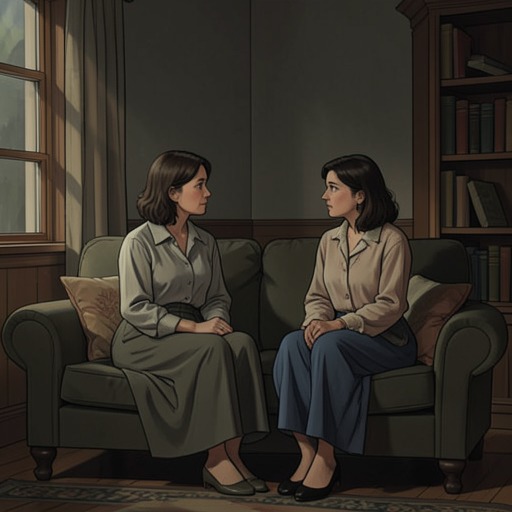
Margot’s connection to Scotland is established through her return to school there. The evidence identifies anthropology as her field of study but does not name a university or a Scottish city. A Saint Andrews mug appears during one of her video calls with Lara Jean Song Covey, but the scene does not establish that she attends a school there. The distinction matters: Scotland is a defined part of Margot’s life, while its precise local geography remains outside the account.
The novel makes that distance felt through ordinary details rather than a travelogue. On a video call, Margot sits at her desk in a Fair Isle sweater, with wet hair and tea in a Saint Andrews mug. Lara Jean Song Covey settles her laptop against her thighs and gets comfortable among her pillows before sharing news about Kitty Covey trying to set up Daddy with Ms. Rothschild. Their conversation shows a family relationship continuing through screens and everyday updates, even while Margot’s school life is elsewhere. Scotland enters the scene as the far end of a familiar exchange, not as an exoticized backdrop.
Departure and the Cost of Distance
Before Margot’s return to Scotland, Lara Jean Song Covey worries that she will leave without speaking to Josh. The sisters have both experienced the consequences of Lara Jean Song Covey’s history with him, and Lara Jean Song Covey has been careful not to disturb the fragile peace after Margot forgave her. But the approaching departure changes the stakes: Lara Jean Song Covey believes that she and Josh, as neighbors who see each other often, can mend their own relationship over time. Margot and Josh will not have that same everyday proximity once Margot is away. She fears that their hurt could harden into a lasting estrangement, leaving them like strangers who once loved each other.
Kitty Covey urges Lara Jean Song Covey to stop dwelling on letters and go get Peter back. Margot, meanwhile, warns her sister not to let it be too late. Lara Jean Song Covey turns that urgency back toward Margot, asking her to talk to Josh before returning to Scotland. Margot does not promise to do so, but the hope Lara Jean Song Covey sees in her response gives her hope as well. The exchange makes the journey consequential before anyone reaches the airport: the possibility of leaving without a conversation weighs against the possibility of repairing an old bond while there is still time.
When departure comes, its practicalities are plain. Daddy notes that international flights require arriving three hours early and that he has bags to check. After returning with a squirming Jamie, he says they should leave before the dog causes more trouble. The family hugs fiercely; Margot whispers encouragement to Lara Jean Song Covey, then leaves for the airport with Daddy. Kitty Covey watches the dog commotion across the street. The farewells are embedded in the bustle of bags, airport timing, and a restless dog, but their force is unmistakable: Margot and Daddy are gone, and the household must resume without her.
A Future Imagined from Afar
Scotland also represents the life Margot expects to continue when she gets back to school. In a late-night conversation with Lara Jean Song Covey, she jokes about dating Scottish guys. Lara Jean Song Covey expands the joke into a tour that would include one man each from England, Ireland, Scotland, and Wales, playfully invoking the British Empire. Margot answers by returning to the concrete fact of her studies: she is at school to study anthropology. The exchange makes her plans for romance playful rather than a report of actual relationships, while her studies give her return a clear purpose beyond being away from home.
The sisters’ joking follows a more painful admission. Margot says she does not regret having loved Josh, even though the relationship has ended. She also believes that she and Josh will never again be friends as they were before: he had been her best friend, and that part of their relationship is over. The prospect of dating people in Scotland belongs to a future she can imagine; it does not erase the particular loss she names at home. The scene holds both facts together without making one cancel the other.
Distance, Family, and What Remains
After the difficult conversation about Josh, Lara Jean Song Covey sleeps in Margot’s room as she did in earlier times. The room is cold because it sits above the garage; the sisters huddle under a quilt while the heat clicks on and off. That intimate, shared setting contrasts with Scotland, the distant place Margot is about to return to. Their closeness is expressed not through a dramatic resolution but through the familiar act of sleeping side by side and teasing each other. When Lara Jean Song Covey jokingly claims the title of best friend, Margot distinguishes sisterhood from friendship and tells her that being a sister means more.
The departure also prompts Lara Jean Song Covey to take on more of the family’s daily responsibilities. After Margot and Daddy leave, she makes banana pancakes for herself and Kitty Covey, wraps extra pancakes in foil for Peter Kavinsky, does the dishes, and contacts Janette at Belleview about Margot’s former job. Janette says the replacement quit and asks her to come in on Saturday to discuss the responsibilities. Lara Jean Song Covey feels that she has finally found her stride. These changes are not descriptions of Scotland, but they show one consequence of Margot’s return there: the family at home reorganizes around her absence, while Lara Jean Song Covey begins to occupy responsibilities Margot had held.
Scotland’s narrative importance therefore comes from its effects on relationships and routine rather than from detailed physical description. It is where Margot studies anthropology and imagines a broader social life, but also the distance that makes her unfinished history with Josh feel vulnerable to time. Her departure separates her from the household; video calls preserve everyday contact, while Lara Jean Song Covey’s memories of their closeness make the separation personal. The novel leaves unresolved whether Margot and Josh repair their friendship before she goes. What it establishes is the pressure of the opportunity: a conversation not had before a long separation may become harder to have later.