Leah Joseph
Pamela's WarLeah Joseph, affectionately called “Auntie” Leah, is the wife of Alf Joseph and a childless family friend who becomes part of Pamela Wheeler Fellows’s dependable circle of adult companions. Her importance lies less in public action than in the shelter she helps provide: when war destroys the family’s home and leaves them without a secure place to live, Leah and Alf receive them as cherished guests. Through her, the book shows how survival depends not only on institutions or heroic military service, but also on domestic generosity offered under pressure.
Identity and Place in the Family Network
Leah is introduced alongside Alf Joseph as one of the grown-ups who keep Pamela company beyond her friendship with Gloria. The Josephs are childless, close to Pamela’s family, and described as exceptionally kind. Alf takes Pamela under his wing, paying for riding lessons, teaching her what he knows about horses, and later accompanying her on hacks through the lanes and bridle paths. Leah’s presence is less individually elaborated, but the shared description of the couple establishes their home as a trusted extension of the family rather than a merely social acquaintance.
That position gives Leah a distinctive form of influence. She is not presented as a commander, wage earner, political figure, or public war worker. Instead, she belongs to the informal adult network that surrounds Pamela’s adolescence and makes ordinary life possible. The Josephs’ kindness begins in companionship and grows into practical responsibility, so that their relationship with the family acquires greater significance when wartime catastrophe turns friendship into a question of shelter.
Refuge During Displacement
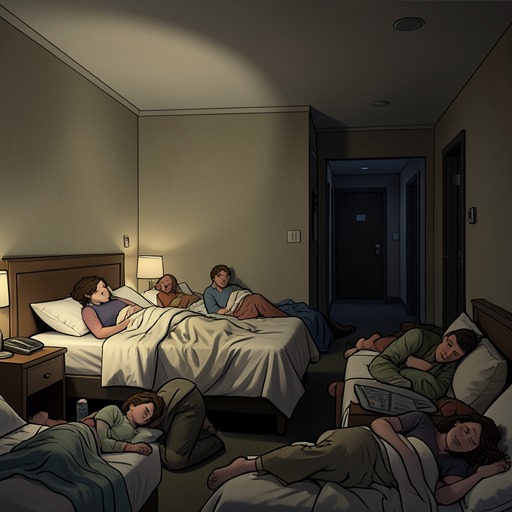
The Josephs’ generosity becomes decisive after bombing leaves Pamela’s family homeless. Their flat has barely been occupied for a night before it is destroyed, yet the family’s small car survives despite being parked close to the building. With their last possessions piled into the vehicle, they can seek only temporary refuge. Jim and Renee Parkes first squeeze them into the tiny accommodation above their café in Quinton, where they camp for several weeks.
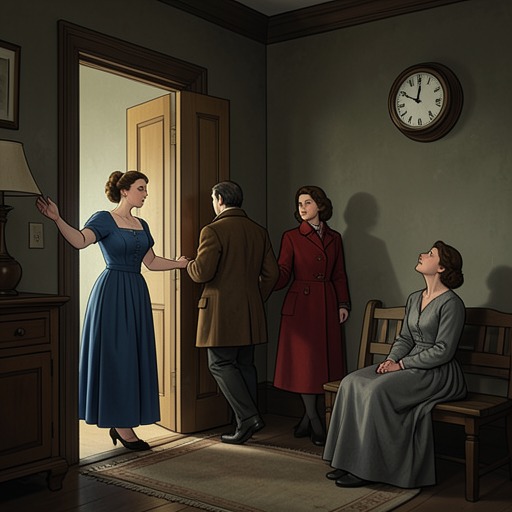
That arrangement does not last. After the Parkes household becomes untenable, the family moves on, and the Josephs take over the work of hospitality. Leah and Alf receive them in Hagley, where they remain for several weeks and are looked after as cherished guests. The wording matters: the family is not simply tolerated or stored temporarily in an overcrowded house. The Josephs’ care preserves their dignity at a moment when homelessness could reduce them to a burden or a logistical problem.
Leah’s role is therefore bound to the book’s recurring contrast between wartime destruction and the human structures that answer it. Bombing removes a home almost instantly; Leah helps create another, provisional home through shared domestic space. The family’s movement from the Parkes café to the Josephs’ hospitality also shows that refuge is cumulative and communal, passed from one sympathetic household to another rather than supplied by a single formal authority.
Care, Scarcity, and Domestic Practicality
The family’s stay with Leah and Alf occurs amid severe wartime shortages. There is no longer enough petrol to justify keeping Pamela’s mother’s car, and it is eventually surrendered. Pamela’s father continues searching for more permanent accommodation while the family depends on borrowed roofs. Against this background, Leah’s hospitality is not an abstract virtue. It involves making room, sharing household resources, and accepting the uncertainty of guests whose future remains unsettled.
The Joseph household also reflects the improvisational world of wartime survival. Alf’s eccentric and practical responses to shortage include acquiring a pony and trap when petrol is unavailable, and the Josephs are associated with the same resourceful community that helps people move, eat, and remain connected when normal systems fail. Leah is not credited with a separate scheme or speech, but the household she shares with Alf becomes a functioning refuge precisely because care is treated as an action rather than a sentiment.
Relations with Pamela and the Wider Community
Leah’s relationship with Pamela is familial without being biological. The title “Auntie” signals affection and trust, while the Josephs’ childlessness helps explain how they occupy an adult, almost kinship-based place in Pamela’s life. Alf’s direct mentorship through riding gives the relationship a visible activity; Leah’s contribution is more domestic and sustaining. Together, they offer Pamela both an expansive world beyond the hotel and a safe adult household to which the family can turn in crisis.
Her significance also belongs to the broader wartime spirit described in the memoir. As bombing intensifies, families are separated, homes are lost, and young men disappear from the social world one by one. Yet the same war lowers ordinary reserve and prompts strangers and acquaintances to offer lifts, assistance, and practical help. Leah’s hospitality embodies this collective ethic at its most intimate scale. It is not theatrical heroism, but it has life-preserving consequences for a family displaced by violence.
Narrative Significance
Leah remains a comparatively quiet figure because the memoir’s attention is concentrated on Pamela’s experiences, romances, work, marriage, motherhood, and wartime losses. Even so, her limited appearances carry structural weight. She helps define the social geography of Pamela’s life: the hotel is a workplace and family home, while the Josephs’ house in Hagley becomes a temporary refuge when that home is destroyed.
Her presence also complicates the emotional history of the war. The narrative places the loss of David, the death of the young bomber pilot Max, the disappearance of many men from the hotel’s original group of twenty, and the terror of bombing beside acts of care that allow civilians to continue. Later, Pamela marries John, gives birth to a daughter on April 10, and still has no home of her own, remaining with her parents while hope gathers around the approaching end of the war. Leah belongs to the network that makes such endurance possible. She represents the private, shared labor of keeping a family sheltered until a future can again be imagined.