Radiogram
Pamela's WarThe Radiogram is the defining public object of the Woodman Hotel during the Second World War: a household appliance that becomes, by turns, a news source, a ceremonial voice, an entertainment machine, and a means of holding a community together. Its significance lies in the way sound reorganizes the hotel’s social space. When the Radiogram speaks, private routines stop, customers and staff listen together, and national events enter the bar as immediate collective experience.
The Object and Its First War Announcement
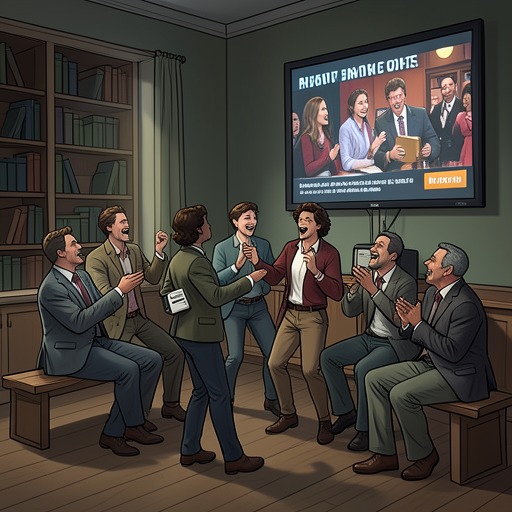
The Radiogram stands at the centre of the Woodman Hotel’s response to the declaration of war on Sunday, 3 September 1939. Pamela Wheeler Fellows is fifteen years and sixteen days old when the machine at home is switched off after broadcasting the Prime Minister’s announcement. The sudden silence resonates around the room, and the crowded hotel falls into a deathly hush. Farm workers in the front bar, businessmen drinking before Sunday dinner, the chef emerging from the kitchen, chambermaids interrupted in their work, and Pamela Wheeler Fellows, her Mother, and her Father all become listeners to the same historical moment.
The broadcast confirms that Germany has invaded Poland and that Neville Chamberlain has declared Britain to be at war with Germany. The Radiogram therefore does more than transmit information: it marks a decisive change in the lives of everyone assembled around it. The ordinary hotel, with its drinking, cooking, and domestic routines, is transformed into a listening community. The cheerful prediction that the conflict will be over by Christmas is heard through the machine, but the retrospective narrative exposes the cruel distance between that hope and the six Christmases of fear, deprivation, and shortages that follow.
A Public Instrument of Leadership
As the war deepens, the Radiogram becomes the hotel’s principal channel for Winston Churchill’s leadership. Churchill succeeds Chamberlain as Prime Minister, and Pamela Wheeler Fellows presents him as the leader whose warnings about Adolf Hitler had proved correct. His speeches are not treated as background sound. Whenever one is announced, the Radiogram is turned to full volume, and hushed attention falls over every room in the hotel.
The machine gives Churchill’s rhetoric a physical setting and a repeated ritual. His cigar and two-finger V sign belong to the public image carried into the hotel through radio, while his speeches provide reassurance when news from the war is increasingly grave. His appeals to blood, toil, tears and sweat, to fighting on the beaches and in the hills, and to never surrender become promises of collective endurance. The Radiogram thus connects the intimate room in Clent with the national crisis: a voice transmitted from political leadership is received by drinkers, workers, and families who must convert words into courage.
Information, Restriction, and Uneasy Trust
The Radiogram also reveals how wartime knowledge is controlled and contested. Local medium-wave broadcasts are discontinued because transmitters might help the enemy with direction finding, so the hotel listens to the Home and Forces Service instead. Official radio reports deliberately obscure the scale of the Birmingham Blitz, referring only vaguely to an air raid in a Midlands town. The same device that brings national danger into the hotel therefore also carries omission and censorship.
This limitation makes hostile broadcasting especially disturbing. William Joyce, broadcasting from Radio Hamburg and known as Lord Haw Haw, appears to know more about the progress of the war than the British public is allowed to hear. His mockery of British leaders and challenges to reported victories make the radio a site of credibility conflict: official silence and enemy disclosure produce different, frightening versions of reality. The Radiogram is not simply a neutral window onto events. It is part of the struggle over what citizens know, what they are permitted to know, and which voice they can trust.
Music, Comedy, and the Hotel’s Social Life
Between announcements and speeches, the Radiogram supplies the lighter sounds that make wartime life bearable. Its record player can hold five records at once, customers can choose the sequence themselves, and a repeat button allows one selection to play indefinitely. That convenience becomes comic tyranny when a customer repeatedly chooses The Umbrella Man, whose refrain drills itself into everyone’s mind. After the fifth playing, Pamela Wheeler Fellows’s Father’s patience and that of the other customers collapse; the offender is thrown out and told never to return.
The episode gives the Radiogram a material presence within the bar. It is not merely an invisible source of national messages but a machine with buttons, records, repetition, and limits. Its capacity to create pleasure can also produce irritation and conflict. The same mechanism that helps a community share music can impose one person’s taste on everyone else, until the public object must be controlled by the people gathered around it.
Radio entertainment nevertheless remains essential to the hotel’s wartime morale. Churchill’s speeches are accompanied by the Radio Doctor, Charles Hill, whose advice addresses the practical problem of keeping well under wartime conditions. ITMA, with Tommy Handley’s catchphrases, makes listeners laugh; Hi Gang offers comedy from Ben Lyon and Bebe Daniels, who remain in Britain rather than return to the safety of America; Music While You Work carries singing across factory floors; and Workers Playtime brings variety entertainment from factory to factory. Through the Radiogram, music and humour enter spaces dominated by machinery, labour, danger, and shortage. The broadcasts do not remove the war, but they interrupt its pressure and help listeners imagine themselves as part of a shared national life.
From Hotel Appliance to Wartime Shelter of Meaning
The Radiogram’s importance grows because the Woodman Hotel itself is more than a business. It is a home, a workplace, a meeting place, and an observation point opposite the police station. From the elevated bar, Pamela Wheeler Fellows can watch the police sergeant put on his helmet and warn the customers that licensing hours are about to end. The hotel therefore organizes both visual vigilance and auditory attention: the police station is watched through the window, while war and national leadership arrive through the Radiogram.
Other wartime activities gather around this same social world. Father drills the local Home Guard in the field behind the police station, where youths practise with broom handles because rifles are scarce. Mother cooks meals for the young soldiers responsible for a nearby searchlight, turning the hotel kitchen into a contribution to the war effort. The Radiogram belongs to this wider network of adaptation. It shares space with discipline, hospitality, surveillance, and improvisation, helping the hotel remain a functioning community while the surrounding world is militarized.
Its broadcasts also accompany a society trained for dangers that may never arrive. Everyone carries a gas mask in a cardboard box suspended by string, and rehearsals use a wooden rattle to signal a gas attack and a bell for the all clear. Radio, like the gas mask and the shelter, is part of a daily system of preparedness. Yet unlike the unpleasant protective equipment, it offers not only warning but companionship. It gives fear a schedule, speeches a ritual, and uncertainty a stream of voices.
The contrast becomes sharper when the family leaves the rural safety of the Woodman Hotel for a top-floor mansion flat near Birmingham city centre, where bombing is increasing nightly. The city’s danger is partly known through restricted broadcasts and partly inferred from bombed-out buildings. During the first raid, residents unable to reach the shelter gather on the ground floor and obey Father’s command to lie on the floor with their hands over their ears; shrapnel holes later appear at waist and head height. In this changed setting, the Radiogram’s wartime role can be understood most clearly. It cannot stop the bombs, but it has already taught the household and the community how to receive danger together: in silence, attention, shared fear, and an insistence that voices, music, and humour remain possible.