Third Reich
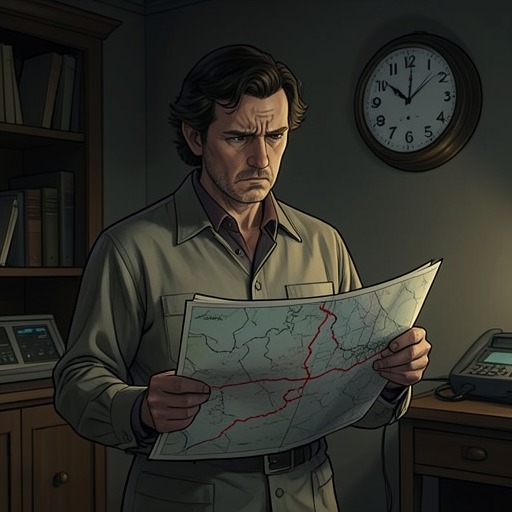
Pamela's WarThe Third Reich is the distant political power that gradually becomes the central external force in the narrative. First imagined as a regime being built by a short, moustachioed Austrian hundreds of miles away in Germany, it eventually reaches into the family business, the village landscape, private romance, civilian routines, and the most intimate experiences of fear and grief. Its history is therefore registered not only through battle reports but through altered spaces, missing young men, air raids, and the effort to preserve ordinary life.
Emergence as a Distant Threat
The Third Reich first appears against the optimism surrounding the family’s investment in the hotel. The parents believe that the Depression is over and that their stylish new business will make their fortune; they cannot yet imagine how the plans of the Austrian leader in Germany will affect their lives and livelihood. This early distance is important: the regime is initially a force outside the family’s geographical and emotional horizon, while the hotel’s chrome, mirrors, cocktail bar, dining room, dance floor, and radiogram embody confidence in prosperity and modern pleasure.
That distance narrows as suspicious wartime circumstances enter the hotel’s immediate surroundings. A group of men begins arriving each evening after walking down the lane opposite the hotel, the lane leading toward properties beside the wooded Clent Hills. One large house is understood to be operating as a nursing home and also produces vegetables for local sale. The men order drinks in English but converse quietly in their mother tongue. Listening behind the bar, Sidney Wheeler recognizes the guttural language from his service in France and from the Somme, although he knows that it is not French. The scene turns an ordinary local route and a familiar hotel into spaces of observation, uncertainty, and possible enemy presence.
War Reaches the Home Front
The Third Reich’s military campaign changes the scale of the narrative when bombing moves beyond London and reaches the provinces. The Coventry Blitz on November 14, 1940, is seen from forty miles away as a glow that lights the night sky. Wave after wave of bombers attacks for hours, setting the medieval city on fire and killing many thousands in their homes. The campaign is understood as an attempt to break the population’s spirit, yet the shared misery instead draws people closer. The regime also targets cities selected for their beauty and architectural heritage, including Bath, Canterbury, York, Norwich, and Exeter, so that cultural destruction accompanies the killing of civilians.
The bombing produces separations as well as physical destruction. Children are evacuated into the countryside, dividing families in ways that can damage relationships long after the immediate danger has passed. A ship carrying children toward safety in Canada is torpedoed, causing the deaths of many innocent passengers. Such events make the war’s violence both impersonal and intimate: the Third Reich is represented by distant aircraft and military decisions, but its consequences are measured in interrupted childhoods, divided households, and the fear that no apparently safe destination will remain safe.
The hotel itself becomes a place where wartime danger is interpreted and endured. Winston Churchill’s succession to Neville Chamberlain and his speeches provide a counterforce to the Third Reich’s attempt at intimidation. Whenever a speech is announced, the radiogram is turned to full volume and the hotel falls silent as people listen. Churchill is valued because he had predicted Adolf Hitler’s motives before the war and had been proved right after those who called him a warmonger had been proved wrong. His cigar, Victory sign, and oratory become recurring signs of resistance, while the language of blood, toil, tears, and sweat gives listeners a framework in which endurance can appear purposeful rather than merely punitive.
Suspicion, Discipline, and Local Defence
The possibility of enemy activity alters the meaning of local spaces. The hotel stands directly opposite the police station, and strict licensing laws threaten the family’s livelihood if alcohol is sold outside permitted hours. Yet the elevated bar gives Pamela Wheeler Fellows a view over the station’s upper sash window. When the Sergeant rises and puts on his helmet, the staff receive the warning they need: customers finish their drinks, beer pulls are covered with towels, shutters are lowered, and the bar is made to appear closed before the officer crosses the road. The arrangement shows how wartime discipline coexists with practical evasion, and how observation turns a bar into an informal lookout.
The village also organizes itself against the possibility of invasion. The local battalion consists mainly of young men too young to join the armed forces, initially wearing armbands marked LDV, a designation mocked as “Look, Duck & Vanish,” before the group is renamed the Home Guard. Sidney Wheeler drills them on the field behind the police station, issuing commands that can be heard through the hotel’s open windows. The youths lack uniforms and proper weapons, so broom handles substitute for rifles; shotguns, pistols left from the previous war, and even pitchforks are contemplated for an emergency involving a German parachutist. Despite these deficiencies, the group patrols the hills at night to protect Clent and the surrounding area, treating the possibility of a German landing as a serious responsibility rather than a theatrical exercise.
Military aircraft likewise become part of the local landscape. A Stirling bomber flies almost level with the hotel chimneys, low enough for Pamela Wheeler Fellows to see the faces of the pilot and crew. The crew wave, and Pamela waves back, but Sidney identifies the pilot, Max, and demands an apology for the reckless display. The incident is later explained as possible preparation for a raid against a German dam, though Sidney remains unconvinced. The episode captures the unstable boundary between ordinary sociability and lethal military technology: handsome young airmen can appear as charming visitors one moment and as participants in the war against the Third Reich the next.
Personal Loss and Collective Mourning
The Third Reich’s war is most devastating when it enters Pamela Wheeler Fellows’s private life. Under Sidney Wheeler’s increasingly strict rules, she is forbidden to walk out of the hotel or onto the car park with young men and is never to be alone with one. Even so, she falls in love with David, a twenty-four-year-old Royal Air Force man who visits the cocktail bar and later appears in uniform. Pamela arranges a dance with him while pretending to be going out with Gloria, concealing the relationship from her father.
During an evening meal for David and his friends, the cleared tables are pushed back and Pamela dances with him in the upstairs dining room. She sees him as the person with whom she will spend the rest of her life, and he tells her that he feels the same. At the end of the evening, despite Sidney’s supervision, she reaches the car park to say goodnight. They kiss once while his friends wait in the car, promise to take care of themselves, and part without knowing that the war will prevent them from keeping that promise. David’s relationship with Pamela gives the Third Reich’s distant conflict a precise human measure: the destruction of a future that had barely begun.
On September 5, 1941, Pamela attends friends’ wedding in Dudley with Gloria. During the service, she is seized by an overwhelming sense of doom and becomes physically ill. She tells Gloria that David has died, although she cannot explain how she could know. The later message confirms that her foreboding was correct. Her grief is expressed as a bodily certainty before it is confirmed by official communication, and the private shock is intensified by the knowledge that David’s laughing smile and carefree manner will remain in her memory while his life has been cut short.
Max, the Stirling pilot who had earlier flown low over the hotel, also dies on a raid over Germany. Meanwhile, the original group of twenty young men who visit the hotel for drinks diminishes week by week; men disappear one by one and are reported only as missing or dead. The authorities provide the briefest details, ostensibly to prevent the enemy from gaining information but also, the narrative suspects, to preserve morale. The prohibition against discussing the losses makes the absence more terrible. The Third Reich thus destroys not only individuals but the social continuity of a whole youthful circle.
Atrocity and Historical Reckoning
The regime’s criminal character becomes fully visible when reports emerge from Bergen-Belsen after its liberation. Richard Dimbleby broadcasts from the concentration camp, describing thousands of prisoners, many Jewish, held in inhumane conditions. People have been transported from across Europe, robbed of their possessions, and systematically murdered by the Nazis through gassing and starvation. Unburied bodies and surviving prisoners reduced to skeletons reveal a world in which the veneer of civilisation has vanished. The narrative identifies this policy as Hitler’s Final Solution and connects it to the regime’s racial fantasy of Aryan perfection.
The account of the camp changes the meaning of everything that came before. Bombing and invasion had already shown the Third Reich as a power willing to destroy cities and civilian life; Bergen-Belsen exposes a deliberate system for defining whole populations as unworthy of existence and removing them from the earth. Someone known to the family witnesses the camp soon after liberation but can scarcely speak of it, while the stench of death is said to have been detectable by the advancing army from many miles away. Later film footage forces viewers to confront the conditions, and German civilians are made to see what their leader and his followers had done.
The regime’s violence is contrasted with the wartime spirit it inadvertently strengthens among those opposing it. Radio comedy, music, Churchill’s speeches, and shared routines help sustain morale, but the deeper bond comes from the presence of a common enemy. Strangers speak like old friends, offer lifts, and help one another; reserve is lowered by collective danger. This solidarity does not erase fear or bereavement, but it prevents the Third Reich’s campaign to break the population from achieving its intended psychological result.
Defeat and the Aftermath of Victory
By the time the war ends in Europe, the Third Reich has been defeated, but its consequences remain unevenly distributed. VE-Day brings street parties, bunting, Union Jacks, trestle tables, sandwiches, trifles, jelly, cake, fireworks, and bonfires. Hoarded food is released to create a communal feast, making celebration itself a visible reversal of wartime restriction and tyranny. Yet at John Fellows’s parents’ home there is no uncomplicated joy: John is safe, Derek is safe, and Megan is at home, but Rex Fellows has been missing for months at the centre of the fighting in Europe.
The telegram that arrives at the family home embodies the unresolved cost of victory. The rattling letterbox, the ringing doorbell, and the delivery boy holding a message addressed to Rex’s father create a moment of dread because such telegrams usually announce that a loved one is missing or dead. Victory over the Third Reich therefore does not restore the lives, romances, families, or futures taken by the war. Its decisive historical significance lies in this contrast: a murderous regime can be overthrown, public freedom can be celebrated, and yet the private aftermath continues to be shaped by absences that no victory ceremony can repair.