prisoner-of-war captivity
Pamela's Warprisoner-of-war captivity is one of the war’s most devastating human consequences in the narrative, turning a handsome young butcher and friend into a survivor almost unrecognisable to those who knew him before. Geoff’s imprisonment exposes both the physical violence of the Japanese camp system and the fragile ingenuity through which prisoners preserve one another’s lives. His eventual release is therefore not a simple return to peace: he comes home alive, but captivity has changed the rest of his life.
Geoff Before Captivity
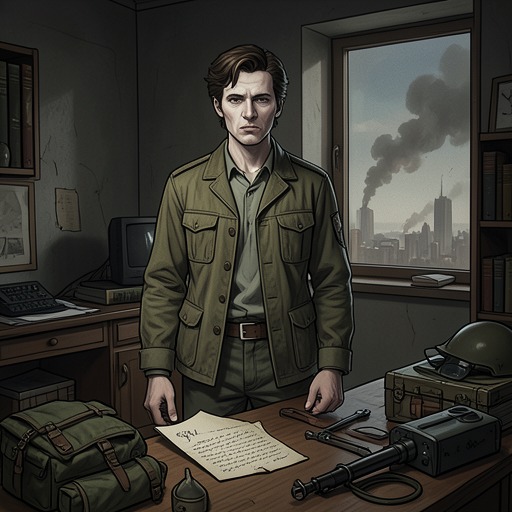
Geoff first belongs to the world of youthful sociability around Googleomo’s, the local Italian coffee shop and ice-cream parlour. Slightly older than Pamela Wheeler Fellows and her friend Gloria, he works in his family’s butchery business and becomes a very good-looking young man and a close friend of Pamela Wheeler Fellows. Their friendship continues through letters during the early years of his war service, giving the relationship a durable form even as military duty carries him far from home. Pamela Wheeler Fellows keeps his final letter, preserving a tangible link to the person he was before the war.
Geoff eventually enlists and serves for some years as an officer in the Far East. His military service places him directly within the theatre in which the narrative’s account of captivity becomes most severe. Once he falls into Japanese hands, the ordinary continuity represented by letters stops: after his capture, no further letters appear. The silence is itself a sign of his removal from familiar civilian life and of the uncertainty surrounding prisoners whose families cannot know whether they are alive, where they are held, or what is being done to them.
Conditions and Survival in Captivity
The treatment of Geoff and his fellow prisoners of war is described as despicable. They are almost starved to death; many are brutalised, and many others are murdered, sometimes on a whim. Captivity is thus not merely confinement. It is a system in which hunger, violence, unpredictability, and the loss of human protection steadily destroy the prisoners’ physical and psychological reserves. The prisoners’ lives depend on improvisation because the formal structure holding them captive offers neither safety nor humane care.
One forced march gives Geoff an opportunity to use the knowledge acquired through his butchery work. He and several comrades are assigned to herd cattle and manage to steal two cows. The keepers conceal the theft by persuading their captors that the missing animals have suffered from a serious disease and would be dangerous for human consumption. The deception succeeds because only the horns and hooves are buried; the meat is taken by the ravenous captives. Geoff’s practical skill therefore becomes a survival resource for the group rather than merely a trade remembered from civilian life.
The stolen cattle preserve quite a few lives for a while longer, although the reprieve remains precarious. The prisoners are never discovered, despite the danger of the deception and the severity of the punishment that would have followed. This episode reveals captivity as a moral and material landscape in which ordinary rules have been overturned: theft becomes a means of survival, professional expertise becomes communal protection, and concealment is necessary to keep food from those who control the prisoners’ existence.
Physical and Psychological Aftermath
When Pamela Wheeler Fellows finally meets Geoff again as an adult, she cannot recognise him. None of the features of the handsome young man from the coffee shop remains, and not one element of his former self seems visible. The narrative makes the altered body an unmistakable record of captivity: the ordeal has not simply interrupted Geoff’s life but has remade his appearance and identity in the eyes of those waiting for him.
Geoff’s suffering is shared by his fellow survivors, many of whom have also been broken by starvation, brutality, and murder. His release does not restore him to his former condition. His health has been ruined by ill treatment, and it takes years of treatment to return him to anything like normal health. Captivity consequently extends beyond the camp and into the postwar period, where recovery is slow, incomplete, and medically demanding.
Liberation and Return
The defeat of Japan on 15 August 1945 frees Geoff from three and a half years of captivity. The narrative presents the end of the war with a grim paradox: the sudden defeat and deaths of so many Japanese soldiers save Geoff and the other prisoners because, had their imprisonment continued much longer, he would not have survived. Many of those captured alongside him are already dead, so liberation arrives as both rescue and belated confirmation of the scale of loss.
Geoff is released alive but extremely diminished, described as stick-thin and hollow-eyed. His journey home takes more than two months and includes a frustrating period of quarantine in America. Even after that delay, he reaches home in time to attend Pamela Wheeler Fellows’s wedding. The return of his last letter gives the reunion an additional emotional force: Pamela Wheeler Fellows is able to hand back the object that had carried their friendship through the early war years, reconnecting the survivor with the young man whose life had once seemed continuous with hers.
Significance in the War Narrative
Geoff’s captivity contrasts sharply with the communal scenes of the British home front. In Britain, strangers offer lifts, neighbours help one another, and shared danger creates what Pamela Wheeler Fellows calls wartime spirit. For Geoff and the prisoners in Japanese hands, however, survival depends on secrecy, stolen food, and resistance to deliberate dehumanisation. The contrast shows that wartime solidarity is not a universal condition: it is shaped by the power structures governing each place and by whether people are protected, mobilised, or imprisoned.
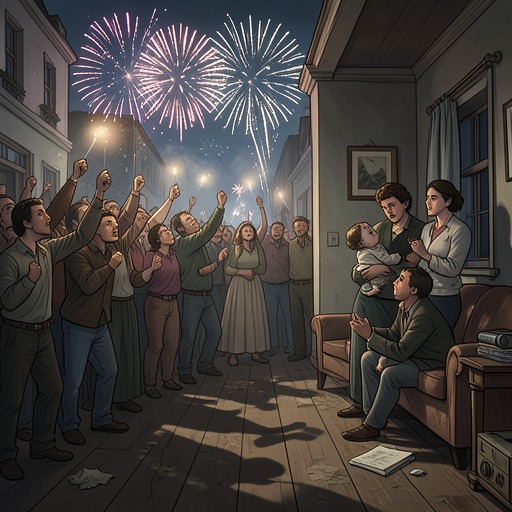
The captivity narrative also interrupts the celebratory imagery of victory. VE-Day brings street parties, bunting, Union Jacks, fireworks, bonfires, and food released from hiding to make communal feasts. Geoff’s liberation later confirms that peace can arrive alongside bodies and lives permanently damaged by the war. He survives, but his health never fully recovers and the ordeal eventually contributes to his premature death. His story therefore resists treating victory as a clean ending. The war is over, yet captivity continues to inhabit the survivor’s body, relationships, and shortened future.