Pamela Wheeler·Fellows and David's romantic relationship
Pamela's WarPamela Wheeler/Fellows and David's romantic relationship is one of the defining emotional episodes of Pamela's wartime youth: a mutual love that promises marriage, is constrained by her father's protective rules, and is abruptly destroyed by the dangerous world of wartime aviation. Its importance lies not only in the intensity of the courtship but in the way David's death transforms the hotel from a place of flirtation and lively service life into a landscape of absence, where one young man's fate stands for the many airmen who vanish from Pamela's world.
Identity and Wartime Setting
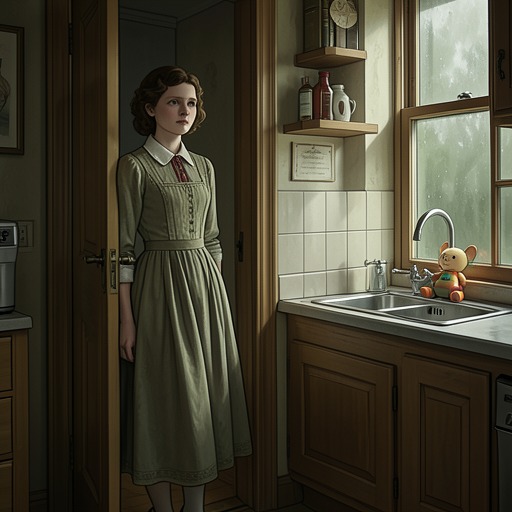
Pamela meets David among the young servicemen who visit The Woodman Hotel between sorties. By this stage, the hotel is both a family business and an informal meeting place for airmen: they drink and eat there, joke with one another, and briefly return to ordinary social life between dangerous assignments. The surrounding atmosphere is increasingly oppressive. Only a quarter of bomber crews survive, and the young men Pamela comes to know are repeatedly declared missing and then dead. Their disappearances alter her future dreams before she has even shared a kiss with some of them, making affection inseparable from the prospect of bereavement.
David is distinguished from this larger group because he becomes a regular visitor to Pamela's cocktail bar and then appears in his Royal Air Force uniform, an image that makes her immediately and powerfully attracted to him. He is twenty-four and Pamela is seventeen. The relationship begins within a society where military service, youth, and danger are visibly intertwined: the handsome men at the hotel are not merely romantic possibilities but members of a generation being consumed by the war.
Courtship and Concealment
Pamela is already subject to strict paternal supervision. Surrounded by servicemen, she is forbidden to leave the hotel or walk onto the car park with them, and she must never be alone with a young man. These rules make the relationship with David partly an exercise in concealment. When David invites her to a dance during his next leave, Pamela and Gloria devise a cover story, planning to say that Pamela is going out with Gloria rather than disclose that the outing involves a Royal Air Force airman. The romance therefore develops under the pressure of both wartime uncertainty and domestic authority.
Their first sustained private encounter takes place after Pamela prepares and serves a meal for David and his friends in the upstairs dining room. Once the meal is finished, the tables are pushed back and David sweeps Pamela into his arms; they dance together in the room. The scene changes the relationship from admiration to commitment. Pamela understands him as the person with whom she wants to spend the rest of her life, while David tells her that he feels the same. The mutuality matters: this is not only Pamela's infatuation, but a shared promise made within an evening that both know is likely to be short.
At the end of the evening, Pamela manages to reach the car park to say goodnight despite her father's surveillance. David's friends wait in the car while the two stand outside on a late summer evening. The setting is still light enough for small stars to be visible, and dance music drifts across the air from the hotel. They kiss once. That single kiss becomes the physical center of the relationship: it is their first kiss and their last, while the car park later becomes the place Pamela identifies as where she saw David for the final time. Their farewell includes a promise to take care of themselves and keep safe, but the promise is immediately exposed to the cruelty of wartime circumstance.
Premonition and Death
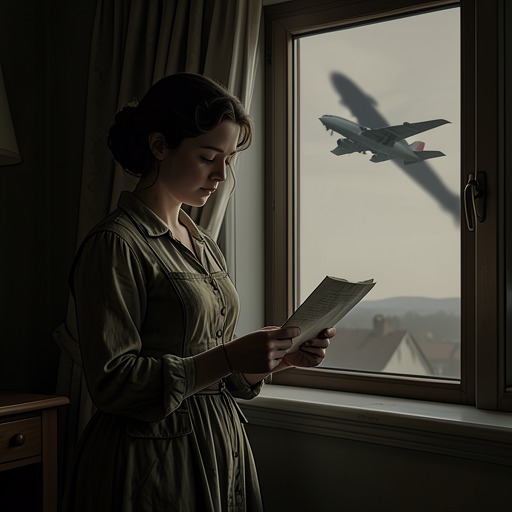
After David leaves, Pamela thinks about him constantly. The separation is not initially marked by a formal ending; instead, the relationship persists in anticipation, sustained by memory and the expectation that he will return. That expectation collapses on Friday, 5 September 1941, when Pamela attends a friend's wedding in Dudley with Gloria. During the service, amid what should be a happy occasion, she is seized by an overwhelming feeling of doom. The foreboding is so physically violent that she feels ill and tells Gloria she is certain David has just died, although she cannot explain how she could know this.
The narrative presents the premonition as exact rather than doubtful. Reassurances from the wedding party do not alter Pamela's conviction, and when she and Gloria return home later that day, confirmation of David's death has arrived. Shortly after their precious evening together, David had been training in Scotland. He had held his pilot's licence for only six weeks when his aircraft collided with another. Because the disabled plane might have crashed onto nearby houses, he remained at the controls rather than attempting to save himself immediately. When he finally escaped, he was too close to the ground; his parachute failed to open fully, and he died.
David's death is therefore described as both a personal catastrophe and an act of heroism. His decision to keep control of the damaged aircraft places the safety of people on the ground before his own survival. The circumstances also intensify the cruelty of the relationship's timing: Pamela and David have just recognized one another as future partners when aviation training, not even a combat sortie, removes him. He is buried at Polmont in Scotland on the following Tuesday, and Pamela says that a part of her heart goes with him.
Grief and Remembrance
Pamela has the opportunity to attend the funeral, but her father decides that the journey is too risky and refuses to let her travel so far with a young man. The domestic protection that had previously obstructed her courtship now prevents her from making a final physical farewell. She accepts that her last gift must be delivered by proxy. She sends a wreath of twelve red roses to Scotland, each rose representing her undying love, and the wreath is placed on David's coffin.
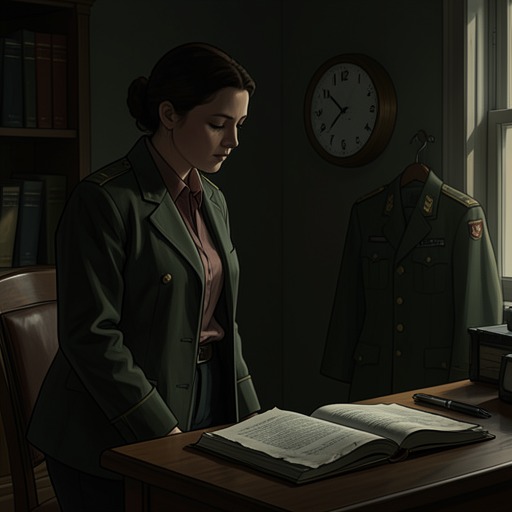
She also writes a poem on the reverse of his photograph, a keepsake she still possesses. The photograph preserves his laughing smile and carefree manner, while the poem gives form to grief that otherwise remains overwhelming. Pamela thinks that her heart will break, and David's memory survives not through an extended shared life but through a photograph, a written tribute, and the remembered kiss in the hotel car park.
The loss is soon joined by another. Max, the pilot responsible for the reckless low-level flight over the hotel, later dies in his Stirling bomber during a raid over Germany. Among the original group of twenty young men who come to the hotel for a drink, the number diminishes week by week. News arrives only in the briefest terms, often reducing a life to the words missing or dead; the restrictions on discussing the details make the silence worse. David's death thus becomes part of a recurring pattern, but his personal place in Pamela's memory prevents that pattern from becoming anonymous.
Memory and Significance
Decades later, on Pamela's eighty-fifth birthday, she returns with the narrator to her old family home, now renamed The French Hen and filled with French antiques. Pamela remembers The Woodman Hotel in its 1930s prime, when customers drank, smoked, laughed, and listened to dance music on the radiogram. Yet the decisive memory emerges only after they leave through the back door and cross the car park: she identifies it as the place where she saw David for the last time. It is also where they kissed for the first and last time.
The later recollection places their private love against the hotel's wider history. The room once occupied by customers and airmen seems haunted by the young lives cut short by war, and the narrator weeps for Pamela and David's lost love even while recognizing that, had David survived, the narrator would never have been born. That contradiction gives the relationship an unusual retrospective force: David's death is both the condition of the narrator's existence and an irreparable human loss that the narrator refuses to treat as merely necessary or fortunate.
The relationship also establishes the memoir's impulse. The return to the hotel awakens the narrator's curiosity about Pamela's war and Pamela's wish to record her memories before it is too late. David's story is consequently not a decorative romance inserted into a war narrative. It is the initiating wound through which private memory becomes testimony. Against accounts of bombing, collective morale, and national endurance, the relationship insists that wartime loss is experienced through individual promises, guarded meetings, a single kiss, a wreath of twelve roses, and a name that remains present long after the young man himself has disappeared.