The Umbrella Man
Pamela's WarThe Umbrella Man is a popular wartime song that becomes memorable through repetition and significant through its place in the bar’s shared soundscape. Played from the radiogram, it briefly offers amusement and then, through mechanical recurrence, becomes an irritation strong enough to expel a customer. Its episode captures the fragile balance between morale-lifting entertainment and the exhaustion produced by wartime deprivation.
The Song and Its Refrain
The song is sung by Flanagan and Allen and is identified by a refrain built from the repeated sounds "toodle-luma-luma, toodle-luma-luma, toodle-oh-lay" before returning to the phrase "any umbrellas, any umbrellas, any umbrellas to mend today". The wording is deliberately simple and repetitive. It is not merely heard and forgotten: the refrain is described as lodging in the mind so forcefully that listeners can think of no other tune for days afterward.
The song’s effect depends on duration. Two consecutive plays remain just about tolerable, but further repetitions change its character from entertainment into an assault on attention. The refrain’s catchiness therefore has a double edge: the same musical accessibility that makes it useful as popular amusement also makes it difficult to escape.
The Radiogram and the Bar
The song is played on the radiogram in the bar, a machine capable of playing five records at a time. Customers can select the records themselves, and a repeat button permits a single record to be played indefinitely. The apparatus gives patrons unusual control over the bar’s atmosphere, but its capacity for endless repetition also allows one person’s preference to become everyone else’s burden.
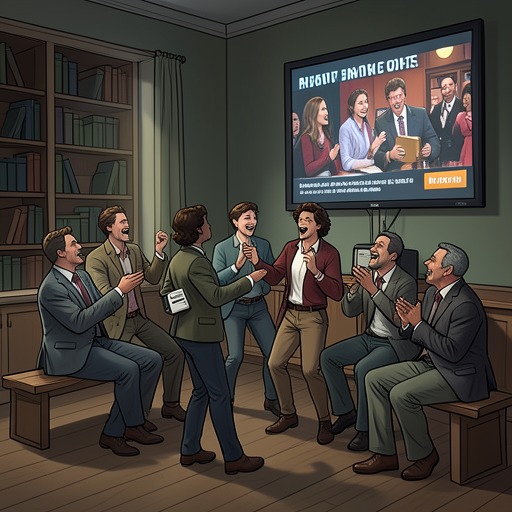
The Umbrella Man is the clearest demonstration of that tension. One customer repeatedly chooses it, using the radiogram’s repeat function to impose the song on the room. What begins as an individual musical choice becomes a collective experience because the bar’s other customers, as well as the narrator’s Father, cannot avoid hearing it. The technology makes the song both selectable and inescapable.
Conflict and Expulsion
At the fifth playing, the customer’s insistence pushes Father’s patience and that of the other customers beyond endurance. The customer is thrown out and told never to return. The punishment is not presented as a response to the song’s content, but to the repeated abuse of a shared space and the refusal to recognize a communal limit.
The incident turns a trivial musical preference into a small social drama. The bar operates as a place where wartime pressures are temporarily managed through company, music, and routine; the customer’s repeated selection disrupts that arrangement. Expulsion restores silence and shared tolerability, showing that even morale-building leisure depends on informal rules of consideration.
Wartime Sound and Morale
The song’s episode belongs to a wider culture of wartime listening. The bar’s radio is important in keeping spirits high, while local medium-wave broadcasts have been dropped because transmitters might assist enemy direction-finding. Listening has therefore been redirected to the Home and Forces Service, where broadcasts include Winston Churchill’s speeches and health advice from Charles Hill.
Other programmes provide comedy and collective participation. ITMA, starring Tommy Handley, supplies catchphrases that listeners adopt with enthusiasm, while Hi Gang, featuring Ben Lyon and Bebe Daniels, offers laughter despite the dangers of remaining in Britain rather than returning to the safety of America. Music While You Work reaches factory workers over the noise of machinery, and Workers Playtime carries variety entertainment from factory to factory. Against this background, The Umbrella Man is both an instance of the music people need and a comic reminder that repetition can make consolation unbearable. The surrounding struggle, shortages, and deprivations require music and humour to remain bearable, but the episode also shows how easily relief can become another pressure when it is played without restraint.