The Woodman Hotel
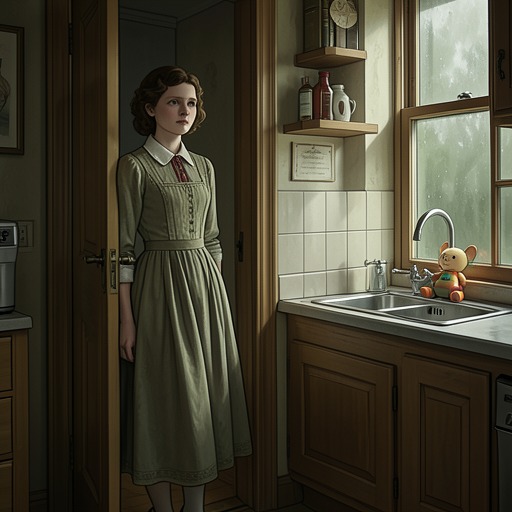
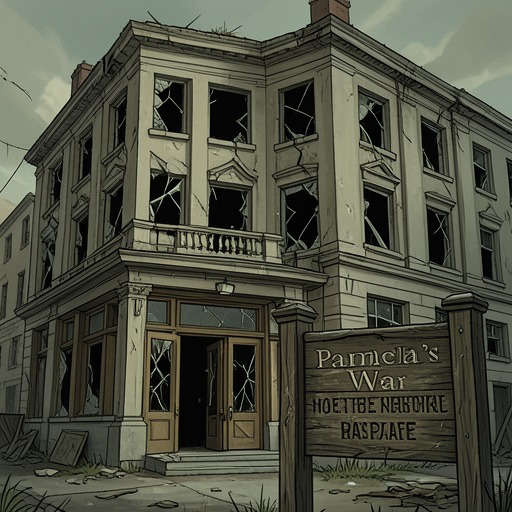
Pamela's WarThe Woodman Hotel is the central physical and emotional setting of Pamela Wheeler Fellows's wartime childhood: a family home in Clent, a thriving licensed business, a meeting place for the local community, and finally a casualty of wartime economics. Remembered later under the name The French Hen, the building holds both the vitality of the 1930s and the losses imposed by the Second World War. Its rooms and surrounding spaces become, in turn, a social world, a lookout, a training ground, a kitchen serving soldiers, and a place from which the family is forced to leave.
A Family Home and Ambitious Enterprise
The hotel enters the narrative as the destination of a family decision to make a living together. Pamela Wheeler Fellows's parents first take the lease on the Prince of Wales in Hagley, abandoning the butcher's shop because the commute and early market starts are impractical. The pub succeeds, and the couple recognise that their combined abilities have found their proper setting: her father's business acumen and her mother's love of entertaining and skill with people. When larger premises become available, probably with assistance from Pamela's maternal grandfather Arthur James, they take the lease on The Woodman Hotel in the neighbouring village of Clent.
The hotel is designed to be more than a drinking establishment. Its six letting bedrooms, bar, lounge, and large upstairs room, soon converted into an exclusive dining room, require a staff that eventually grows to fourteen, including chefs, chambermaids, waiters, cleaners, a kitchen porter, and a peak-capped attendant for the newly floodlit car park. The scale of the operation reflects the family's confidence that the hotel can become a destination in its own right. For Pamela, it is also the landscape of a carefree childhood, even though she longs unsuccessfully for a brother or sister for company.
The Woodman quickly acquires a social and cultural importance beyond the village. Because Pamela's father is friendly with local theatre owners, actors and entertainers stay there between performances, including Tommy Trinder while appearing in Why Go to Paris in Wolverhampton. The car park fills with the finest vehicles of the period, while the local car club from Hagley meets there for a “noggin and a natter.” Young men gather around open bonnets with beer, cigarettes, or pipes in hand. In this period the hotel is unmistakably a place to be seen: prosperous, sociable, and connected to the wider entertainment world.
A Place of Memory and Lost Love
Decades later, the hotel is no longer recognisable as the family remembered it. On Pamela Wheeler Fellows's eighty-fifth birthday, she is taken to the old building, which has been renamed The French Hen and filled with French antiques and bric-a-brac. Pamela is unimpressed, but she can still summon the earlier building with striking clarity: freshly decorated and newly carpeted, crowded with customers drinking, smoking, laughing, and listening to dance music from the radiogram. The modern interior cannot erase the remembered presence of that vanished social world.
The most painful memory is located not in the bar or dining room but outside, across the car park. At the back door Pamela identifies the place where she saw David for the last time. David was the young airman she loved and hoped to marry, and the car park was where they kissed for the first and last time. The hotel therefore contains the beginning and ending of a love that the war interrupts. The young airmen who once laughed, joked, drank, and smoked in its rooms are retrospectively transformed into a lost generation. The building's remembered liveliness is haunted by the knowledge that many of those lives were cut short.
This return to The Woodman Hotel initiates the memoir's larger act of recollection. Pamela Wheeler Fellows's curiosity about her mother's war and Pamela's wish to record her memories before it is too late grow directly out of the building's power as a mnemonic site. The hotel is not merely where the story begins; it is the structure through which private memory reaches the wider history of wartime Britain.
Wartime Space: Surveillance, Training, and Service
When war changes the village, the hotel's ordinary functions acquire military and civic uses. Opposite the building stands the police station, and the elevated area of the bar provides a direct view over its upper sash window. Pamela can see when the Sergeant rises and puts on his helmet. That small gesture becomes an unofficial signal: the staff warn that he is crossing the road, cover the beer pulls with towels, pull down the shutters, and persuade remaining customers to finish drinking. The hotel is thus simultaneously a regulated business and a place of watchfulness, using its architecture to anticipate the enforcement of licensing hours.
The field behind the police station, where Pamela once played cricket, becomes the drill ground of the local Home Guard. The battalion consists largely of village youths too young to join the armed forces, initially marked only by armbands bearing the initials LDV, later replaced when the organisation is renamed the Home Guard. Pamela hears her father's commands through the open hotel windows as he imposes discipline on the inexperienced group. Their weapons shortage is stark: broom handles substitute for rifles, while shotguns, pistols left from the previous war, and even pitchforks are considered for an emergency involving a German parachutist. Despite inadequate equipment, the men patrol the Clent Hills at night to protect the village.
The surrounding geography also gives the hotel a role in interpreting suspicious movement. A group of men begins arriving early each evening after walking down the lane opposite the hotel, the lane leading towards the hills. They are associated with properties and a nursing home on the hillside, whose extensive grounds produce vegetables for sale. The men order drinks in English but converse quietly in another language. Pamela's father listens from behind the bar, recognising the guttural sound from his wartime experience in France and on the Somme. The hotel bar becomes a point from which unfamiliar language, movement, and possible danger are observed and assessed.
The hotel's wartime service is also practical and domestic. A battalion of young soldiers stationed roughly half a mile away operates a searchlight against German bombers but cannot cook decent meals from its rations. Pamela's mother offers to prepare their food if they bring it to the hotel kitchen. The soldiers march across the field in single file, sit around a large table, and eat the cooked joint of meat; drinks naturally accompany the meal in a building licensed to sell them. The episode turns the hotel kitchen into a modest contribution to the war effort, joining maternal care, professional skill, hospitality, and military necessity.
From Community Shelter to Economic Ruin
The wider war presses increasingly hard on the hotel. The glow of the Coventry bombing on 14 November 1940 can be seen from forty miles away, while the destruction of other historic cities and the evacuation of children demonstrate how thoroughly ordinary British spaces have been reclassified as vulnerable. Against this background, The Woodman Hotel remains a place where people gather, but the nature of gathering changes. Customers become fewer, mobility is restricted, and the hotel's success depends on people who can reach it and afford to spend there.
The building's size becomes a liability. It is expensive to heat and light, its overheads are substantial, and the rent that was manageable in prosperous times becomes impossible during wartime decline. The original staff of fourteen are eventually called up to fight for King and Country. Only Jack, the barman, Pamela's mother, Pamela's father, and Pamela herself remain to keep the business operating, and the reduced household workforce must labour intensely while the customer base contracts. The hotel is therefore depleted in two ways at once: its staff disappear into military service, and its civilian trade evaporates.
Pamela's father conceals the true financial position for several months, but eventually he has to admit defeat and return the tenancy to the brewery. The family has to leave. The surrender is not presented as a voluntary change of career or a temporary inconvenience; it is the direct consequence of wartime shortages, reduced business, and the burden of maintaining a large commercial building. The war has ruined the enterprise that had seemed to express the family's shared vocation.
The departure also marks a decisive spatial reversal. Suitcases are loaded into the car, and the family moves from the relative safety of rural Clent to a top-floor mansion flat about half a mile from Birmingham city centre. The new property is elegant and spacious, with high ceilings, cornicing, and views over Islington Row, but the move carries them into a city already suffering increasingly frequent bombing. The Woodman Hotel, once a refuge of country sociability, is left behind precisely when the family most needs security.
The Hotel in the Memory of War
The Woodman Hotel's significance lies in the contradictory lives it holds together. Before the war it is full of music, customers, theatrical visitors, cars, and the routines of a prosperous family business. During the war it becomes a place of surveillance, discipline, feeding, and shared anxiety. The same rooms that once promise entertainment now contain conversations conducted in a foreign language, while the nearby field shifts from childhood cricket to Home Guard drill and soldierly movement.
The hotel also registers the changing scale of belonging. At its best, it gathers strangers into a local social world; during the war, that sociability becomes part of what Pamela describes as wartime spirit, when people who would normally preserve their distance speak like old friends and offer one another lifts. Yet the hotel's community cannot protect everyone. David's disappearance, the steady reduction of the young airmen who once drank there, and the family's eventual financial collapse expose the limits of fellowship against military death and economic pressure.
Its final transformation is therefore both material and symbolic. The family leaves the building, its furnishings sold to a new tenant, and enters a more dangerous urban setting where an inaccessible shelter forces residents to gather on the ground floor during an air raid. The hotel remains behind as the lost centre of Pamela's adolescence, recalled through its former carpets, radiogram, car park, staff, customers, and absences. In the memoir's architecture, The Woodman Hotel is the place where private life meets national catastrophe: a home made into a business, a business made into a wartime institution, and a building made into an enduring memorial to love, community, and loss.