Blake and Jack Harkness
Panic RoomBlake and Jack Harkness are linked less by personal intimacy than by a place: Harkness’s secluded Cornish retreat becomes Blake’s refuge after she is thrown out by Muriel. For Blake, the arrangement is an unexpected form of rescue and a rare chance to feel safe; for Harkness, she is someone he scarcely knows, living in a property whose ownership and future are not his alone to determine.
The refuge and its terms
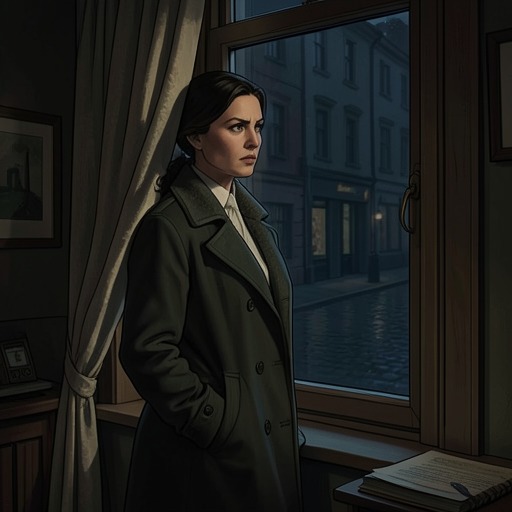
Blake understands her life at Wortalleth West as a shelter made possible by Harkness. She says that she might not have known what would become of her after Muriel expelled her if she had not been able to come there, and credits Harkness with having saved her. He is not an obvious benefactor in her eyes: his notoriety for secrecy makes the role seem unlikely. The refuge is therefore significant not because the two have established a close bond, but because his intervention has altered Blake’s immediate circumstances.
The retreat offers her both security and room to live on her own terms. Blake swims, walks, runs, cleans, and sells driftwood art; the property’s distance from ordinary visitors lets her enjoy peace and solitude. Harkness’s wealth is apparent in the luxury available there, but Blake regards space, privacy, and the feeling of safety as the greater gifts. The secluded setting also fits the arrangement between them: she can depend on what he has made available without sharing his daily life.
That dependence is markedly one-sided. Harkness does not know the circumstances that make the retreat so important to Blake, and she believes he knows little about her in general. She doubts that she enters his thoughts at all. Her sense that they have a good arrangement thus rests on what the place provides, not on an explicitly mutual understanding or a demonstrated emotional attachment. The difference between what the refuge means to Blake and what Harkness appears to know about her is central to their connection.
A concealed, distant connection
Harkness’s absence helps preserve Blake’s seclusion. When she reflects on the trouble surrounding him, she expects that he will not be visiting by helicopter any time soon and notes that she has the place to herself. She is relieved that the press has not begun investigating the property, and hopes it remains unaware of his Cornish hideaway. The retreat’s obscurity benefits her as well as Harkness: it keeps attention away from the place where she has found shelter.
Blake even recognizes that the refuge may be one of Harkness’s most closely guarded secrets. His public reputation for secrecy and her private dependence on his hidden property meet in this arrangement, though she does not present herself as a confidante. Indeed, she assumes he gives her little thought. His distance is not simply an absence of visits; it marks how little personal knowledge passes between them despite the material importance of his provision.
The first challenge to Blake’s understanding comes when a visiting man says that the property belongs to Mrs Jackson. Blake rejects this outright, insisting that its owner is Harkness. The exchange makes the gap in her knowledge visible: she has treated the person who gave her access as the owner, while another visitor claims that the legal ownership lies elsewhere. Her confidence in the arrangement has been formed from her experience of living there, not from a full account of who controls the property.
Ownership, exposure, and insecurity
Blake later overhears Don Challenor speaking with Fran Revell, Harkness’s lawyer, and learns that the visitor’s claim was correct: the property belongs to Harkness’s wife, Mona Jackson. Blake has never seen Mona there, which helps explain why she had assumed Harkness owned it. She speculates that the arrangement may have been made for tax reasons, but that remains her conjecture. What she learns for certain is that Harkness’s apparent provision of a home does not give him sole control over its future.
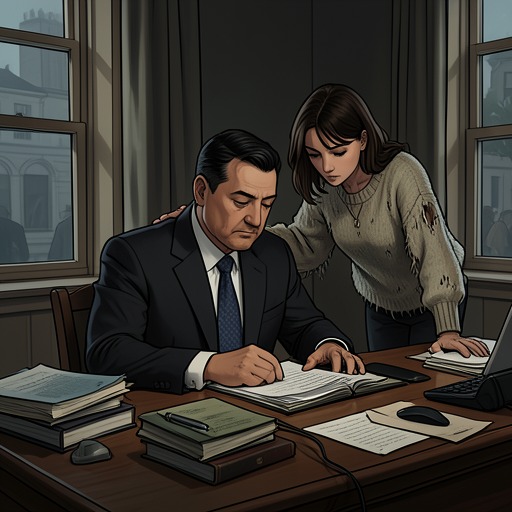
Mona wants to sell while Harkness is in trouble and is concerned with her own future. Because a quick sale requires vacant possession, Fran frames Blake as a practical obstacle to clearing the property. Don relays Blake’s name to Fran, and Blake notices that he has already moved beyond treating her as an anonymous cleaner: he has made her identity matter in the conversation. She considers whether she might draw him further into concern for her, but her immediate predicament remains that the shelter can be withdrawn through decisions made by people with greater authority over the house.
Precarious refuge
Blake’s attachment to Harkness is therefore complicated by the limits of what he has provided. She is grateful to him, and the retreat gives her a measure of safety and independence she does not expect to find elsewhere. Yet Harkness does not appear to understand the depth of that dependence, while Mona’s decision to sell threatens the arrangement from outside the relationship as Blake has imagined it. Blake recognizes that the stay cannot last forever, even as she wants to remain.
Their connection rests on a sharp contrast: Harkness has offered a refuge without, in Blake’s account, knowing much about the person who needs it; Blake experiences that refuge as a lifeline while recognizing that it may end abruptly. The property makes the bond concrete, but also exposes its fragility. What seems to Blake like a private, settled arrangement is revealed as temporary occupancy within a concealed house whose ownership, sale, and vacant possession are being handled by others.