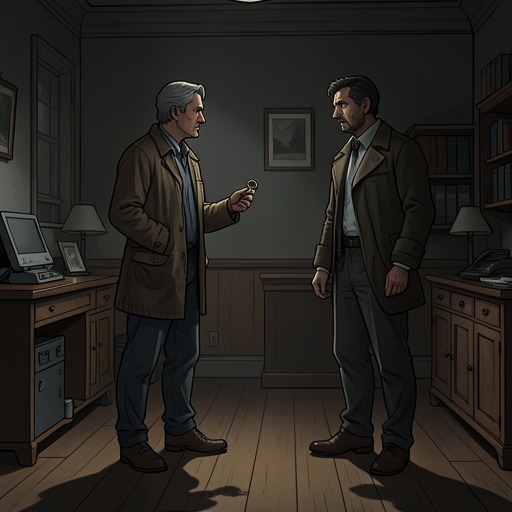
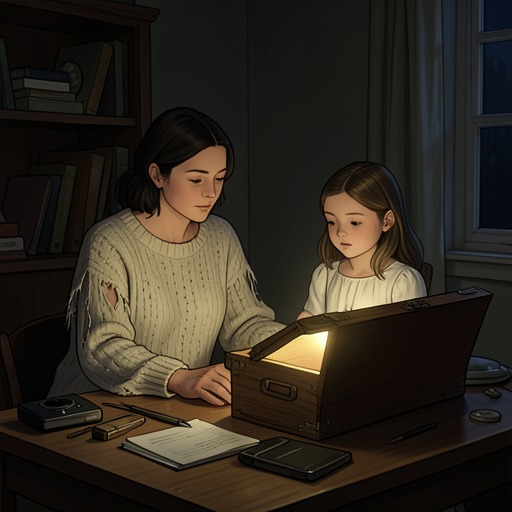
Blake–Don friendship
Panic RoomBlake and Don’s friendship becomes decisive when the fate of the panic room at Wortalleth West turns on whether Don will act on a warning from far away. Its force lies less in any supplied account of how the friendship began than in what each is prepared to do: Blake stakes the future on Don’s judgment, while Don responds to her voice and accepts the urgency of her appeal.
Friendship as Practical Trust
Blake invokes Don as a possible source of help while Cascade appears unstoppable. She says that her friend is in Cornwall and may be at Wortalleth West or nearby; in doing so, she identifies him not simply as someone she knows, but as the person who might still change what happens. The qualification matters: she cannot be sure of his location, and her hope that he is close enough to intervene is only a possibility. Even so, she places Don inside the narrow remaining chance of preventing catastrophe.
That confidence is sharply contrasted with the dismissive label applied to him as a “useful idiot.” Blake rejects the description rather than allowing Don to be reduced to an instrument. Her defense is brief, but it gives the friendship a clear edge: another character treats Don’s usefulness as a reason to discount him, while Blake insists that he is more than that. The exchange makes her trust in him visible before the telephone call tests it.
A Call Across Distance
When Blake tries Don’s mobile, the call goes straight to voicemail. She cannot know whether he is at Wortalleth West; she can only suspect that his silence may mean he is there. Filippo Crosetti recognizes what she is thinking and puts a landline on the conference table. He explains how to dial the United Kingdom and urges her to use the fixed connection, while his tense face and cracking voice register the strain of the moment. The practical details of the call—an outside line, the country code, the local number—stand between Blake and the person she needs to reach.
Don answers. The narration describes his response as something he could not rationally explain: on picking up the handset, he has somehow sensed that he wants to speak to the person calling. The scene gives the connection a moment of apparent coincidence without establishing a supernatural cause. Blake recognizes him and is so relieved that she can hardly speak; at the same time, she knows that she must speak quickly. Their exchange moves immediately from the emotion of contact to the danger that has made the call necessary.
The Warning and Its Stakes
Blake asks whether the panic room has been opened. Don says it has not, and she presses him to keep it that way. Her warning is absolute: she tells him that nothing he has ever done matters as much as preventing the room from opening, because their futures depend on it staying shut. The appeal turns private trust into a decision with consequences beyond the two friends. Don is the person at the relevant place; Blake is the person who understands enough to warn him. Neither can substitute for the other in this moment.
Blake then explains the essential danger: Jack Harkness has rigged the panic room so that opening it will trigger something too terrible to describe. The warning does not give Don a full account of what will happen, but it gives him a clear instruction and the reason not to disregard it. Their friendship is therefore tested under unequal conditions of knowledge. Blake has to convey urgency without offering a complete explanation; Don has to take her warning seriously while the catastrophe remains only partly described.
Reciprocity and Narrative Function
The call’s importance is reciprocal. Blake’s relief at hearing Don’s voice is immediate, but the scene does not present affection as a pause from action: she uses the connection to deliver the warning on which she believes the future depends. Don, in turn, answers despite having no rational explanation for picking up. The narrative places emotional recognition beside practical danger, making the friendship legible through response rather than a history of shared experiences.
Afterward, Blake’s expected return remains part of the scene’s human aftermath. Glenys is told that Blake will explain everything when she gets back, placing Blake in the position of someone expected to make the events intelligible to others. The exchange does not establish further details about the friendship, but it extends the pattern already visible in the call: Blake is associated with explanation and warning, while Don’s importance is shown by the fact that she reaches for him when the stakes are greatest. Their friendship is not a separate refuge from the crisis at Wortalleth West; it is one of the means by which the crisis might still be prevented.