Cascade
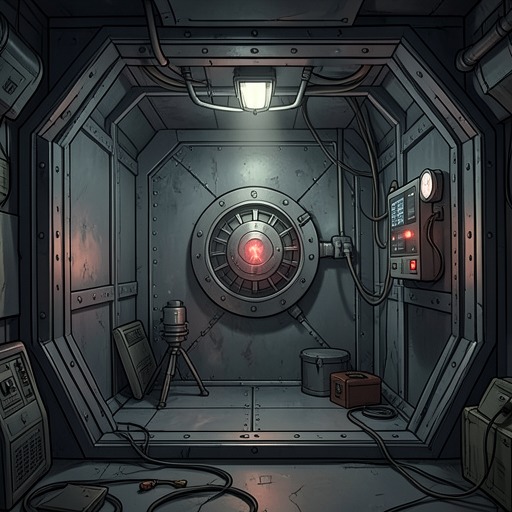
Panic RoomCascade is the activation mechanism that converts the widespread, largely undetectable presence of Harkness Pharmaceuticals’ nanobots into a planned mass-casualty event. Its trigger is the breaching of the panic room at Wortalleth West: once activated, the process is meant to spread beyond the house, while the electrical effects of the nanobots are designed to cause heart failure. The system joins a hidden architectural space, a protected power supply, and a global distribution network in a single mechanism whose climate rationale does not lessen its human cost.
Purpose and Origins
Jack Harkness’s plan begins with a climate calculation. He and his collaborators believe that preventing severe warming requires reducing humanity’s impact on the planet; Filippo Crosetti describes mass deaths as a way to keep temperature rise below two degrees. Jack entered pharmaceuticals because he believed the industry could provide the means to act at scale. He recruited Astrid and then Filippo, and together they developed what they called the nanobot programme. Their reasoning makes Cascade an extreme form of climate intervention: instead of waiting for changes in energy use and production, the plan would remove people through a covert technological system.
The programme’s distribution method is central to its design. According to Filippo, people who used a Harkness Pharmaceuticals drug or cosmetic over the preceding five years could have nanobots in their bloodstream. The same applied to people who ate food grown with the company’s pesticides or meat from animals treated with its antibiotics. The named products included Elixtris and Fenextris, alongside beauty treatments, headache remedies, anti-malarials, and pain relief. The nanobots eventually leave the body, but continuing production replenishes them. Their presence is described as a symptomless plague: dispersed through ordinary consumption, difficult to perceive, and repeatedly renewed.
How the Cascade Works
The mechanism depends on a control breakthrough attributed to Doctor Tau. His technique allows nanobots to be controlled from outside their human hosts and to begin their pre-designed function. Cascade is a chain reaction: one nanobot triggers another, then another, provided they are within ultrasonic range. This propagation makes the system more than a single device or local release. Nanobots already distributed among people become connected through the activation process, allowing the intended effect to extend far beyond the place where it starts.
The function of the nanobots is not the therapeutic use Doctor Tau believes they are being prepared for. Filippo says that he redesigned their components so that, when activated, they discharge an electrical signal modulated to interfere with the host’s bioelectronic system. He identifies the intended result as heart failure. The gap between the apparent medical application and the concealed lethal function is crucial to the scheme: the same technology can be presented as treatment while being engineered for a different end.
The Panic Room and Power Supply
Wortalleth West supplies the initiating system. Filippo says that its equipment is powerful enough to start Cascade, and that overrides at the house and in Locarno can be operated only by Jack and Filippo. Without those controls, he says, there is no way to stop the process once it begins. The panic room therefore serves not only as a concealed space but as the physical trigger built into the wider plan. Filippo states that breaching it will start the reaction, and later confirms that the process begins as soon as it is opened.
Earlier investigation makes the room’s concealment part of the suspense. The steel barrier could be a sliding door, closed and locked from inside, with a two-floor chamber beyond it. The person examining the building cannot trace the expected electrical supply, air system, ducted cables, pipes, or separate phone line. If those services exist, they are well shielded. A malfunction or deliberate closure would normally be expected to leave the room accessible, making the possibility that someone could be sealed inside especially troubling.
The house’s energy infrastructure offers another clue without immediately explaining the room. Mike Coleman tells Don Challenor that Jack arranged an exclusive solar supply from an array in a nearby field, supplemented by inconspicuous photovoltaic film on the south-facing walls of the house and garage. Harkness also bought a large flow battery, a full rack of modules about the height of the room where Coleman speaks to Don. Coleman considers the supply excessive and cannot find the battery. Don suspects a connection to the panic room but withholds that suspicion. Together, the hidden room and unusually extensive independent power make the house’s infrastructure part of the mechanism rather than neutral background.
Intended Consequences and Dramatic Role
Filippo estimates that the deaths would exceed anyone’s ability to count, but says the reduction in human numbers would be enough to restrain temperature rise. He presents the logic as both irrational in its extremity and, within the collaborators’ climate reasoning, purposeful. The plan treats human beings simultaneously as the intended victims and as the source of the environmental threat. Its claimed planetary benefit depends on an indiscriminate human cost, not on a targeted medical intervention.
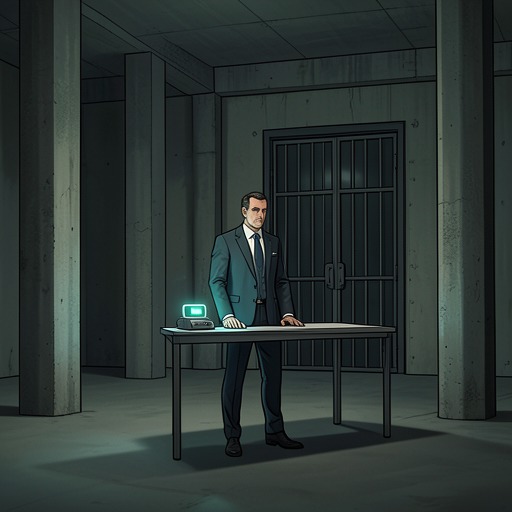
Cascade also gives the hidden architecture a delayed meaning. The steel barrier first raises questions about whether a panic room exists and whether it could have been sealed. The disproportionate power supply and missing battery deepen that uncertainty. Filippo’s explanation then recasts these details as components of a system designed to make opening the room consequential. When French demands that Don open it, Filippo confirms that breaching it will initiate Cascade and says it cannot be stopped. The immediate danger is therefore not simply what may be inside the room: the act of opening it may activate a distributed threat whose consequences reach far beyond Wortalleth West.