Environmentalism and the Anthropocene
Panic RoomEnvironmentalism and the Anthropocene are more than a background concern in the novel: they link Jane Glasson’s principled care for the natural world to Jack Harkness’s attempt to intervene in the planetary crisis by technological means. The language of climate limits and mass extinction gives his plan a rational, urgent framework, but its hidden reach into the public’s bodies turns environmental action into a question of power and consent. The novel’s central tension is not whether ecological damage matters, but what may be done in its name—and who must bear the cost.
Jane Glasson’s Ecological Convictions
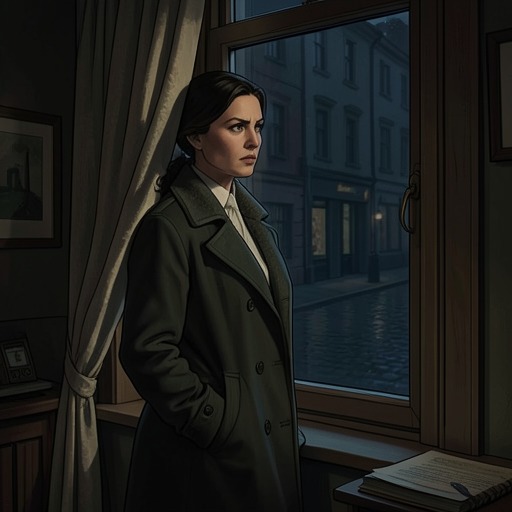
Jane Glasson’s environmentalism appears early and consistently in Holly Walsh’s recollections. At school, Jane was already concerned about global warming when Holly and many of their peers remained largely unconcerned. During their sixth-form years, around 1992, she lectured Holly about the disappointing outcome of the Rio Earth Summit. The memory establishes her concern not as a later response to crisis, but as a conviction formed when climate change received less attention from people around her.
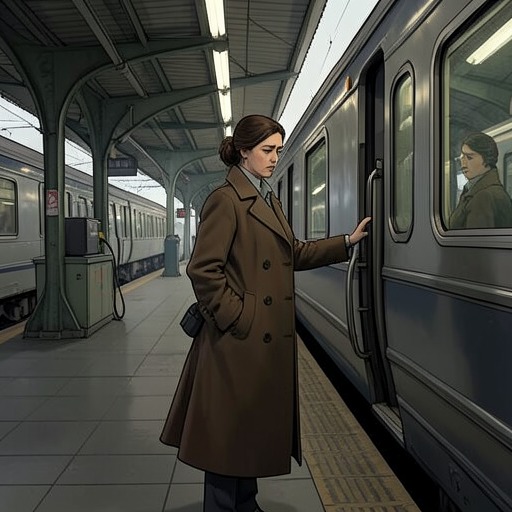
Their gap-year travels to Thailand, Indonesia, and Australia sharpen the contrast between them. Holly wanted to spend time on beaches; Jane was more preoccupied with rainforest loss and the degradation of coral reefs. Later, at Cambridge, Jane objected to chemical fertilizers and pesticides, seeing them as part of a broader disruption of ecological relationships. Her underlying concern was that human beings were unsettling an interconnected system without understanding how dependent its forms of life were on one another.
That conviction persists in Holly’s memory through a small, recurring sign: dead bees. Holly says that seeing one brings Jane’s voice back to her, and that she sees many of them. The bee makes environmental harm legible through a particular loss rather than an abstract argument. Jane’s principles also make her apparent connection to Harkness Pharmaceuticals difficult for Holly and Blake to reconcile. The company’s chemical products seem to stand against the environmental values Jane held, intensifying the mystery surrounding her work rather than resolving it.
Harkness’s Planetary Vision
Jack Harkness presents ecological vulnerability as an idea that has shaped him since childhood. At twelve, during the Christmas holiday in 1968, he saw a photograph of Earth taken by Apollo 8. He recalls understanding the planet as beautiful and fragile, and imagines it as something that could be removed from a Christmas tree and smashed—or left hanging. The image joins wonder to the awareness of human power: Earth’s vulnerability is not remote from ordinary life but bound up with the choices people make.
Years later, Harkness describes the present as the Anthropocene, a geological era in which humanity is shaping the planet’s future. His forecast is severe: heat, drought, famine, thirst, conflict, deforestation, desertification, and the extinction of thousands or even millions of species. The scale of this language contrasts with the casual advice he gives Blake to enjoy life while its pleasures remain. It also sits uneasily beside his position as a pharmaceuticals billionaire whose company has spent decades putting chemicals into the biosphere. The contradiction does not erase his stated concern; it makes his environmental vision inseparable from the industrial power through which he proposes to act.
Carbon Limits and the Sixth Extinction
Filippo Crosetti gives the crisis a numerical structure. He explains that holding the rise in global temperature to two degrees above pre-industrial levels would require carbon emissions to fall to half their current level by 2050 and then continue down to zero. The stated total carbon budget is no more than 800 gigatons. More than 500 gigatons have already been emitted, leaving less than 300; at a rate of 10 gigatons a year, Crosetti calculates that fewer than thirty years remain before emissions must stop. The figures translate a diffuse, long-term threat into a narrowing limit, while making clear that reaching the target would not reverse warming already set in motion.
Crosetti also places climate change beside the destruction of other species. He cites estimates that at least 20 percent of species will be extinct or near extinction by 2050 and describes the crisis as a sixth mass extinction, the worst since the dinosaurs disappeared following an asteroid impact 66 million years ago. The crucial distinction in his account is responsibility: this time, he says, human beings will have caused it. Environmental loss therefore appears both as a planetary process and as a consequence of collective human activity, difficult to contain within the decisions of any one person or institution.
The Nanobot Plan and Its Ethical Rupture
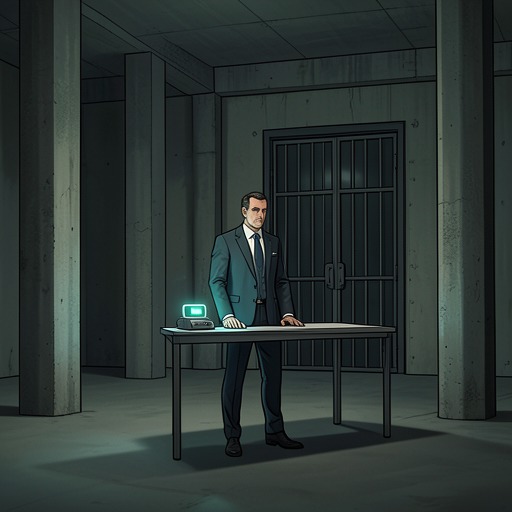
The response developed by Jack Harkness, Astrid, and Crosetti turns ecological diagnosis into an engineered intervention. Crosetti says that the group devised a nanobot programme to pursue the environmental result they believed necessary. Nanobots entered the bloodstream of people who had used Harkness Pharmaceuticals drugs or cosmetics over the preceding five years; they also reached people through food grown with the company’s pesticides or meat from animals treated with its antibiotics. Beauty products, headache remedies, anti-malarials, pain relief, Elixtris, and Fenextris all belong to the list. The agents are described as eventually leaving the body, only to be replaced by more manufactured around the world. Ordinary products become the distribution system for a technology whose planetary purpose its users do not know.
The plan’s stated logic is brutally consequentialist. Crosetti argues that reducing the human population enough would reduce the threat humans pose to themselves and other species, and says the number affected would be beyond anyone’s ability to count. He frames the decision as a choice between catastrophes: action that risks immense harm now, or a worse future later. That framing gives the scheme its force, but also exposes what its climate arithmetic cannot settle. The people exposed through medicines, cosmetics, and food are not shown choosing to become instruments of climate policy. Ecological responsibility is invoked to justify a vast, concealed intervention whose costs fall on people who had no part in making that decision.
This conflict becomes personal when Crosetti links Astrid to obtaining Ditrimantelline for Holly Walsh, while acknowledging that the treatment will kill her. He suggests that Astrid wants Holly to be comfortable, but that her commitment to the plan leaves little room for hesitation or compromise. Jane’s remembered environmental principles and the lethal consequence attached to her apparent actions thus come into sharp, unresolved tension. The novel presents planetary care as morally serious, but refuses to let the scale of the emergency make the proposed remedy innocent: a plan intended to protect life can reproduce the very disregard for living beings that ecological thinking ought to challenge.