Filippo Crosetti
Panic RoomFilippo Crosetti is Harkness Pharmaceuticals’ chief researcher, a specialist in nanotechnology and bioelectronics, and a pivotal link between the company’s cosmetic research and Jack Harkness’s covert climate intervention plan. His loyalty is real but unsettled: he says he still partly believes the plan is right, yet his explanation of how its nanobots are designed to work exposes the human cost he can no longer discuss as an abstraction.
Identity and Position
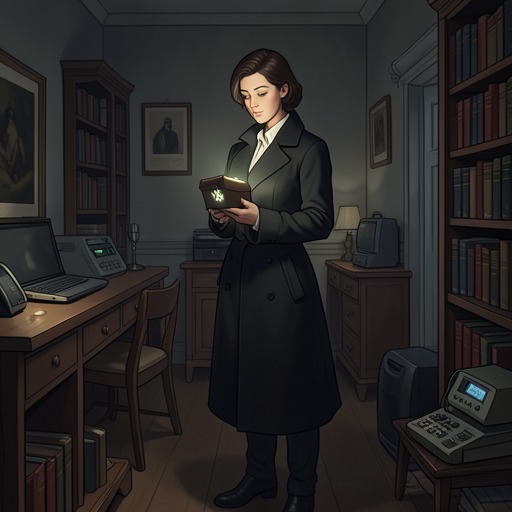
Crosetti supervises a discreet group of specialists whom he personally recruits. Company human-resources records identify retained specialist contractor number 55 as a forty-six-year-old British woman attached to his staff, but refuse to provide her personal information because Crosetti insists on absolute confidentiality for those specialists. Their work is based at the research facility in Locarno, where Crosetti alone is responsible for supervising them. This arrangement gives him unusual control over both the personnel and the information surrounding their research.
That secrecy becomes an obstacle when Ingrid Denner investigates a budgetary allocation for outside scientists whose expertise in nanotechnology and bioelectronics appears unrelated to a conventional cosmetic. Their first recorded contact with the company was through Ms Townsend, and Ingrid plans to question Crosetti at a meeting in Zug on 14 June. Her email makes clear that she intends to scrutinize his management of the Elixtris project as well as the scientists’ funding. Crosetti’s confidential research structure, once a way to protect specialist work, has become a reason the company’s internal investigator wants answers.
Appearance and First Encounter
When Blake watches the entrance to Jane Glasson’s apartment, Crosetti arrives about five minutes early. Blake recognizes him by his appearance: he is small and slim, in his mid-to-late thirties, with thick brown hair, a narrow face, a neatly tailored beard, and restless, almost-black eyes. His pressed jeans, grey jacket, and striped shirt combine Italian polish with what Blake sees as Swiss nerdiness. The description introduces a man whose careful presentation does not conceal his agitation: Blake follows him up the silent stairs, while Crosetti’s arrival signals a meeting whose consequences remain uncertain.
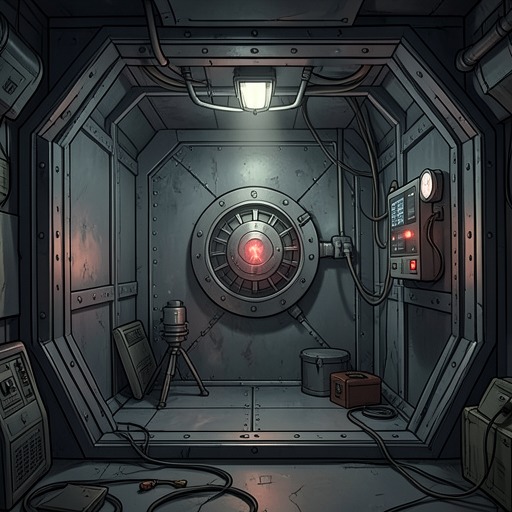
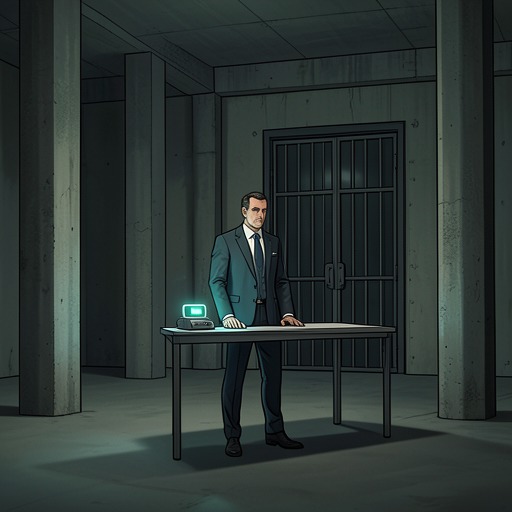
At the later conference-table meeting, that agitation is visible again. Crosetti hovers before sitting down, his hands locked together and his eyes repeatedly drawn to Harkness’s computer, about four metres away. The scene places him among Ingrid, Hertha, Jane, and Blake, with Ingrid at the head of the table. A Lanyon hangs near the desk, while equipment in ventilated metal cupboards appears to provide backup power for the relay Crosetti had described. His attention to the computer and the technical apparatus ties his unease to the machinery and decisions under discussion, rather than presenting him simply as a detached researcher.
Research, Secrecy, and Suspicion
Under pressure from Jane, Crosetti interprets Harkness’s actions as an attempt to move ahead before the project can be stopped. He says Harkness knows he is away from the laboratory because of Ingrid Denner and has made his move; Jane cautions that he cannot know this for certain. The exchange shows Crosetti reasoning from the project’s urgency and his own absence, but it does not establish that his suspicion is correct. His alarm nevertheless reveals how the investigation has disrupted the work and how closely he reads developments in terms of whether the plan will proceed.
When Ingrid asks what Harkness Pharmaceuticals is receiving for its substantial investment in the outside scientists, Crosetti answers with a single technical objective: “Deliverability.” The terse answer points to a gap between the public-facing Elixtris project and the capabilities the research is actually meant to secure. He then allows Jane to explain further. His willingness to leave the explanation to her contrasts with his earlier control over specialist researchers and information, while his own later account supplies the crucial distinction between the project’s stated medical use and its redesigned function.
The Climate Plan and Its Human Cost
Crosetti says that Jack Harkness and Jane Glasson brought him into the project twelve years earlier and persuaded him that their purpose was right. He has not wholly abandoned that belief. His explanation is grounded in a specific climate calculation: holding global temperature increase to two degrees above pre-industrial levels requires emissions to fall to half their current level by 2050 and then continue downward to zero. Because carbon dioxide already in the atmosphere would sustain warming, he says, total emissions must remain under 800 gigatons. More than 500 gigatons have already been emitted; at ten gigatons a year, fewer than thirty years remain before emissions must drop to zero. Otherwise, he warns, floods, storms, droughts, and famine would amount to disaster for humanity.
The force of Crosetti’s account lies in the turn from that global arithmetic to the mechanism he helped design. Doctor Alan Tau believes his technology will be used for nerve-stimulation therapy powered by nano-transducers. Crosetti says he redesigned the components so the nanobots instead discharge an electrical signal that interferes with the host’s bioelectronic system. When pressed on the meaning of that interference, he answers softly: “Heart failure.” The contrast is not between a plausible medical use and a vague danger, but between the technology’s believed therapeutic purpose and a design whose stated effect is fatal. Crosetti’s admission makes his divided commitment concrete: he can still explain why he joined the plan, but he also names what its machinery is built to do.