Glenys Probert
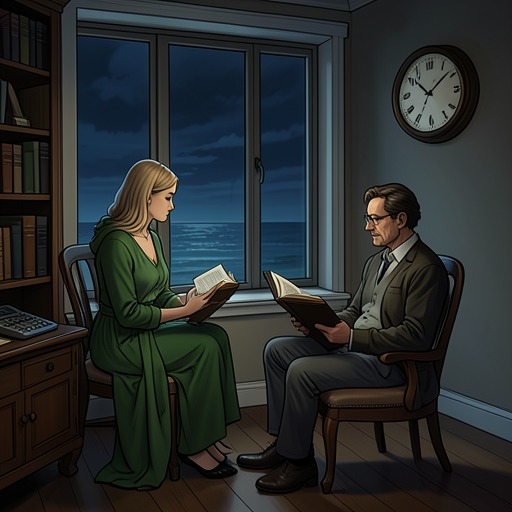
Panic RoomGlenys Probert is the part-time gardener at Wortalleth West and one of the people who sees most clearly how precarious life around Jack Harkness has become. Unshowy and self-reliant, she offers Blake shelter, warns her to leave the house, and stands between a threatening visitor and the people she is trying to protect. When danger reaches Wortalleth West, Glenys’s ordinary gardening tools and knowledge of the house become practical means of resistance; her intervention also gives Don Challenor a chance to live.
Identity and Work
Glenys works directly for Jack Harkness as a part-time gardener at Wortalleth West. She is lean and weather-tanned, cuts her own hair, and dresses practically: jeans and a sweater in winter, a T-shirt and denim shorts in summer. Blake admires her hard work and genuineness, qualities that stand out precisely because nobody appears to monitor her work. Harkness pays her on the first of each month, and the payment also reaches Blake through Glenys. Blake finds this regularity ironic, since Harkness apparently no longer owns the house and does not come down to enjoy its garden.
Her work does not make her deferential. When Fran Revell visits Wortalleth West with Robin Pawley, Glenys tells her plainly that she works directly for Harkness and will stop only if he tells her to. That answer establishes both her employment and the limit she places on it: she is there because the work is hers, not because she is eager to please whoever arrives at the house.
Loyalty to Blake
Glenys responds to Blake’s news that she may have to leave Wortalleth West with a practical offer: Blake can stay with her for a while if necessary. Glenys lives in St Keverne, and Blake has never visited her home; she suspects it is small and knows Glenys is accustomed to solitude. The offer is therefore not casual in its implications. Glenys is willing to inconvenience herself, while presenting the generosity in the same matter-of-fact manner with which she tends a weed.
After Don discovers the panic room and Dale’s crash deepens Blake’s unease, Glenys advises her to clear out of Wortalleth West. She has read the Financial Times Blake discards and sees that Harkness is finished and under pressure. Rather than promise that events will turn out well, she argues that Blake should not wait to find out how bad they may become. Her warning makes her concern concrete: she understands the danger not through the investigation’s technical details, but through what Harkness’s failing position could mean for someone living under his roof.
Glenys also turns concern into follow-through. Although Saturday is not one of her scheduled workdays, she tells Blake she will come the next day simply to check on her. That small departure from routine echoes the larger pattern of her character: she does not make a display of attachment, but she acts on it. Blake understands that the promise is sincere, and Glenys’s subsequent conduct bears it out.
Protecting the House and Its People
When Mike Coleman tries to seize an opportunity to search Wortalleth West for material that could be traded or publicized, Don attempts to stop him. Glenys enters behind Coleman wearing her gardening clothes and carrying a hoe. Her stern presence makes the tool’s purpose unmistakable, and she helps interrupt a situation in which Coleman is using intimidation to get his way. She addresses Don by his first name in a way that suggests a familiarity the two do not actually share; Don plays along, allowing the pretence to support her intervention.
Glenys later explains that she came because she had promised to check on Blake, recognized Coleman’s car, and decided to investigate. She considers Coleman a bully and says she knows how to handle bullies. Her response is characteristic: she does not wait for Don to explain or ask her to act. The decision follows from her promise to Blake and her assessment of the person attempting to enter the house.
Defiance and the Final Confrontation
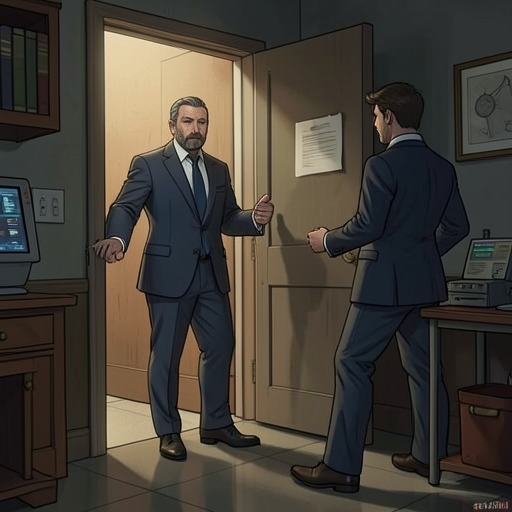
Near the end of the crisis, Don recognizes the truck outside Wortalleth West as Glenys’s. He also knows that Harkness had instructed her to stay away, so her presence is unexpected. Glenys has found Coleman’s body and called the police. When Amos French and Gennady Zlenko arrive, she hides in the basement because she distrusts them and sees nowhere else she can safely go. She takes a steel exercise weight from the gym for protection, then comes upstairs when she hears the sirens.
As Zlenko moves against Don, Glenys strikes him with the weight, stopping him. Her response is immediate and decisive, not the result of an elaborate plan: she has hidden, armed herself with what was available, and acted when Don was in danger. She tells Don she had come up after hearing the sirens and notes that the police are about to arrive. When a police car stops outside, she offers to let the officers in and checks whether Don is all right. Don realizes in that moment that he is going to live. Glenys’s intervention has changed the immediate outcome, and her call to the police has helped bring the confrontation to an end.
Asked why she is at the house despite Harkness’s instruction, Glenys cannot give a fully considered explanation. She suggests that the manner in which he ordered her away may have mattered, then acknowledges a longstanding inclination to do what she is told not to do. The scene makes that defiance consequential: her willingness to disregard Harkness’s command places her in a position to discover the body, summon help, and protect Don.
Narrative Role
Glenys’s importance lies in the contrast between her modest role at Wortalleth West and the force of her actions. She is paid to maintain the garden, yet no one is monitoring her; she lives quietly in St Keverne, yet repeatedly crosses the boundary between private concern and intervention. A hoe, a promise to visit on a Saturday, and an exercise weight mark different scales of the same practical loyalty. The book does not present her as an investigator or as a figure with access to the whole conspiracy. Instead, her attention to Blake and her refusal to submit automatically to Harkness’s instructions allow her to act at crucial moments. Her final offer to admit the police completes that pattern: she protects not through authority or privileged knowledge, but by noticing what is happening and taking responsibility for the next useful step.