Jane Glasson and Holly Walsh’s Friendship
Panic RoomJane Glasson and Holly Walsh’s Friendship is a close bond recalled by Holly as central to her youth and made painfully unresolved by Jane’s disappearance. Holly’s memories place her inside the Glasson family’s life, while her conviction that Jane would not knowingly cause such suffering gives the friendship a stake in the novel’s question of whether Jane vanished by choice.
A Friend Within the Glasson Family
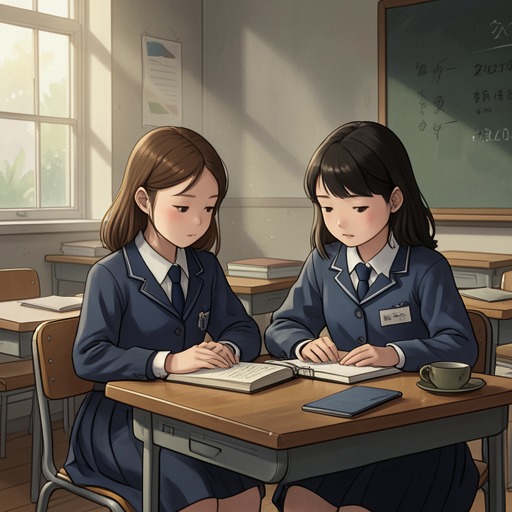
Holly says she stayed with the Glassons several times during school holidays and university vacations. Her recollection is not of a distant acquaintance: she knew the family well enough to describe them as lovely people and to feel for Andrew Glasson, whose daughter’s disappearance, she observes, must be especially painful after his wife’s death. The loss is therefore framed not only as the absence of Jane but as a rupture that Holly has watched persist within a family she had once visited as part of its ordinary life.
The conversation also brings the family’s relationships into view through Holly’s response to Muriel. When Anna Marchant remarks that Muriel does not sound lovely, Holly concedes the point and suggests that having a younger sister as beautiful and intelligent as Jane cannot have been easy. The comment is brief, but it shows Holly thinking about the tensions and comparisons surrounding Jane, rather than recalling their friendship in isolation from the family setting. Her account offers a personal perspective on the Glassons, not an exhaustive explanation of their relationships.
Jane as Holly Remembers Her
Asked whether she and Jane were close, Holly answers without hesitation: Jane was the best, alive, and inspiring. The description makes Jane’s absence more than a missing-person question for Holly. She remembers a person whose vitality and influence shaped her attachment, and the reverence in her words sits beside the practical intimacy of shared holidays and plans to meet again.
A later exchange identifies Holly as Jane’s best friend and characterizes her as having wanted to be more than a friend. That characterization suggests an emotional asymmetry or longing, but it does not establish that Jane returned those feelings. The distinction matters: the evidence presents Holly’s devotion and another person’s interpretation of it, not a mutually declared romance. Her affection is most clearly shown through the certainty with which she remembers Jane and through the pain that surfaces when she recounts their final meeting.
The Last Meeting and the Disappearance
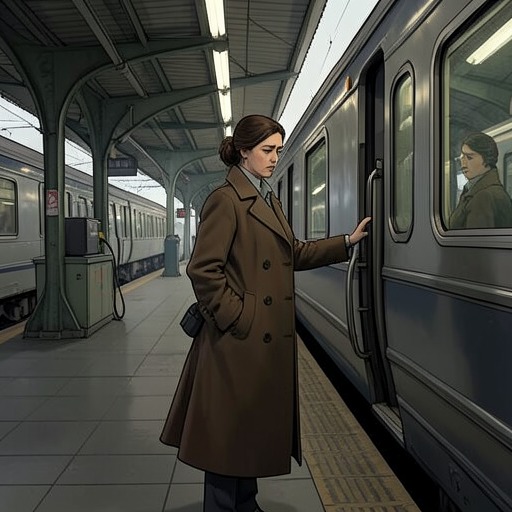
Holly recalls that she and Jane had coffee at King’s Cross before separating onto the Underground. They talked about ordinary things. Jane had recently rejected a young man from King’s who thought he was her boyfriend, and Holly teased her about it, though she adds that teasing Jane was not really possible because Jane seemed to rise above most things. Nothing in the day struck Holly as a sign of departure or a concealed plan.
They agreed that Holly would go down to Cornwall at the beginning of September, after they had both earned some spending money. The arrangement gives their friendship a near future: the separation was supposed to be temporary, with another visit already anticipated. Holly says it never occurred to her that she would never see Jane again. The ordinary coffee, Underground journey, teasing, and plan for September acquire their weight retrospectively because the expected reunion did not happen.
Grief, Doubt, and the Meaning of the Bond
Holly rejects the significance of the fortune-teller consulted by Andrew Glasson. More fundamentally, she cannot believe Jane would put her parents—or Holly herself—through the agony of not knowing what had happened. Her reasoning is grounded in her knowledge of Jane and in the friendship’s closeness: a chosen disappearance would not be an abstract mystery but an act that inflicted years of uncertainty on people Jane cared about. Holly reports no unusual event on their last day together and no warning that Jane was preparing to vanish.
The passage allows certainty and uncertainty to coexist. Holly is sure that the day seemed completely normal and that Jane’s disappearance was not something she could have anticipated; she is not able to explain what happened afterward. Twenty-two years later, she says she almost certainly will never know and tries to accept that ignorance may be preferable to whatever the truth contains. Her attempt at composure falters: she looks close to tears, waves away Anna’s consoling approach, and summons a smile before returning to the loss. In a later conversation, the mention that Holly has multiple sclerosis prompts an immediate expression of sympathy. That detail does not explain the friendship, but it marks Holly as someone whose present circumstances are also part of what others learn when Jane’s past is reopened.
The friendship thus functions as both testimony and limit. Holly can attest to Jane’s character, their plans, and the apparent normality of their final meeting, but intimacy cannot give her knowledge of Jane’s fate. The contrast between a vivid remembered friend and the blankness after King’s Cross sustains the bond’s emotional force: Holly’s grief is not resolved by declaring Jane lost, even as she recognizes that this may be all she can say.