Paddington
Panic RoomPaddington is the point at which Jane Glasson’s long absence becomes visible again, but not explainable. In Andrew Glasson’s account of her disappearance and Gareth Lawler’s later recollection of seeing her alive, the station is both a practical junction and a place of missed contact: Jane is expected there, then glimpsed there, yet neither episode gives those looking for her a way to reach her.
A destination in the disappearance
At the end of her second year at Cambridge, Jane travelled to London with a friend. They parted at King’s Cross station, where Jane said she would take the Tube to Paddington and catch a train to Cornwall. Andrew Glasson drove to Camborne to meet her, but she was not on the train. He initially thought there had been a misunderstanding and expected her on a later service; when she did not appear, the family still hoped they would find her or eventually learn what had happened.
The uncertainty begins before anyone knows whether Jane reached Paddington at all. Her stated route gives the station a place in the family’s account, but Andrew and the others never establish that she boarded the train to Cornwall. The distinction matters: Paddington marks the intended next step in her journey, not a confirmed point in her disappearance. Andrew describes the prolonged lack of knowledge as devastating to Jane’s mother, whose death he connects to the strain of not knowing, though not officially.
Gareth’s recognition on the concourse
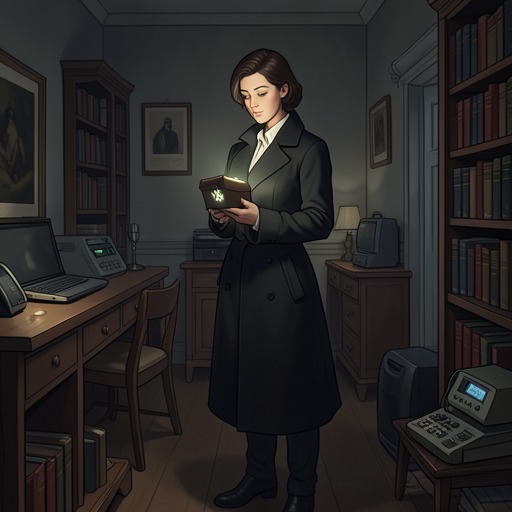
Twenty-two years later, Gareth is at Paddington waiting for a train to Cardiff on a business trip. Seated beneath the departures board, he notices a woman in the row ahead, working on an iPad. It is a wet day; she wears a shiny black raincoat and a Hermès scarf, and a small wheeled suitcase stands beside her, with a bag looped over its handle. Her fair hair, darker in places and shaped to her neck, catches his attention. Unsure whether the resemblance will survive a closer look, he walks around the end of the row to see her face—and recognizes Jane.
Gareth believes Jane recognizes him too. Their eyes meet briefly, and he becomes convinced she will deny who she is. He approaches as she remains seated, closes the iPad, and looks at him as if she does not know why he has come over. Gareth addresses her by name and identifies himself; she says she does not know him and is not the person he thinks she is. He presses her for an explanation, but she gathers her things and tries to leave. When he steps into her path, she again denies knowing him and asks him to move. The encounter gives Gareth certainty that Jane is alive while offering no account of why she disappeared or why she refuses to acknowledge him.
The departing train
Jane walks across the concourse toward the platforms, and Gareth follows, calling after her. A man who has overheard them intercepts Gareth and tells him to leave her alone. Gareth withdraws toward the shops, but keeps watching Jane. After the man sits down again, Gareth follows her to the Heathrow Express platform. The train is due to leave within minutes; preoccupied with Jane, Gareth no longer thinks about his journey to Cardiff.
He boards and searches through three or four carriages, assuming Jane must be on the train. The doors close and the train begins to move before he finds her. Only then does he see her still on the platform, walking back toward the concourse and looking straight ahead. Gareth bangs on the door, but Jane does not look toward the train. He considers two possibilities—that she boarded and got off before departure, or never boarded at all—and cannot determine which is true. The movement of the train turns a fleeting recognition into another separation.
Gareth continues to Heathrow Airport, waits for the next train from Paddington in case Jane is aboard, and then returns to the station when she is not. By then he has no way to find her. He concludes that she may have drawn him onto the train deliberately and blames himself for losing what he sees as his only chance. Paddington thus becomes the setting not for a reunion but for an encounter whose decisive fact—Jane is alive—arrives together with the proof that Gareth cannot make her stay.
A recurring point of contact
The station resurfaces as Gareth’s movements intersect with Don Challenor and Blake’s investigation. When Don receives Gareth’s call, railway-station announcements can be heard in the background. Gareth says he will not come to their expected meeting because he needs to be where another meeting is being held; he avoids specifying the details over the phone and says they can discuss the matter when Don joins him. This call places Gareth once more amid railway travel and signals that the investigation has developed beyond what Don has yet learned, though the call itself does not identify Paddington as the station.
Later, Blake tells Jane that Gareth saw her at Paddington earlier that year and came there to find her. She says that Jane had arranged to meet him the following morning, but he ended up in hospital instead. Jane calls the incident an accident. In the wider account, the station sighting is therefore not an isolated glimpse: it leads Gareth to seek Jane out, and becomes part of Blake’s evidence when she confronts Jane. Paddington’s narrative importance lies in this chain of incomplete encounters. It is attached first to the route Jane was supposed to take, then to Gareth’s recognition and failed pursuit, and finally to the investigation that brings the past into the present without making Jane’s disappearance fully transparent.