Wortalleth West planning records
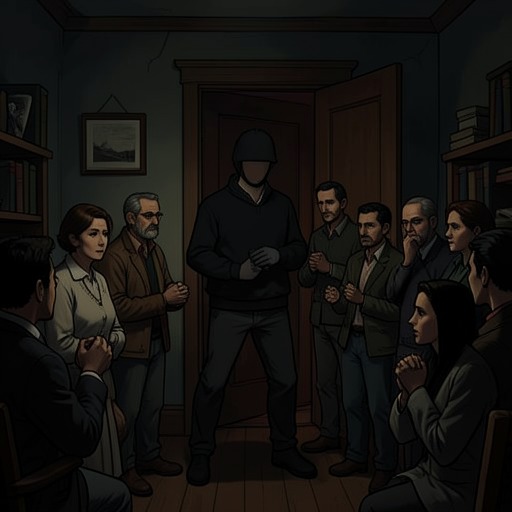
Panic RoomThe Wortalleth West planning records are the absent paper trail behind Don Challenor’s attempt to resolve structural ambiguities in the house. He needs the original construction details to complete a specification, but the council file that might supply them cannot be found. Its disappearance links a practical property enquiry to an unexplained earlier search.
Construction and the search
Don asks Robin Pawley who built Wortalleth West. Pawley recalls that it was constructed around the turn of the millennium by a firm from outside the area, probably from London. He remembers complaints at the time: the builders hired no local tradespeople, and the firm was not British. These recollections establish why original records could matter, while offering no precise construction details themselves.
Don explains that he cannot complete his specification because of structural ambiguities. He is confident the original construction details will help resolve them, so he asks Pawley how to find them. Pawley points to the council, which would have received the plans as part of the planning application, but cautions that nearly twenty years have passed and cannot say whether the documents remain on file. Don nonetheless cannot persuade himself to leave the matter alone: if Fran Revell wants the job done, he intends to do it his way.
The file’s disappearance
Pawley later tells Don that he asked John Troke about the original planning application for Wortalleth West. Troke said Don was not the first person to enquire: someone else had recently asked about it. That earlier enquiry had prompted Troke to investigate what he could, so the missing file is discovered through a chain of searches rather than a routine check of the archive.
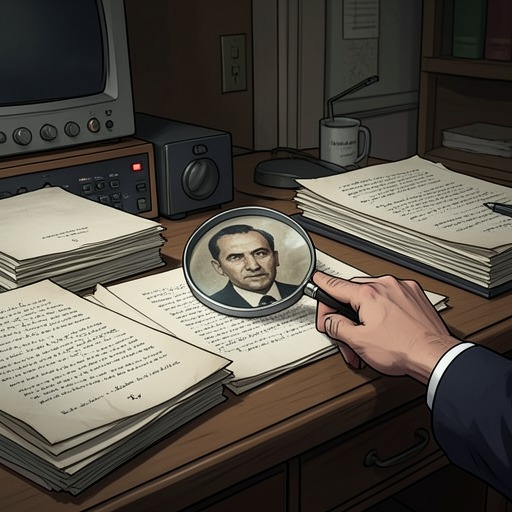
The result is stark. The Wortalleth West file is not in the system, with no trace of it at all. Pawley calls it a possible clerical error, but presents that only as a supposition; he does not explain who made the first enquiry or what became of the documents. The records are therefore absent, not confirmed destroyed, and the reason for their absence remains unresolved.
Significance
The file’s importance lies both in what it might contain and in the fact that someone else sought it before Don. The planning application could provide the construction history needed to settle the house’s structural ambiguities, but its disappearance blocks that straightforward route to an answer. Pawley’s memory supplies fragments—the approximate date, the foreign firm, the exclusion of local tradespeople—without replacing the formal record Don needs.
The gap in the archive also changes the enquiry’s character. What begins as a request for building information becomes a question about access to knowledge: the relevant file should have been part of the planning process, yet it cannot be located, and another search has already drawn attention to it. The possibility of clerical error keeps an ordinary explanation open, while the unexplained prior enquiry makes the missing records consequential rather than merely inconvenient.