
Satan's Rebellion and Fall
Paradise LostThis flow traces Satan's revolt against divine sovereignty from proud aspiration through defeat to his hardened identity as the adversary.
increasing Bearing strength in each event
 decreasing
Bearing strength in each eventdecreasingHeavenly Ambition
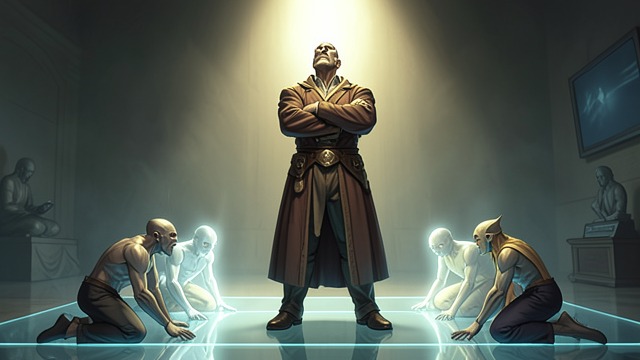
Heavenly Ambition
A claim to equality
Satan rises among the highest celestial powers and converts distinction into entitlement. His desire is not merely for honor but for equality with God, which makes political rivalry a metaphysical rebellion.
Freedom turned against order
He treats obedience as humiliation and imagines that created freedom authorizes resistance to the Creator. The movement matters because later catastrophe begins as a choice of interpretation: hierarchy becomes tyranny in his mind, and self-assertion becomes liberty.
Celestial Defeat
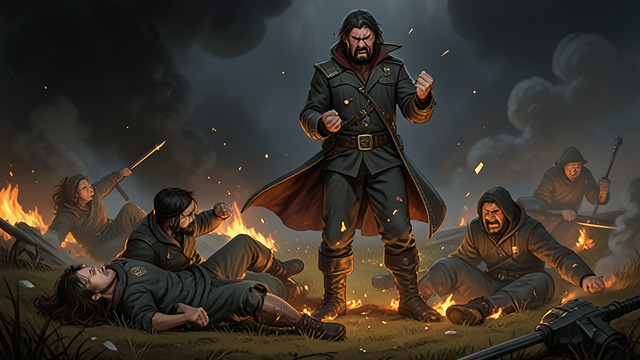
Celestial Defeat
The broken host
God's power casts Satan and the Rebel Angels from Heaven into Hell. Their fall is physical, political, and spiritual: they lose their place, radiance, and participation in blessed order.
Defeat without surrender
Satan refuses repentance and interprets survival as proof that resistance remains possible. The defeated army therefore becomes more dangerous, because its humiliation is converted into a program of revenge.
Infernal Consolidation
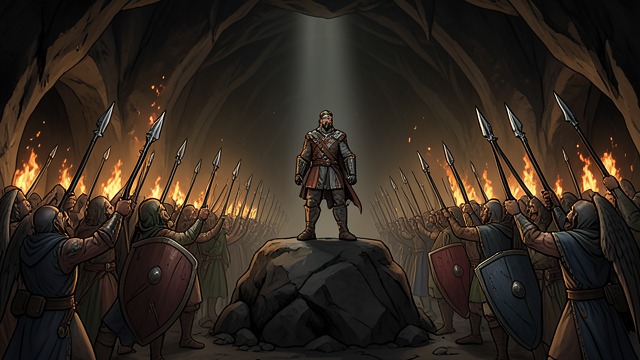
Infernal Consolidation
From scattered ruin to command
Satan awakens the fallen host and gives its misery a military shape. Standards, ranks, speeches, and collective movement restore the appearance of empire within the prison of Hell.
Political theater
The assembly does not remove suffering, but it gives suffering an audience and a leader. Satan's authority grows through rhetoric, making rebellion appear rational, heroic, and communal rather than merely wounded.
The Human Target

The Human Target
A new world discovered
Beelzebub proposes that the fallen powers attack the newly created human race rather than assault Heaven directly. Humanity is valuable precisely because God has favored it and because its weakness can make divine joy vulnerable.
Revenge through corruption
The plan seeks neither simple conquest nor immediate destruction. It aims to make human beings betray their Maker, turning God's new creation into evidence against God's wisdom and mercy.
The Adversary Established

The Adversary Established
A chosen identity
Satan reaches Eden after acknowledging that his inward Hell travels with him. He rejects repentance because pride, shame, and fear of losing authority make submission seem impossible.
Evil as a vocation
His declaration that evil will become his good turns defeat into an identity. From this point, he no longer seeks restoration; he seeks to reproduce his own alienation in humanity.
before the opening of the poem
immediately after the Rebellion and War in Heaven
early after the fall into Hell
during the Infernal Council in Book II
near the end of Book IV
