
The Infernal Council
Paradise LostThis flow follows the competing proposals of Moloch, Belial, Mammon, and Beelzebub as Hell constructs a political order around defeat.
increasing Bearing strength in each event
 decreasing
Bearing strength in each eventdecreasingMoloch's Offensive
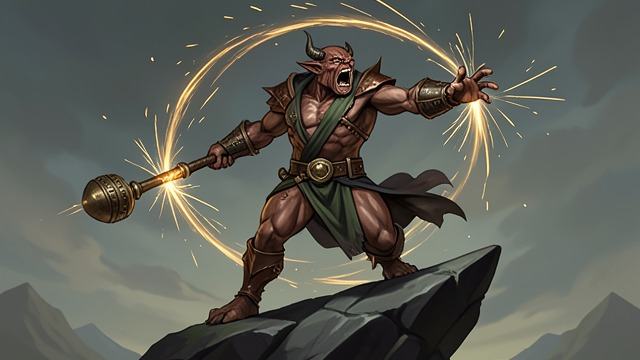
Moloch's Offensive
Force as answer
Moloch calls for open war and argues that continued imprisonment is worse than annihilation. His proposal expresses rage without strategic patience.
Despair disguised as courage
The willingness to risk destruction sounds heroic, but it depends upon the hope that pain can be escaped through violent action. His courage is therefore inseparable from hopelessness.
Belial's Delay
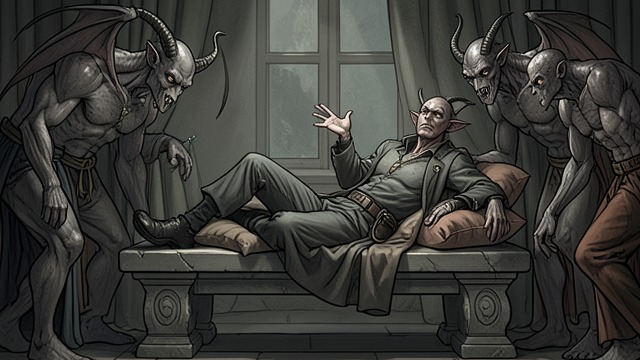
Belial's Delay
Elegant resistance
Belial rejects both open war and reckless schemes, presenting submission to punishment as prudent endurance. His polished language turns cowardice into philosophy.
Ease without peace
He imagines that time may soften Hell and make pain tolerable. The proposal preserves existence but abandons moral purpose, replacing rebellion with luxurious stagnation.
Mammon's Empire
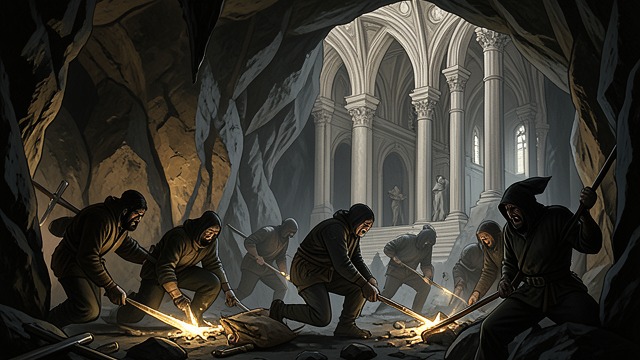
Mammon's Empire
Building below
Mammon recommends creating wealth, magnificence, and self-sufficiency in Hell rather than pursuing Heaven. His material politics seek independence from divine rule.
Splendor as compensation
The construction of Pandemonium proves that art and industry can flourish under corruption. Yet the achievement exposes the limits of wealth: magnificence cannot restore blessedness.
Beelzebub's Proposal
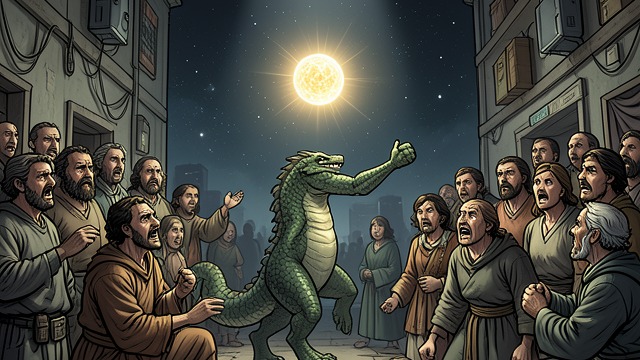
Beelzebub's Proposal
A safer war
Beelzebub combines caution and aggression by proposing an attack on the new human world. His plan avoids Heaven's defenses while striking at God's favored project.
Consensus through revenge
The proposal succeeds because it offers every faction a version of victory: action for Moloch, strategy for Belial, empire for Mammon, and revenge for Satan.
Pandemonium's Founding
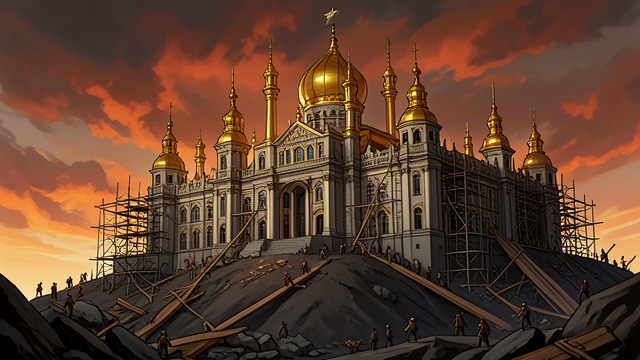
Pandemonium's Founding
Infernal architecture
Mammon's followers mine the hill and raise a palace from gold, brass, and magical craft. The capital gives Hell the outward form of a state.
A counterfeit Heaven
The building imitates celestial hierarchy and splendor while remaining rooted in greed and rebellion. Political order here is spectacle: impressive enough to coordinate evil, powerless to heal it.
first during the Infernal Council
second during the Infernal Council
third during the Infernal Council
fourth during the Infernal Council
after the Infernal Council and before Satan's departure
