Liberty and Tyranny
Paradise LostLiberty and Tyranny is one of Paradise Lost’s central political and theological oppositions. The poem repeatedly places the language of freedom, equality, service, law, and rule under pressure, contrasting rightful government founded on reason and created order with rebellion that calls itself liberty while seeking mastery. Its decisive irony is that Satan presents resistance to God as emancipation, yet converts that resistance into a new hierarchy in which he expects to reign over the very beings whose freedom he invokes.
Liberty as Rebellion and Self-Rule
Satan first defines liberty as refusal to submit. After the defeat of the Rebel Angels and their expulsion into Hell, he rejects repentance and obedience as shameful dependence, preferring an “unconquerable Will,” revenge, and perpetual resistance. In his account, to bow before God would be to acknowledge the victor’s power, whereas continued opposition would preserve dignity. The political vocabulary is inseparable from personal identity: Satan will not accept a change of place as a change of self, insisting that “The mind is its own place” and that inward determination can make “a Heav’n of Hell, a Hell of Heav’n.”
His most compressed political claim is that “Better to reign in Hell, then serve in Heav’n.” The sentence makes sovereignty appear more valuable than blessedness and turns service into the opposite of freedom. Hell therefore becomes, in Satan’s rhetoric, a refuge from accountability: a place where the Almighty supposedly cannot expel him and where he and his followers may live “to our selves,” free from an external master. Yet the setting contradicts the claim. Satan speaks of freedom while surrounded by punishment, pain, darkness, and dependence on the conditions imposed by the power he denies. His liberty is announced as self-possession, but it is also an obstinate fixation on opposition.
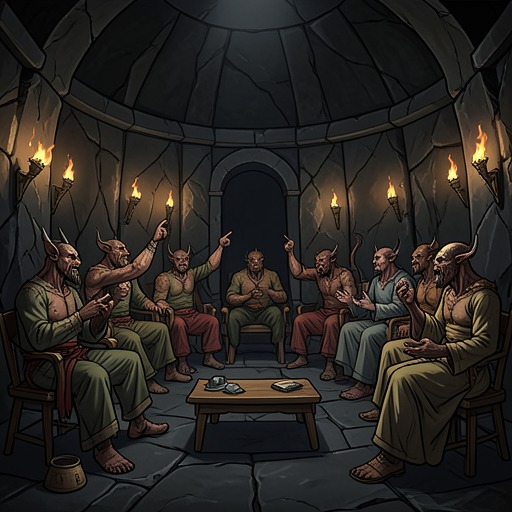
The poem sharpens this contradiction through the debate in Pandemonium. Moloch calls for open war, preferring renewed violence to continued captivity; Belial recommends inaction and endurance, presenting passivity as prudent survival; Mammon argues that the fallen should build their own prosperity in Hell rather than seek restoration through submission. Mammon’s version of liberty rejects both military defeat and reconciliation on terms set by God. Even if grace were offered, he argues, accepting renewed subjection would mean performing worship before a hated sovereign. He therefore prefers “Hard liberty” to “the easie yoke of servile Pomp,” imagining that labor, endurance, and material transformation can make Hell their own domain.
Rightful Rule and the Meaning of Service
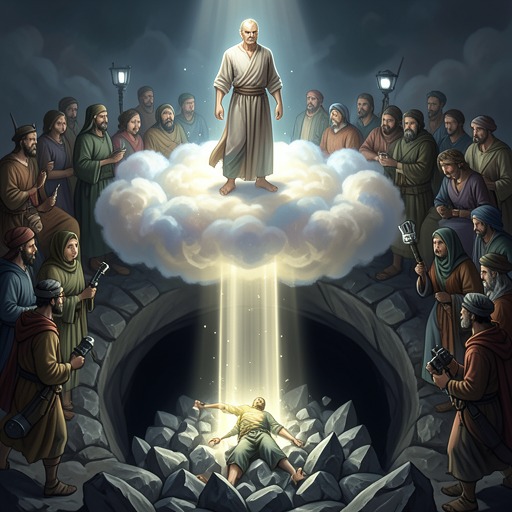
Against Satan’s definition, Abdiel distinguishes freedom from mere independence. In Heaven, Satan claims that the angels are naturally equal and therefore cannot rightly be ruled by a monarch; he describes the decree requiring them to honor the Son of God as an imposed yoke and an insult to beings who were created to govern rather than serve. The appeal is politically attractive because it joins equality with liberty: orders and degrees, Satan suggests, are compatible with freedom only until one figure claims absolute power over equals.
Abdiel answers that the decisive question is not whether a ruler stands over subjects, but whether the ruler is worthy to govern. God created the heavenly powers, and the Son of God is the one through whom creation was made; his rule does not diminish the angels’ glory but gathers and enlarges it under a rightful head. Abdiel therefore reverses Satan’s terminology. To serve God is not servility, because God and nature command service to the worthiest. True bondage lies in serving the unwise or rebellious—precisely the condition of Satan’s followers, who have placed themselves under a leader enthralled to his own pride. Abdiel’s challenge, “Reign thou in Hell thy Kingdom, let mee serve / In Heav’n God ever blessed,” separates moral freedom from the mere possession of power.
This exchange gives the poem’s political theology its most exact formulation. Liberty is not the absence of all command; it is inseparable from right reason. Authority is tyrannical when it is undeserved, coercive, or directed toward the ruler’s private ambition, but obedience is not automatically tyranny. The poem thus distinguishes rightful hierarchy from domination and makes moral judgment, rather than symmetrical status alone, the basis of legitimate rule.
Satanic Freedom and the Making of Tyranny
Satan’s rhetoric grows more suspicious when viewed beside his conduct. He tells the Rebel Angels that they are equally free, but he also presents himself as the indispensable leader who must organize their recovery, direct their councils, and determine whether they will fight or plot. His claim to defend liberty is therefore joined to a desire for kingship. Abdiel identifies the concealed motive: Satan once flattered and adored Heaven’s monarch in the hope of dispossessing him and reigning in his place. The language of emancipation does not abolish monarchy; it seeks to transfer the crown.
This pattern recurs when Satan travels to the Mount of Congregation and summons the heavenly powers under the pretense of preparing an honorable reception for the newly anointed king. His speech portrays obedience to the Son of God as humiliating knee-tribute and argues that free beings should not be bound by law. The assembly applauds the argument, while Abdiel stands alone in defense of divine command. Satan then claims that the angels were self-begotten and self-raised, denying the dependence that would establish God’s authority. His doctrine of autonomous origin supports his political doctrine: if the angels owe their being to no creator, they owe allegiance to no ruler.
The poem presents this as false freedom rather than liberation. Satan’s self-rule is a form of enslavement to pride, anger, and revenge; his followers’ apparent equality exists within a military order centered on his authority. The tension becomes explicit in Abdiel’s description of Satan as “not free, but to thy self enthrall’d.” Satan’s rebellion removes obedience to God only by making the rebel subject to his own destructive will, while his promise to govern others converts inward bondage into outward domination.
Human Liberty and External Tyranny
The same distinction governs the poem’s account of human history. God gives Adam and Eve dominion over the animals, the earth, the sea, and the air, but this authority does not authorize one human being to rule arbitrarily over another. When Adam sees the rise of a proud descendant who claims dominion over his brethren and builds a tower toward Heaven, he condemns the usurpation as an offense against both human equality and divine sovereignty. Human beings were given dominion over creation, not an unlimited right to dominate other human beings; God reserved ultimate lordship to himself while leaving human beings free from human masters.
Michael complicates Adam’s judgment by explaining that the Fall damages liberty from within before tyranny appears from without. True freedom dwells with right reason. Once reason is obscured or disobeyed, disordered desires and unruly passions seize government within the person; the individual who was free becomes internally servile. God’s subsequent permission of external rulers is therefore presented as judgment upon an inward loss, not as an excuse for the tyrant. Tyranny remains unjust to the tyrant’s victims, but the poem connects political subjection to the prior failure of self-government.
The account of the Tower of Babel develops the same principle on a collective scale. An ambitious ruler attempts to impose authority over his brethren, and his people pursue a monumental project designed to secure a name and challenge Heaven. God answers by dividing their language, making mutual understanding impossible and leaving the building unfinished. The episode presents political ambition, imperial construction, and defiance of divine limits as mutually reinforcing forms of overreach.
Law, Conscience, and the Remaining Hope of Freedom
The poem’s later vision of religious history extends the conflict between freedom and tyranny into institutions. After the ministry of the Apostles, teachers described as wolves turn sacred mysteries toward lucre and ambition, blending truth with superstition and tradition. They appropriate names, places, titles, and secular power while claiming spiritual authority, then impose carnal laws upon individual consciences. This is a particularly intimate tyranny because it attempts to govern the inward domain that belongs to faith and the Spirit.
The contrast is not between all law and no law. The Law of Faith works through love and is written upon the heart, guiding believers from within; coercive religious power instead binds conscience through external force and substitutes institutional command for living faith. The poem therefore preserves the principle established by Abdiel: legitimate order can support liberty when it accords with truth and right reason, while domination arises when authority serves ambition and compels what it cannot inwardly justify.
Liberty and Tyranny finally belong to the poem’s larger movement from Fall and Restoration. Satan’s revolt makes freedom into self-exaltation, and human history repeats that error through domestic, imperial, and ecclesiastical domination. Yet the poem does not end by celebrating unrestrained autonomy. Its promised resolution joins justice with grace: the deliverer will overcome Satan’s perverted world and establish new creation in righteousness, peace, and love. Freedom’s restoration thus depends not on escaping every form of rule, but on the defeat of arbitrary power and the recovery of rightly ordered reason, faith, and obedience.