
The Color Line in Everyday Life
Passing (Nella Larsen Edition)This flow tracks how ordinary encounters reveal the racial boundaries that govern access, safety, and belonging.
increasing Bearing strength in each event
 decreasing
Bearing strength in each eventdecreasingThe Roof at the Drayton
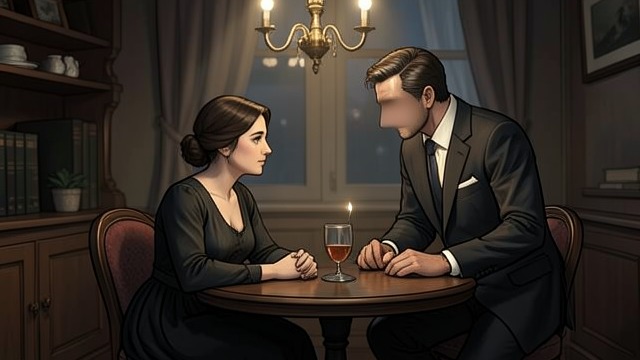
The Roof at the Drayton
Conditional access
Irene enters the Drayton Hotel tearoom while passing as white. Her fear is not shame about being Black but the prospect of being expelled from a white space.
An unstable boundary
Her body offers no obvious sign to strangers, exposing the gap between appearance and racial classification. A seemingly private tea becomes a test of who may belong.
The Hotel Tea

The Hotel Tea
A gathering under false assumptions
At The Morgan, Irene meets Clare and Gertrude Martin. Clare’s white husband joins them, unaware that the women around him are Black.
The mask is exposed
John Bellew’s racist jokes make the room’s danger unmistakable. Irene suppresses her anger and conceals her own identity to protect Clare’s secret.
The Harlem Dance
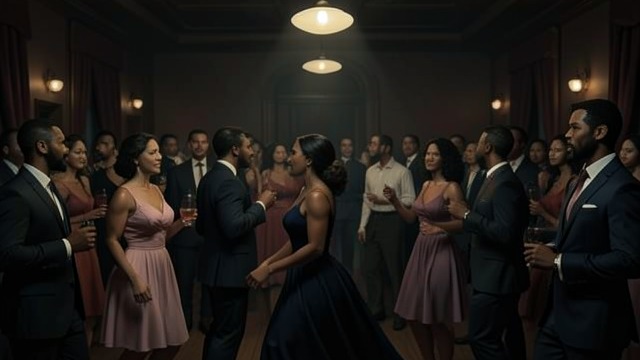
The Harlem Dance
A divided audience
White visitors come to Harlem to observe Black life as well as to enjoy its nightlife. Irene recognizes that the dance is both a social gathering and a spectacle for outsiders.
The line becomes porous
Clare dances freely among Black guests, while Irene discusses how racial identity can escape visual detection. The scene unsettles the idea that race is self-evident.
Bellew’s Recognition

Bellew’s Recognition
A chance encounter
Irene meets John Bellew while walking with Felise Freeland. His expression changes when he sees Felise beside her, suggesting that he has begun to understand Irene’s identity.
A withheld introduction
Irene refuses to acknowledge him and leaves without warning Clare. The color line becomes a source of immediate danger rather than an abstract social rule.
A Party Without Borders
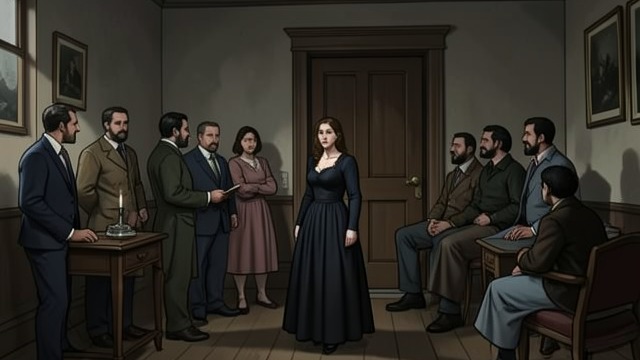
A Party Without Borders
The room changes meaning
Bellew crosses into a Harlem gathering and names Clare’s concealed identity before the assembled guests. The party’s relative safety disappears at the instant of recognition.
The boundary is enforced
Clare’s fall follows the public restoration of the racial division she had crossed. The novel leaves the physical cause uncertain while making the violence of the social boundary plain.
A sweltering afternoon in Chicago
The following Tuesday in Chicago
Autumn, during the Negro Welfare League dance
A cold day in December, downtown
Christmas night, shortly before Clare’s fall
