Anti-Black racism
Passing (Nella Larsen Edition)Anti-Black racism in Passing is not merely a set of openly hostile beliefs: it is a system that determines access, belonging, and safety, and that reaches from legal definitions of race into marriage, parenthood, public life, and private conversation. Through the conflict surrounding Clare Kendry’s concealed Black ancestry, and through Irene Redfield’s efforts to protect her family from racial danger, the novel shows both how the color line is enforced and how unstable its supposed biological foundations are.
Historical and Legal Foundations
The historical account accompanying the novel locates racial passing in the aftermath of slavery, when legal and social status became bound to racial classification. Whiteness carried material and civic advantages; Blackness was positioned against freedom and property-holding. This history helps explain why passing could offer access to opportunities barred by racism, while also making exposure a source of serious personal and social risk. The stakes are therefore more than a matter of appearance: racial identity has been made to govern who can claim security, status, and rights.
The legal doctrine associated with Plessy v. Ferguson helped codify segregation and reinforce the one-drop rule, under which any Black ancestry could determine a person’s racial classification. Jim Crow laws translated that principle into social and institutional separation. The passing narrative, however, unsettles the idea that race can be reliably read from the body. If a person’s ancestry is not visible, the distinction on which exclusion depends cannot be secured by appearance alone. In this way, the plot exposes racial categories as powerful social rules rather than self-evident facts.
The text also places its conflict against the authority claimed by scientific racism. The historical commentary describes social-scientific theories that treated racial difference as fundamental and used supposed biological distinctions to rationalize hierarchy and discrimination. Passing challenges that authority by making the effort to identify racial difference uncertain, while also showing how legal and popular definitions continue to impose consequences. Its critique does not mean that race has no force; it shows how a socially constructed classification acquires force through law, custom, and unequal access.
Passing, Public Space, and the Color Line
Clare’s life makes the contradictions of that system personal. She has concealed her Black ancestry and lives as white with John Bellew, whose racist convictions coexist with his ignorance of her background. At a tea gathering, his remarks draw a firm boundary against Black people while he treats Clare’s changing appearance as a private joke. When she raises the possibility that she might have some Black ancestry, he insists that his acceptance depends on believing that she is not Black. The episode reveals how his racial boundary operates: affection and marriage do not dissolve his prejudice, and his confidence in his own ability to define Clare’s identity rests on a false premise.
The historical commentary connects this marriage to the Rhinelander miscegenation case, in which a court dispute over a marriage made racial identity a matter of legal proof. The case exposed the gap between visible appearance and legal classification, and it showed how marriage could become a contest over racial status and its consequences. Set beside Bellew’s certainty, the reference makes clear that racial boundaries are not only asserted in private speech; courts can also claim authority to classify people and regulate the meanings attached to family relationships.
Public life offers a different but related scene of scrutiny. In 1927, white visitors increasingly attended events in Harlem, including the Negro Welfare League dance. Irene explains their presence as a desire to observe Black people, and Brian fears that the growing white audience may eventually push Black attendees aside or confine them to segregated sections. The scene captures a contradiction in public attention: white visitors can enter Black social spaces as spectators, even as the possibility of exclusion remains. The color line is thus challenged by movement across it but reinforced by unequal power over who may belong.
Family, Children, and Racial Fear
Racism enters family life through Clare’s fear about her daughter, Margery Bellew. At the tea gathering, Clare says that she was terrified throughout her pregnancy that the child might be dark and that she will not risk another pregnancy. Her fear makes the consequences of racial classification intimate and reproductive: a child’s appearance could expose the ancestry that Clare has concealed and threaten the security of the life she has made. The scene also shows how the color line exerts pressure before any public revelation, shaping what Clare believes she can safely choose.
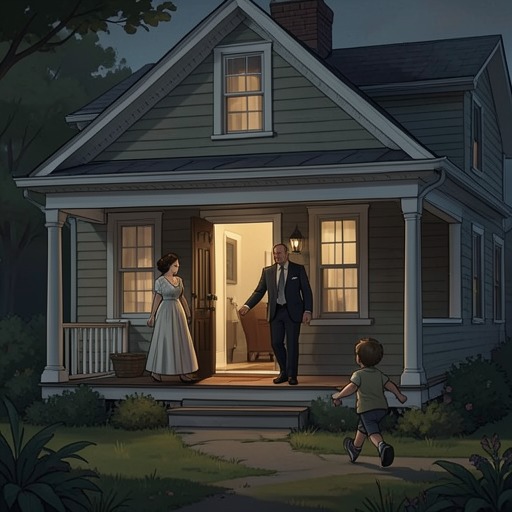
In Irene’s household, the conflict centers on whether the children should be told about racist violence. At dinner, Brian speaks bitterly about a lynching described in the evening paper. When Ted asks why Black people are lynched, Brian answers that white people hate and fear them. Irene’s response is a plea and a rebuke; she wants her sons’ childhood to remain as happy and insulated from such knowledge as possible. Her wish for protection is real, but the conversation shows its limits: the violence is already part of the world the children inhabit, not simply a subject their parents can keep outside the home.
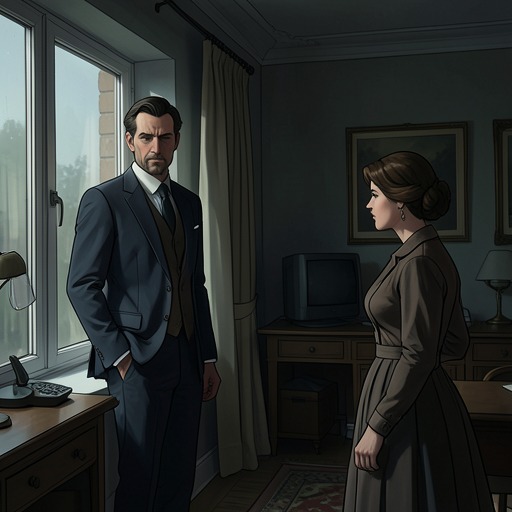
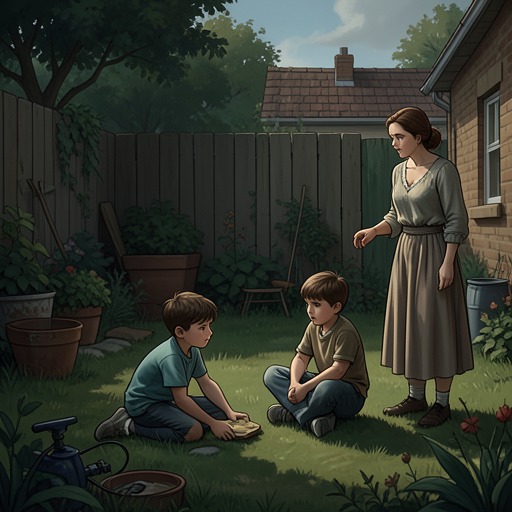
After the boys leave the table, Irene tells Brian that he should not discuss lynching with them until they are older. Brian rejects this protection as impractical. The children, he argues, must understand the country they are expected to live in and be prepared for what they may face. He points to the fact that Junior has already been called a racist slur, despite the parents’ effort to keep the word and its meaning from the children. Irene insists that Brian not discuss the race problem with them; they glare at each other, leaving their disagreement unresolved. Their exchange turns racism into a conflict over parenting: Irene seeks emotional shelter, while Brian regards knowledge as necessary preparation against danger.
Social Position, Exposure, and Narrative Significance
Irene’s response to racism is shaped by her class position and her commitment to stability. She values her family’s comfortable life and takes pride in the advancement of the race through her participation in the Negro Welfare League. Brian, by contrast, regards that work as an unwelcome obligation to help poorer Black people. The critical account also notes that the Redfields’ household workers remain without individual characterization, visible chiefly through their efficiency. Their absence exposes a class boundary within the family’s own social world: Irene’s concern for racial advancement coexists with the marginalization of Black workers whose labor sustains her household.
The novel’s final confrontation makes the costs of Bellew’s prejudice explicit. At a gathering, he discovers Clare’s concealed identity and directs a racist insult at her. Felise Freeland steps between Bellew and the others, warning him that he is the only white man present. Clare remains composed as the room’s attention turns toward her. The scene moves the racial secret from private concealment into public exposure, where Bellew’s assumptions become open hostility and Clare’s carefully maintained position is no longer secure.
Together, these episodes make Anti-Black racism both structural and ordinary. It appears in segregation and legal rules, in the policing of marriage and ancestry, in white spectatorship of Harlem, in anxiety over a child’s appearance, in arguments over what children should know, and in the unequal labor and status within Irene’s household. The novel challenges the premise that race can be reliably identified by sight, yet it also insists that racial classification has material consequences precisely because people and institutions act on it. Its critique therefore does not reduce passing to a private deception or racism to individual animosity: it traces how a racial order makes concealment seem advantageous, exposure dangerous, and even domestic security dependent on an unjust boundary.