Dreton Hotel
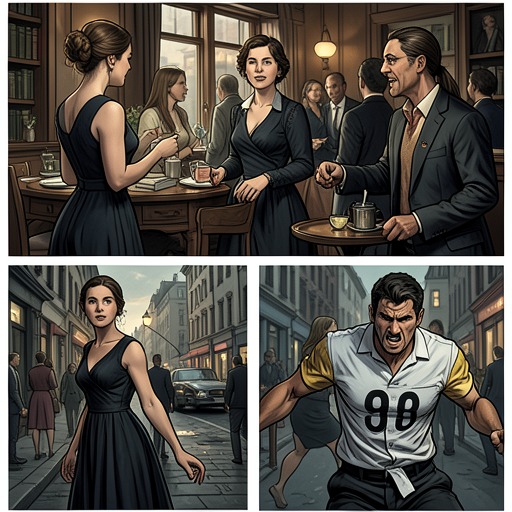
Passing (Nella Larsen Edition)The Drayton Hotel’s rooftop tea room is both a refuge and a threshold: Irene Redfield escapes the city’s oppressive heat there, only to become acutely aware that her apparent safety depends on whether others recognize her as Black. Its quiet height and lake view offer temporary distance from the streets, while the woman watching Irene makes the hotel’s social welcome feel uncertain.
Setting and Arrival
After deciding that tea on a roof was what she needed, Irene accepts a cab driver’s suggestion that the Drayton’s rooftop is known for its breeze. The journey through boiling traffic gives way to a cooler ascent: the driver helps her from the cab, and an elevator carries her to the hotel roof. The change in setting is immediate. The rooftop seems remote from the heat below, a composed space reached by leaving the crowded streets behind.
Irene is seated beside a long window, where gently moving curtains suggest the breeze she came for. Tea arrives in a tall green glass, and the view opens over lower buildings to the lake, whose blue surface seems to reach an indistinct horizon. The contrast between the restless traffic below and the stillness above gives the hotel a temporary, almost separate world of its own.
Refuge and Interruption
At first the rooftop provides what Irene sought: after drinking, she can let the tea become a background comfort, sipping absently as she looks around the room and out toward the lake. She watches cars and people moving like specks in the streets below. From this elevated distance, the city’s bustle appears small and remote. Her thoughts return to the day’s concerns, including what to do about Theodore Redfield and his book, but the setting has afforded her a pause from the heat and crowds.
That pause changes when Irene notices another woman looking steadily at her. Irene tries to answer the stare with polite indifference, then finds herself looking back; the woman’s gaze does not waver. What had seemed a sheltered public interior becomes a space in which Irene feels observed and potentially exposed. The hotel’s height and quiet cannot remove the social scrutiny that accompanies her presence there.
Racial Exposure and Significance
The woman’s stare prompts Irene to wonder whether she has recognized that Irene is Black. Irene knows that white people have often mistaken her for other ethnicities and have not, when she was alone, seemed to suspect her racial identity. Yet that history does not reassure her. She moves through anger, scorn, and fear as she imagines being asked to leave, even if the hotel were to do so politely.
The Drayton therefore brings two conditions into close contact: Irene’s ability to occupy a space that appears to offer comfort and the vulnerability of that comfort to racial judgment. Her fear is not described as shame about being Black; it is the prospect of exclusion from a public place. The rooftop’s breeze, curtains, tea, and distant lake first suggest ease and separation, but the watching woman makes clear how fragile that separation is.