Harlem
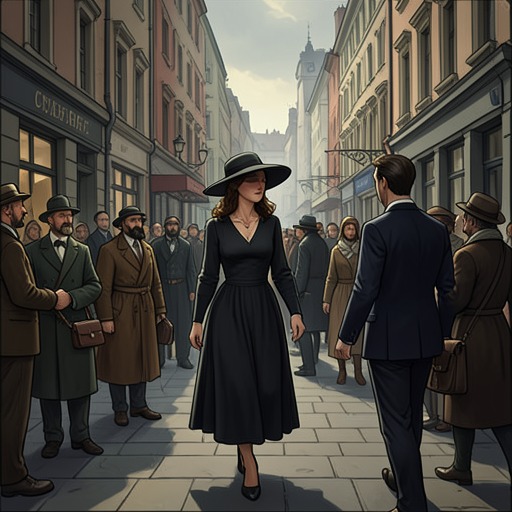
Passing (Nella Larsen Edition)Harlem is the principal urban setting of Nella Larsen’s Passing and more than a backdrop to its conflicts: it offers anonymity and public life that can enable racial passing, while making Black identity and belonging newly visible to outsiders. During the Harlem Renaissance, the neighborhood signifies cultural and social possibility, but its streets and gatherings also expose the unequal power shaping who may move freely, who is watched, and who is treated as an object of interest.
Urban Setting and Mobility
The novel’s opening encounter between Irene Redfield and Clare Kendry takes place in their native Chicago, but the main action and denouement unfold in New York City, the period’s destination for the New Negro and the New Woman. Harlem thus belongs to a broader geography of movement: the city is marked by ethnic and social diversity in the aftermath of the Great Migration, and by women’s increasing presence in public culture beyond the domestic sphere.
That urban setting matters to the plot of racial passing. Cities offer anonymity and the possibility of self-representation through role-playing, making movement between social worlds more practicable than it would be in a setting where everyone is known. Yet mobility does not dissolve the color line or the gendered boundaries of separate spheres. Harlem’s modernity offers openings while leaving the arrangements that govern race, gender, and social position in force.
Public Culture and the White Gaze
In 1927, white visitors increasingly attend Harlem gatherings. Irene explains this change to Clare, noting that people of Hugh Wentworth’s type come to such affairs in growing numbers. Brian Redfield fears that the trend could end with Black people excluded from their own events or confined to segregated sections. The episode makes public access a contested question: Harlem’s cultural life attracts outsiders, but their presence can reproduce the very exclusions the neighborhood’s public spaces might seem to overcome.
Irene identifies the visitors’ motive as the desire to see Black people. Her judgment connects the social scene to her resentment of Clare’s repeated movement across the color line: Irene believes Clare belongs to the race without caring for it. That accusation also illuminates the position of Harlem as a place looked at as well as inhabited. The neighborhood’s cultural visibility can draw an audience, but the attention may turn its residents and customs into objects of observation rather than recognize them as participants with equal claims to the city.
Class, Community, and Unequal Belonging
Irene’s place in Harlem is shaped by class as well as race. She cherishes her sons and the security of her family’s life, and takes pride in racial advancement through her participation in the Negro Welfare League. She belongs to an elite, light-skinned Black circle, however, and the novel’s account also exposes that circle’s distance from poorer Black residents. The Redfield household’s domestic workers remain unnamed; their work is recognized for its efficiency, while their individual lives receive no comparable attention.
The neighborhood’s community ideals therefore coexist with internal distinctions of status and visibility. Irene resents Brian’s candor about lynchings because she wants their sons to be happy, a wish that, in the account’s interpretation, means shielding them from knowledge of the dangers of Black life. Harlem is not presented as a setting in which racial solidarity automatically erases class privilege or vulnerability. Its social world contains both collective aspirations and unequal distributions of attention, labor, and security.
Literary and Historical Significance
As a Harlem Renaissance setting, the city represents transformation and the possibility of liberation, but the novel keeps that promise in tension with the restrictions its characters encounter as Black people and women. Harlem’s public spaces make encounters, observation, and self-presentation possible; they do not provide escape from racial hierarchy. The result is a setting that gives the plot of passing its urban conditions while showing the limits of mobility within a society organized by the color line.
The novel’s concern with Harlem also participates in a wider debate about passing narratives. Such stories expose the social construction of racial categories and the privileges attached to whiteness, while critics have read Passing through intersecting questions of race, class, gender, and sexuality. Harlem grounds these debates in a specific social world: a center of Black cultural life where access to public space is meaningful, but remains subject to white scrutiny and to distinctions within the community itself.