Hugh Wentworth
Passing (Nella Larsen Edition)Hugh Wentworth is a familiar presence in Irene Redfield’s social world and a reader of interest to Clare Kendry: Clare recognizes his name and has read some of his books before meeting him. At the Negro Welfare League dance, he turns his attention to Clare’s identity and to Irene’s guarded account of their past. Later, after a cup is shattered, Irene interprets Hugh’s words as evidence of his discernment and resolves to hide that she has understood their implication. Through Hugh, the novel makes social observation itself part of the uncertainty surrounding race, recognition, and passing.
Social Position and Introduction
Hugh is established through the attention other characters give him. When Irene handles arrangements for the Negro Welfare League dance, she speaks with him by telephone and changes her box assignment so he can have a place. Clare immediately recognizes his name when Irene mentions him, asks whether he is the Hugh Wentworth, and says she has read a book or two of his. The exchange presents him as someone whose public reputation precedes him, without specifying more about his work or background.
Clare’s interest in meeting Hugh gives their introduction a particular charge. Irene tells him that Clare is an old friend from Chicago and that Clare especially wanted to meet him. The explanation places Hugh between Irene, who controls what she discloses, and Clare, whose return to the circle is bound up with the racial identity she has concealed in her married life.
The Dance and Clare’s Identity
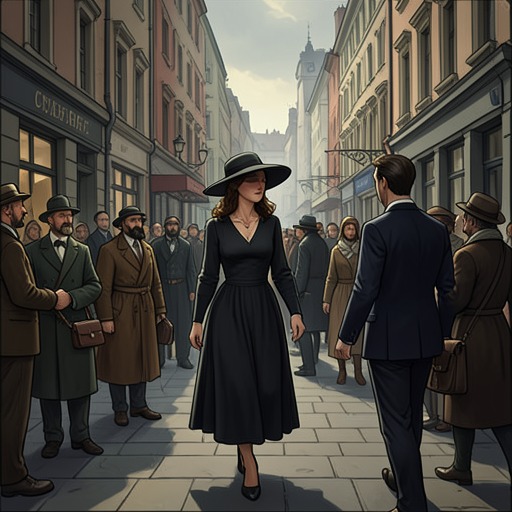
At the dance, Hugh notices Clare among the crowd and asks Irene for the blonde woman’s name, status, and race. His questions treat identification as a matter of social knowledge, not merely appearance. Irene supplies the limited explanation that Clare is someone she knew in Chicago; she does not offer the history that would make Clare’s presence and identity fully legible to him.
Hugh calls Clare and her dancing partner, Ralph Hazelton, a study in contrasts, then remarks that Clare is visiting Harlem for the first time. He calls her a case in point and asks whether she really is Irene’s old friend. The question presses on the gap between Irene’s public description and the significance she leaves unspoken. Irene answers with teasing deflection rather than a clarification, so the scene suggests Hugh’s suspicion or curiosity without confirming that he has identified Clare’s racial history.
Perception and Irene’s Caution
Hugh’s attentiveness becomes more unsettling in a later exchange with Irene. After a cup breaks on the floor, he appears beside her, apologizes, and suggests that he may have pushed her. Irene regards the apology as a cover and is struck by the significance she hears in his words. She concludes that she cannot prevent him from knowing what he has discerned, but can keep him from knowing that she recognizes his insight. The narration leaves the content of Hugh’s perception unstated; its immediate consequence is Irene’s decision to manage her response and preserve appearances.
Narrative Role
Hugh functions as an alert observer within a novel where racial identity is repeatedly treated as something other people claim to recognize, misread, or conceal. At the dance, he asks directly about Clare’s race; in his exchange with Irene, his words make her conscious of how much an observer may infer without being told. His role therefore sharpens the tension between visible presentation and hidden knowledge. The text establishes his curiosity and the force Irene attributes to his discernment, but does not resolve whether he knows the truth about Clare or exactly what he understands about Irene.