Theodore Redfield
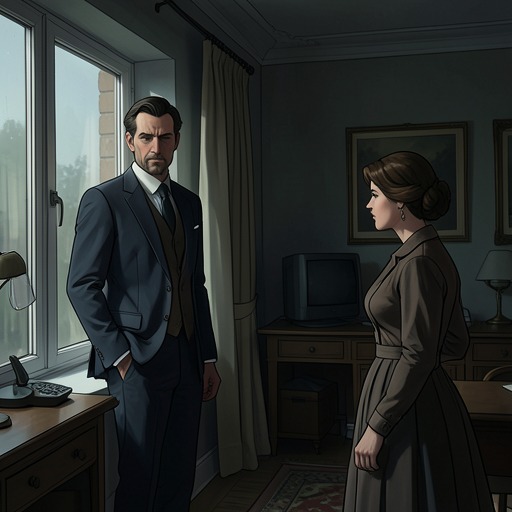
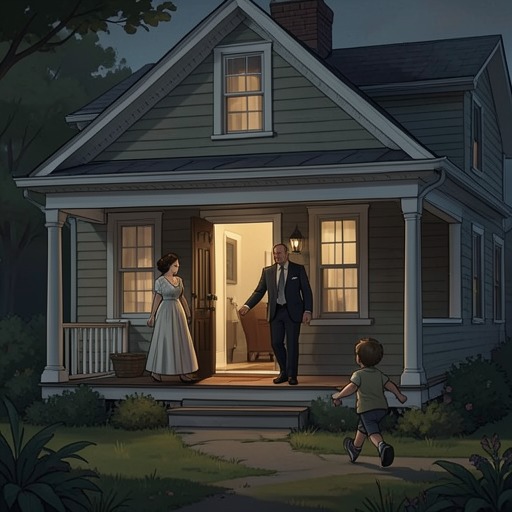
Passing (Nella Larsen Edition)Theodore Redfield, usually called Ted, is the younger son of Irene Redfield and Brian Redfield. Though his appearances are brief, they give him a distinct place in the family: he is thoughtful and conflict-averse, bears a revealing resemblance to his father, and asks a child’s plain question about lynching that exposes the racial violence surrounding the household.
Identity and Family
Theodore lives with his parents and his older brother, Brian Redfield Jr. Irene’s account distinguishes the boys rather than treating them as a single pair of children. Brian Redfield Jr. is tall for his age and resembles his father in feature and coloring, but Irene sees her own practical, determined temperament in him. Theodore, by contrast, is speculative and withdrawn; his desires and ideas seem less definite. The contrast gives Irene a way to describe the different temperaments she sees within the same family.
The boys are present in the texture of Irene’s domestic life even when they are not at the center of a scene. She hears their voices upstairs, sometimes serious, sometimes deceptively gracious, amid laughter, tussling, commotion, and toys being slammed down. These sounds establish a lively household, but they also lead Irene’s thoughts toward the future and toward Brian Redfield, whose quiet compliance she fears may conceal a wish to pull himself and his possessions away from their settled life.
Temperament and Resemblance
Irene reads Theodore’s apparent candor as potentially misleading. She thinks his manner resembles his father’s display of reasonable acquiescence: he may give way when faced with greater strength or an immovable circumstance, not because he has been persuaded, but because he intensely dislikes scenes and unpleasant argument. The comparison links father and son while leaving an important distinction between them: Irene describes Theodore’s withdrawal as a response to conflict, not as proof that he lacks wishes of his own.
That assessment complicates the idea of a compliant child. Irene notices the difference between outward submission and inward preference, and her description suggests that Theodore’s quietness can conceal rather than resolve disagreement. The same household contains Brian Redfield Jr.’s practical determination and Theodore’s less openly asserted desires; Irene’s close attention to both boys turns their contrasting temperaments into part of her larger apprehension about family stability.
The Drawing Book and the Visit
During a shopping trip in Chicago, Irene tries to fulfill promises she has made to her sons before leaving town. She finds the mechanical airplane requested for Brian Redfield Jr. without much trouble, but Theodore’s drawing book proves difficult: despite visiting five shops, she cannot locate one matching the precise directions he had given her. The errand makes his particularity concrete. His request is not interchangeable with his brother’s, and Irene’s failure to find the book stays on her mind after she escapes the heat and settles for tea.
As she waits for more tea, Irene thinks about what she will do for Theodore and wonders why he so often wants something difficult or impossible to obtain. She compares this tendency to his father’s persistent wanting of what he cannot have. The observation connects a small domestic problem to Irene’s wider concern about Brian Redfield’s dissatisfaction, while also showing that she understands Theodore through the details of his wishes as well as through his reserved manner.
When Clare Kendry appears in the boys’ playroom, Theodore responds with cool courtesy. After Irene introduces Clare as an old childhood friend, Theodore turns back to his books, takes one from the shelf, and begins to read. His action contrasts with his brother’s silent waiting and makes his withdrawal visible: he does not create an open confrontation, but neither does he display eagerness to welcome the visitor. The moment accords with Irene’s description of a child who avoids scenes and can retreat from an uncomfortable situation without making a direct protest.
A Question About Lynching
At dinner, Brian Redfield speaks bitterly about a lynching he has read about in the evening paper. Theodore asks why only colored people are lynched. His question is direct and asks for an explanation of a pattern of racial violence. Brian Redfield answers that people hate them; Irene’s immediate plea and rebuke to her husband registers her distress at the exchange.
The scene gives Theodore no extended speech or political position, and it does not establish what he understands beyond the question itself. Its significance lies in the question’s presence within family conversation: racial violence reaches the children through the news and through an adult’s account, and Theodore asks openly about the unequal targeting he has noticed. The contrast between his plain inquiry and the adults’ strained response makes the household’s exposure to racism visible without turning him into a fully formed spokesman for a view the text does not attribute to him.