
Atevi History and Political Memory
PeacemakerGeigi’s history shows how earlier alliances, treaties, and leadership decisions shape the present political order and its recurring crises.
increasing Bearing strength in each event
 decreasing
Bearing strength in each eventdecreasingThe First Railroad
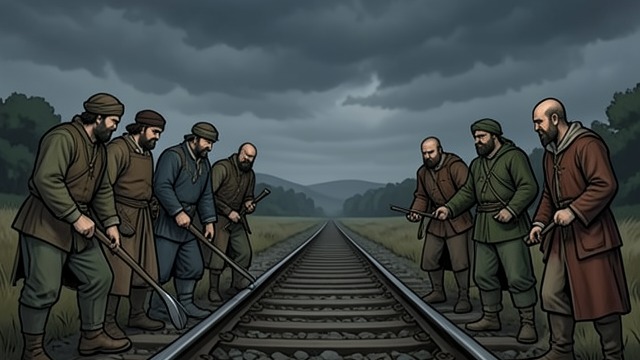
The First Railroad
Shared work across regions
Atevi associations agree to build a railway from Shejidan to the west. The project requires coordination among clans, guilds, and elected leaders who must keep promises across local boundaries.
A political institution follows
The Assassins’ Guild develops to protect the aiji and the agreements behind the railway. Trade and common projects gradually strengthen the legislature and the wider association.
Geigi’s history presents the railway as more than infrastructure. It provides a practical reason for people to cooperate, helping create political relationships that are stronger than temporary alliances formed only to resist a common enemy.
The Landing Treaty
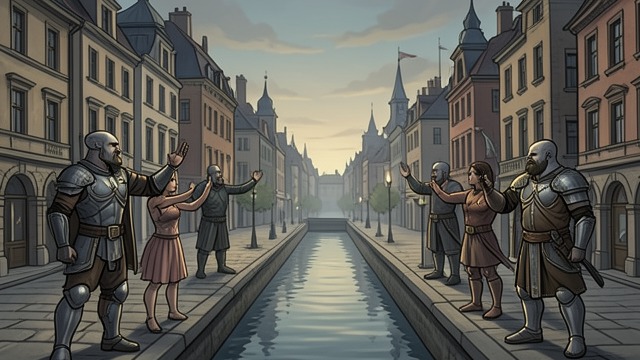
The Landing Treaty
A settlement after war
The War of the Landing ends with human forces disarmed and concentrated on Mospheira. The Treaty of the Landing creates a paidhi’s role and restricts the transfer and use of technology.
Peace with unresolved terms
The settlement prevents further fighting, but each side withholds important information and interprets its obligations differently. Human knowledge continues to influence Atevi society even as the treaty attempts to limit that influence.
The treaty is both a foundation and a constraint. Its durability comes from shared need, but its unresolved contradictions help explain why later technological and political changes provoke fear on both sides of the strait.
Institutions Across Boundaries
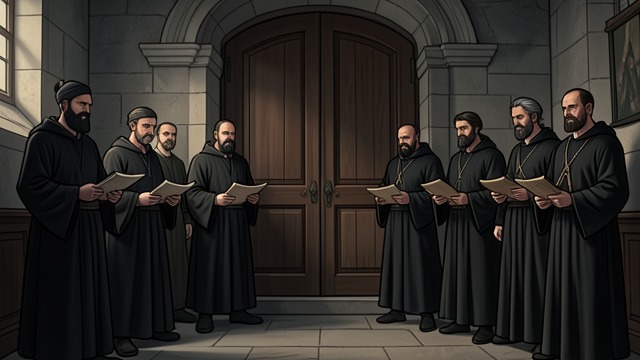
Institutions Across Boundaries
Guild autonomy established
After the war, guilds recruit and assign members across clan and regional lines. The Assassins’ Guild receives additional independence in exchange for neutrality and limits on its members’ political roles.
Benefits and vulnerabilities
The system reduces some clan conflicts and spreads expertise, but it also concentrates substantial authority within the guilds. When the Assassins’ Guild is infiltrated, the very independence that protects it from political pressure complicates outside oversight.
The history explains why the current crisis is so consequential. The Guild is not merely one department among many; it is a core check on power whose autonomy must be repaired without allowing the executive to absorb it.
before the Foreign Star’s arrival
after the War of the Landing
after the aishidi’tat expands beyond the western associations
