
The Birthday That Belongs to Two Children
PeacemakerThe coincidence of Cajeiri and Seimiro sharing a birthday turns numerical anxieties into an opportunity for a new family custom.
increasing Bearing strength in each event
 decreasing
Bearing strength in each eventdecreasingA Fortunate Ninth
A Fortunate Ninth
A day expected to be special
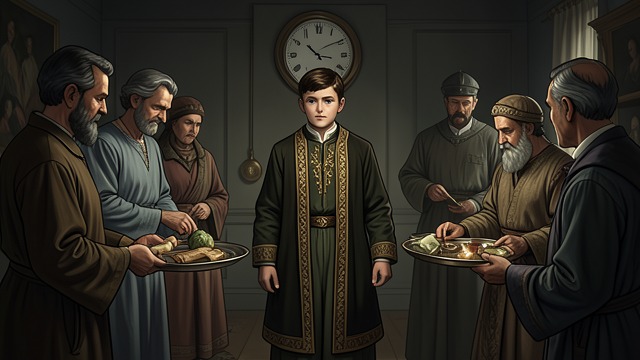
Cajeiri wakes to greetings from his friends and household, delighted that his ninth birthday is treated as a fortunate milestone. The day begins with a private breakfast and anticipation of the larger ceremony.
Pressure beneath celebration
The boy soon faces formal clothes, a prepared speech, and a schedule organized by adults. His guests will not remain beside him for every part of the public event.
The birthday contains both joy and obligation. Cajeiri welcomes the affection but is already learning that a fortunate day can be claimed by public expectations as well as private wishes.
The Sister's First Day
The Sister's First Day
A birth among ceremonies
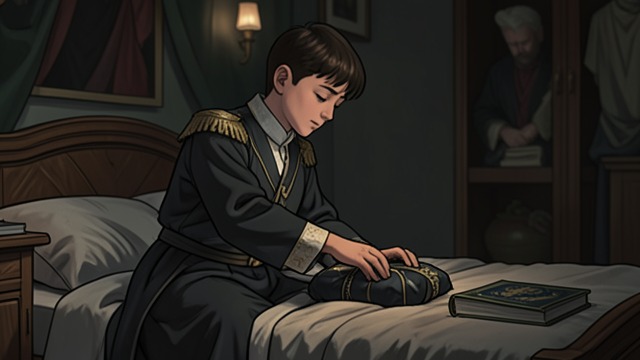
While Cajeiri’s investiture and birthday events continue, Damiri gives birth to Seimiro. Cajeiri is brought to his mother’s room after the formal gathering, where he meets the newborn privately.
A cautious introduction
He touches Seimiro’s hand and accepts the chance to hold her, though he fears doing something wrong. He is beginning to think of himself not only as heir but as an older brother.
The new relationship arrives amid public politics, but its first meaning is simple and physical: warmth, a small fist, and a child who cannot yet see him. That encounter gives Cajeiri a personal connection to the future his investiture has made political.
A Shared Celebration
A Shared Celebration
Discovering the coincidence
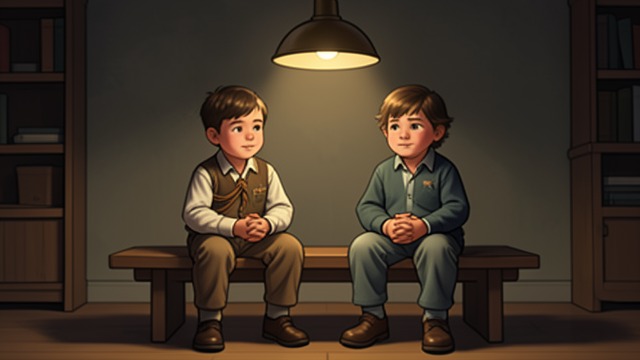
Cajeiri realizes that Seimiro’s birthday falls on the same date as his own. Their ages will carry different numerical meanings, so the date may repeatedly feel fortunate for one child and inauspicious for the other.
A custom imagined
He considers celebrating together on his own fortunate day, giving his sister a place in his birthday rather than letting numbers divide their experience. He keeps the idea playful and privately calls it a possible arrangement.
The thought makes a cultural rule feel negotiable without dismissing its significance. Cajeiri’s affection becomes an imaginative act of inclusion, suggesting that tradition can be carried forward by people who find ways to make it serve their relationships.
the morning of Cajeiri’s ninth birthday
late on the same day
after midnight following the Festivity
