Abundio the muleteer
Pedro PáramoAbundio the muleteer is Juan Preciado’s first guide into Comala and, in the account of his arrival, the first person to disclose that he too is a son of Pedro Páramo. His practical kindness—showing the way and recommending a place to seek lodging—draws Juan farther into the village. Only afterward does Eduviges Dyada insist that Abundio is dead, turning an apparently ordinary meeting into an early disturbance of the novel’s boundary between the living and the dead.
Identity and Introduction
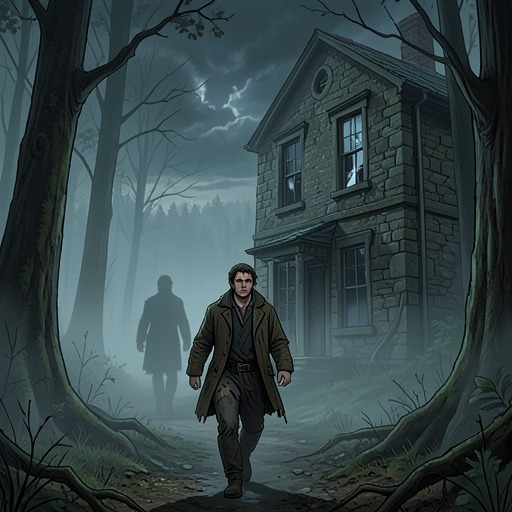
Abundio first appears at Los Encuentros, a place where several roads cross. Juan has waited there for a man to appear, then asks where he is going. Abundio says he is going down that way; when Juan explains that he is headed to the same place, he lets the younger man follow. The meeting begins as a matter of direction and shared route, not as a planned reunion between relatives.
As they walk, Abundio tells Juan that he is also a son of Pedro Páramo. The disclosure makes the two travelers brothers through their father, though their brief encounter supplies no further account of their family or of how Abundio came to be born. The relationship is presented as a fact of parentage, not developed into a conventional sibling bond: the men have only just met, and their immediate connection is that they are descending toward the same destination.
Guide on the Road to Comala
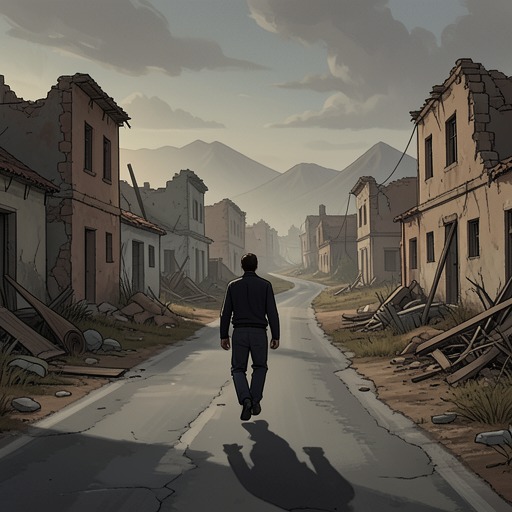
Juan follows Abundio, adjusting his pace to the muleteer’s until Abundio appears to notice him and slows down. They come so close that their shoulders nearly touch. Their proximity contrasts with the emptiness around them: a flight of crows crosses the bare sky, and after they pass the heights, the route continues downward into air that is stifling and still. The landscape makes their movement feel less like an ordinary journey through open country than a passage into a place suspended in expectation.
At Comala, Abundio continues on rather than staying with Juan. He tells him that his own home lies farther on, where two heights seem to meet, and offers him a welcome if he chooses to come. He also suggests that Juan might find someone still alive in the village. Juan elects to remain, because reaching Comala was his purpose. The guide’s departure therefore divides their paths at the threshold: Abundio carries on toward his home, while Juan stays to pursue the reason he came.
A Recommendation and an Old Arrangement
Before leaving, Abundio gives Juan a concrete next step: he should seek Eduviges Dyada, if she is still living, and say that he comes on Abundio’s recommendation. Juan asks his name, but does not hear the surname. That small failure of identification matters later: the introduction rests on a familiar given name and on the trust Eduviges is expected to place in it, rather than on any complete account of who the traveler is.
When Juan tells Eduviges that Abundio directed him to her, she recognizes the name and recalls an established arrangement. She used to give him a little something for every traveler he sent her, and says they were both content with the exchange. Her recollection recasts his recommendation as more than a spontaneous kindness to Juan: Abundio had served as a link between travelers and a possible lodging, receiving a modest payment for each referral. Eduviges adds that times have changed and poverty has arrived, so that she and Abundio no longer attract anyone’s interest as they once did.
The Dead Guide and the Unsettled Encounter
Eduviges’s recognition soon becomes a contradiction. After Juan insists that the Abundio he met could hear, she concludes that the traveler cannot have been the man she remembers: Abundio is no longer alive, she says, and there is no doubt about his death. Juan agrees with her conclusion. The exchange does not explain how he could have met a man whom Eduviges declares dead, nor does it resolve whether the encounter should be understood as a visitation or as a mistaken identification.
That unresolved discrepancy changes the meaning of Abundio’s apparently practical role. His route, advice, and referral have brought Juan into contact with Eduviges, but the guide himself is already described as belonging to the dead. The novel lets the helpfulness of the encounter remain intact while making its ordinary explanation impossible within the conversation that follows. Abundio thus marks an early point at which the journey into Comala becomes more than a search for a living father: even a companion met on the road may already belong to the village’s dead.