Bartolomé San Juan
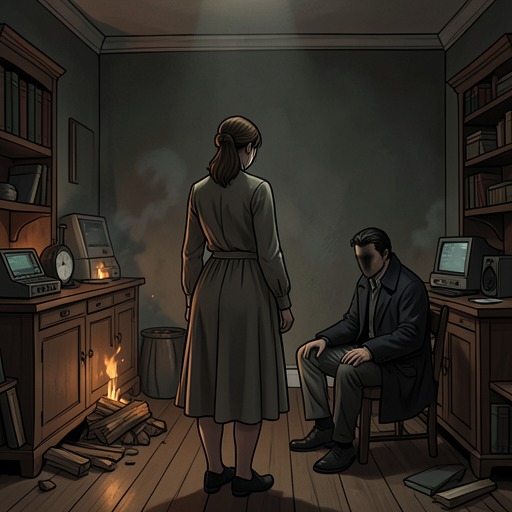
Pedro PáramoBartolomé San Juan is Susana San Juan’s father and a prospector associated with the abandoned mines of La Andrómeda. His return to Comala is presented as an act of protection: amid reports of armed rebellion, he brings his daughter to a more populated place. But the shelter offered by Pedro Páramo turns that protective journey into a trap. Bartolomé’s practical knowledge of the mines cannot shield him from a landowner who wants his daughter and is prepared to remove her father to get her.
Identity and Background
Bartolomé is first made present through other people’s reports. Fulgor Sedano tells Pedro Páramo that Bartolomé has arrived, and describes a man who did not look for lodging but went directly to Pedro’s former house, dismounted, and unpacked as if the place had already been rented to him. His confident arrival draws Pedro’s attention; Fulgor’s account also shows that Bartolomé’s return is unexpected enough to prompt questions about what he is doing there.
Fulgor later searches the mountain for him, following Pedro’s demand to find Bartolomé rather than assume that the land has swallowed him up. He eventually locates him alone in a log cabin in a ravine, near the abandoned mines of La Andrómeda. The contrast between the isolated prospector and the confident newcomer at the house gives his return two dimensions: he is a father trying to resettle his daughter, but also a man whose whereabouts and livelihood are being investigated by Pedro’s agent.
Return with Susana
Bartolomé returns because reports of armed men rising up have reached the area. According to the account of his letter, he comes not for his own sake but to put Susana somewhere populated and safer. He accepts Pedro’s invitation to return, use the house, and receive what they need. The gesture looks like assistance, yet Bartolomé does not mistake it for a gift without conditions. He expects that what Pedro provides will have to be repaid, and believes his own labor can meet that obligation.
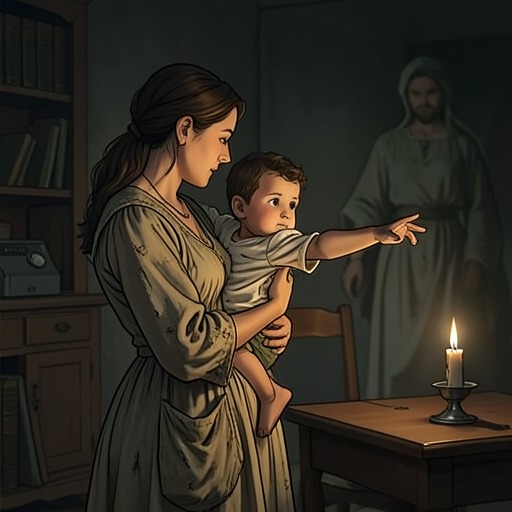
The daughter’s recollection of Bartolomé’s words makes the move feel ominous rather than reassuring. He describes the village as marked by misfortune, its air old, stagnant, impoverished, and dry. He contrasts it with the place they came from, where Susana could watch clouds, birds, and moss, and says that in Comala she will find only a stale, sharp odor. He suspects that no salvation is possible there. His foreboding is specific to their new surroundings: the house and provisions may answer immediate needs, but neither makes Comala feel like refuge.
Work, Fatherhood, and Pedro’s Demand
Bartolomé tries to turn his dependence on Pedro into an exchange of work. He gives Pedro a detailed report on La Andrómeda and explains the mines’ prospects if they are exploited methodically. Pedro rejects the apparent subject of the conversation. He is not interested in the mines, he tells Fulgor, but in Bartolomé’s daughter, whom he calls the most beautiful woman the earth has borne and remembers as a childhood companion. Bartolomé’s technical knowledge and offer of labor thus become irrelevant beside Pedro’s private claim on Susana.
Bartolomé’s account also reveals a harsh, possessive side to his own fatherhood. Learning that Pedro and Susana played together as children, and even bathed together in the river, he says that had he known, he would have beaten her with a belt. Susana answers that she does not doubt it. The exchange does not soften Pedro’s pursuit; instead, it places Susana between two forms of male control. Bartolomé’s threat is hypothetical and disciplinary, while Pedro’s is backed by the power to direct Fulgor and plan violence. When Susana calls herself mad and Bartolomé asks whether she is, their exchange gives no sign that he can make sense of or protect her from the danger gathering around them.
The Plot Against Him and His Significance
Pedro does not merely ask Fulgor to persuade Bartolomé to leave. He instructs him to send the father back to work at the mines and suggests that the old man could disappear in the remote country where nobody goes. He frames the intended killing as a duty of protection: Susana must become an orphan, he argues, so that they can protect her. The language turns violence into a grotesque imitation of care, exposing the difference between Bartolomé’s stated reason for bringing Susana to Comala and Pedro’s reason for wanting her there.
Bartolomé’s role in the narrative is therefore defined by an unequal contest over Susana’s future. He returns in response to armed unrest, accepts shelter while expecting to earn it through work, and offers Pedro knowledge of the mines; Pedro answers by treating the daughter, not the land or labor, as the object he wants. The evidence establishes Pedro’s plan to have Bartolomé removed, but does not establish its outcome. Bartolomé remains a figure caught at the point where the appearance of hospitality gives way to a threat: his attempt to bring Susana to safety has placed both of them inside Pedro’s design.