Comala
Pedro PáramoComala is both the destination Juan Preciado has been sent to find and a village whose silence unsettles the very idea of arrival. In the course of his passage through it, the place shifts between a cherished image of permanence, a deserted landscape, and a temporary, deafening crowd; after Susana San Juan’s burial, Pedro Páramo turns that crowded village toward hunger.
Approach and Setting
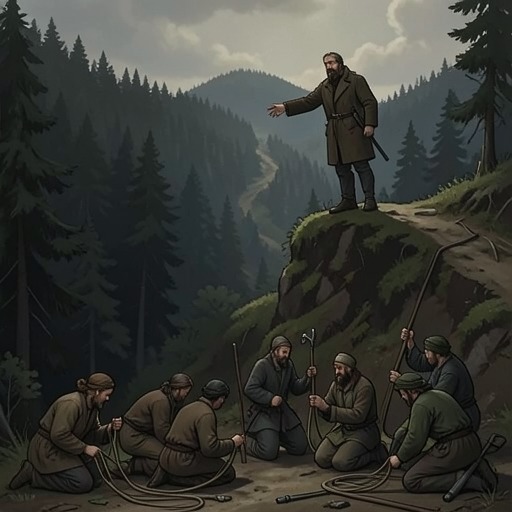
Comala first appears below the road Juan Preciado is traveling. The route rises or falls according to the direction of travel: for someone leaving, it climbs; for someone arriving, it descends. Asked to identify the village, Juan’s companion names Comala and confirms it. That downward approach gives arrival a physical direction, but not the welcome the name might promise. From the road, Juan sees the settlement as deserted, and is told plainly that nobody lives there.
The hour makes the emptiness especially stark. Juan remembers the previous evening in Sayula, where children filled the streets with cries and pigeons crossed the calm air before settling on rooftops. In Comala, the same hour brings no children or ordinary street life. Juan hears his own footsteps striking the round stones that pave the streets; the walls return their sound, still colored by the evening sun. Empty houses line the main street, their broken doors overrun by weeds. The village is not simply quiet: its visible abandonment and the amplified sound of a lone traveler make the absence of inhabitants part of the setting itself.
A Village of Echoes
As Juan walks through Comala, he sees a shawled woman disappear as if she were not of this world, then encounters her again along the open doors. The brief sighting belongs to the village’s unsettling pattern: the streets appear empty, yet Juan’s passage is not free of presences. The architecture seems to participate in that contradiction. Walls and stones, which should merely enclose or pave the streets, become the apparent hiding places and conduits of sounds.
Damiana Cisneros of Media Luna describes echoes as confined in the walls or beneath the stones, seeming to follow people as they walk. She associates them with creaks, laughter worn thin by age, and voices exhausted through long use. Her account gives a name and a material setting to the noises Juan encounters: they seem to seep from cracks and peeling surfaces, close enough to trail a walker without resolving into clear speech. The village’s emptiness is therefore not a silence that cancels the past. In Damiana’s account, the old sounds remain in place after ordinary life has gone.
The same distinction between sound and presence appears in Damiana’s memory of nights when she heard a celebration from the direction of Media Luna. She once approached to watch the dancing, only to find the streets as empty as they are now. The noise eventually stopped, and she was not surprised when it ended: even joy, she reflects, grows tired. In this recollection, Comala’s emptiness is not new. A sound of communal life could fill the night and still leave no visible gathering when someone came to look.
Memory and the Promise of Home
The abandoned streets stand against the image of Comala Dolores Preciado had given Juan. In her remembered description, it is the place she loves: a village in the open countryside, rich with trees and plants, like a small container holding tightly packed memories. Its mornings, noons, nights, and dawns seem to persist without change; the wind alone alters the colors and makes life seem as slight as a murmur. This remembered Comala offers Juan more than a location. It is the home he expects to find through his mother’s attachment to it, and a promise of a life in which he might remain.
The difference between that image and the village Juan enters is not merely a contrast between beauty and decay. The memory makes Comala feel continuous and welcoming, while the present supplies broken doors, weeds, and the sound of footsteps returning from bare walls. Even the wind’s power to alter color in Dolores Preciado’s image cannot restore the inhabited village Juan seeks. Comala’s changing appearances are instead bound to what its visitors remember, hear, and fail to find.
Bells, Mourning, and Celebration
At dawn on December 8, the bells wake the people of Comala. The morning is gray, and the ringing begins with the largest bell before others join. Some residents think a major Mass is being called and open their doors; others have already been awake, waiting for the Angelus to mark the end of night. But the ringing continues longer than expected. By noon, bells from several churches are sounding together, and they continue through the night, building into a single, increasingly loud lament. People shout to make themselves heard. After three days, they are deaf, and the air remains filled with the bells; some have cracked and now sound dull and jar-like.
The tolling draws people from far away. Visitors come from Contla and beyond, as if on pilgrimage; a circus arrives with tightrope dancers and rides, along with musicians. Those who first claim to have come only to see what is happening begin to make acquaintances, and serenades follow. The gathering gradually becomes a festival. Comala fills with people, noise, and celebration, as crowded as it would be on the village’s own feast day. The bells stop, but the revelry does not. No one succeeds in making the visitors understand that the occasion is mourning, or persuading them to leave; more people arrive instead.
The Village Under Pedro Páramo’s Power
The festival has a quiet counterpoint at Media Luna. While Comala celebrates, the estate is solitary and hushed: people walk barefoot and speak softly. Susana San Juan is buried there, and scarcely anyone in Comala seems to notice. The village’s gathering and the estate’s mourning occupy the same days, but do not share the same understanding of them. The light from the busy village reaches toward Media Luna like a halo in the gray sky, yet it cannot overcome the silence surrounding the burial.
Pedro Páramo stays in his room and says nothing. He swears revenge on Comala, then carries it out by withdrawing his support and letting the village go hungry. The change is consequential: the place that has just overflowed with visitors and celebration becomes the object of a deliberate deprivation imposed by the landowner whose wife has been buried in near isolation. Comala’s public noise cannot protect it from his power, just as its crowds cannot undo the separation between the village and Media Luna. Across these episodes, the village’s condition turns sharply—from deserted streets, to a crowd drawn by bells, to a population exposed to hunger—while its earlier promise of permanence remains only in memory.