Comala's ghost-town state
Pedro PáramoComala’s ghost-town state is more than a matter of empty streets: the village has been deserted by most of its living inhabitants, yet remains crowded with echoes and restless dead. Juan Preciado first encounters it as a place where, he is told, nobody lives; he also learns that Pedro Páramo has been dead for years. The apparent emptiness is therefore both a consequence of Comala’s collapse and a deceptive surface beneath which voices, memories, and souls continue to persist.
An Empty Village Full of Echoes
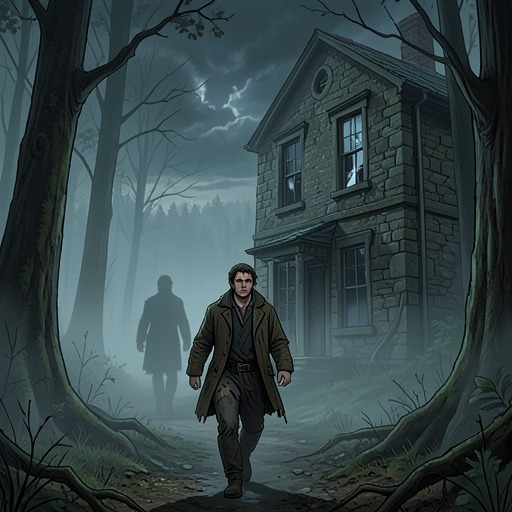
From the road, Comala looks abandoned. Juan observes that it seems no one lives there, and his companion confirms the impression rather than correcting it. But the village’s silence is never complete. Damiana Cisneros describes echoes apparently lodged in walls or beneath stones, seeming to follow a person’s steps. They include creaks, laughter worn thin by age, and voices that sound exhausted from having been used too long. The village is not simply quiet: its ordinary human presence has faded, while sound survives in disembodied form.
The distinction between apparent emptiness and persistent presence shapes Juan’s passage through Comala. Damiana recalls hearing a celebration for many nights at Media Luna and going there to watch the dancing. When she arrived, she found deserted streets and no one in sight, much as they are now. Eventually the festive noise stopped; she reflects that joy, too, grows tired. The remembered revelry and its disappearance give the present emptiness a history: even the sounds of communal life have come and gone, leaving only echoes.
Those echoes can be recognized as the dead. While going to fetch Juan, Damiana says, she encountered a funeral procession and stopped to pray. A woman drew away from the other mourners, asked Damiana to pray for her, and was recognized as her sister Sixtina. Sixtina had died when Damiana was twelve. She had been the eldest of sixteen siblings, and her death lay far in the past, yet she still wandered in the world. The encounter makes Comala’s ghostliness intimate and familial: the dead are not anonymous noises but people who return with requests, sometimes to those who remember them.
The Few Who Remain
The claim that nobody lives in Comala needs qualification. A local speaker tells Juan that a few people remain, including residents who stay shut inside their homes. Their days are difficult to account for; their nights, she says, are spent behind walls, while souls roam the streets after dark. The living and dead occupy the same village, but not on equal terms. The inhabitants’ withdrawal leaves the streets to the dead, and the abundance of wandering souls has become so great that the remaining people have given up trying to pray for all of them. Their limited prayers would provide each soul with only a fragment of a prayer.
The town’s haunting is also tied to a religious failure that cannot be repaired by shame alone. The speaker recounts confessing to a bishop who visited to administer confirmation, including her relationship with her brother. She asked him to marry them, explaining their isolation and the absence of anyone else in the village. The bishop refused, told them to separate, and rode away on his mule without returning. In the speaker’s account, Comala consequently remains full of souls in distress who have received no absolution. The village’s supernatural condition is inseparable from human isolation, sin, and the failure of the religious authority that might have offered relief.
Abandonment and the Village’s Decline
Comala’s material ruin is traced to Pedro Páramo’s response to Susana’s death. A local account describes him spending the rest of his days slumped in a chair, looking toward the road by which she had been taken to the cemetery. He lost interest in everything, abandoned his properties, ordered their contents burned, and drove everyone away. The account distinguishes this visible withdrawal from uncertain explanations others offered: some thought he had simply had enough, while others said disillusionment had overtaken him. Whatever the explanation, his grief becomes a force with consequences for the whole estate and village.
Once the land was left unattended, it fell into ruin, disease, and infestation. Comala’s population dwindled as people scattered in search of other places to live. At first, those leaving intended to return: they entrusted their belongings and families to others. Later, some came back for their families but not their possessions; eventually, people forgot the village and those they had left behind. The repeated departures turned abandonment into a gradual process rather than a single evacuation.
Those who stayed did so for want of somewhere else to go, or because they hoped Pedro would soon die and leave them his property. Years passed while he remained alive, compared in the account to a scarecrow standing before the lands of Media Luna. The hope of inheritance kept some people in place without restoring the community. Then the Cristero wars began, and the army seized the few men who remained. The speaker says she began to starve at that point. The sequence joins private grief, neglected land, migration, political violence, and hunger in the making of Comala’s desolation.
Death as the Village’s Continuing Present
For Juan, the village’s voices are not merely a story told by others. He describes reaching the plaza and leaning against a portico pillar. Although he sees nobody, he hears the even murmur of a multitude, like wind in branches when neither tree nor branches can be seen. The sound gathers and circles him; among its barely audible words, he makes out a plea for prayer. Terror freezes him. Dorotea later tells him that she and Donis found him on the plaza, already stiff, and carried and buried him. Juan’s encounter confirms that Comala’s apparent crowd is not a living population and that its whispers can kill.
In this way, the ghost-town state alters the meaning of presence and absence. Pedro is already dead when Juan arrives, most inhabitants have left, and the few who remain conceal themselves indoors; nevertheless, the abandoned village is full of voices and souls that cannot depart into rest. The dead continue to ask for prayer, while the living lack the spiritual standing or practical capacity to answer them. Comala’s empty streets thus hold the history of a community’s dispersal and the unresolved burdens that outlast it.