Comala's unpardoned souls
Pedro PáramoComala's unpardoned souls make the village's spiritual desolation audible: the dead remain near, speaking from unseen places and asking the living to pray, while the people left in Comala doubt that prayer can reach them. Their condition is more than a supernatural mystery. It grows from denied religious absolution, isolation, and a community too diminished to answer the dead’s continual requests.
The Dead and the Living
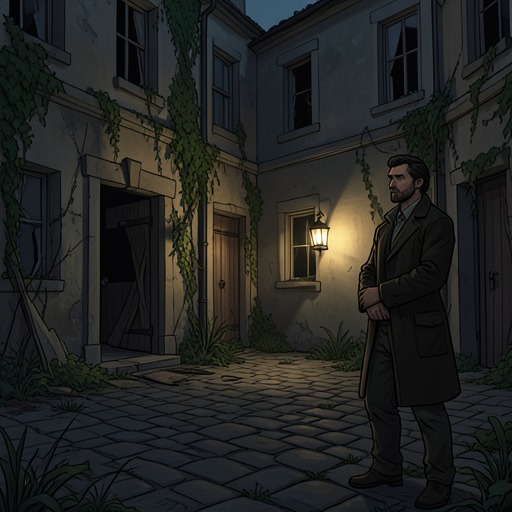
A resident explains that some people still live in Comala, but cloister themselves in their houses, spending their nights behind walls. Outside, souls emerge into the streets at night in such numbers that the living have given up praying for all of them. Their prayers, the speaker says, would have to be divided into small portions, too little to help anyone. The dead are not distant from daily life: their presence fills the hours after dark, even as the living avoid looking at them.
The boundary is also audible. Damiana Cisneros of Media Luna describes echoes apparently lodged in walls or beneath stones, seeming to follow a person through the village. The sounds include creaks, laughter worn down by repetition, and voices that have been used too often. She recalls that the noises of a party once carried from Media Luna, though when she went to see it, the streets were empty. The festive sound eventually stopped; the village’s echoes did not. Damiana has grown accustomed to them, but the voices remain evidence of a past that has not cleanly disappeared.
Some of those voices make direct demands on the living. Damiana recounts stopping at a funeral procession to pray, when a woman separated from the others and called for her to pray. Damiana recognized her sister Sixtina after she loosened her shawl. The scene collapses the distinction between a familiar voice and a voice from among the dead: recognition does not restore the sister to ordinary life, and prayer is the only response Damiana can offer.
Absolution Denied
The village’s spiritual crisis is connected to sin and the failure of religious authority to provide relief. One resident describes visible purple marks across the body as an outward sign of sin, and an inner life that feels like a sea of mud. When a bishop visited to administer confirmation, the speaker confessed and asked him to marry her and her brother. She explained that isolation had left them together as the only people available to populate the village. The bishop rejected the plea: shame, he said, did not absolve, and the two had to separate. He rode away without turning back and never returned.
The account does not present the refusal as a simple resolution. The siblings’ isolation explains the circumstances they describe, but the bishop offers no means of remaining together within religious law or of surviving their predicament. His departure leaves the speaker with a stark understanding of Comala as a place of lost souls, where the dead will receive no absolution and the living cannot provide it. The passage links the spiritual condition of the dead to the damaged condition of the living, without suggesting that shame itself can repair either.
Dorotea describes a related judgment. Father Rentería had told her that she would never know or even glimpse heaven because of her sins. For her, that denial emptied heaven of its power as a promise of elsewhere: the hope that death might carry a person to another place had been closed off. She calls her present location her heaven, not as a claim that she has been forgiven, but as a measure of how completely the promise of salvation has failed her.
Voices, Fear, and the Grave
The dead’s pleas reach Juan Preciado before he understands their source. On the empty plaza, he hears the din of a multitude, although nobody is visible. The sound gathers around him like a swarm; among the nearly voiceless words, he makes out a request for prayer. His soul freezes, and he dies of fear. The scene turns Comala’s invisible population into an immediate physical danger: the voices are not merely remnants of the past but an encounter that Juan cannot withstand.
Afterward, Dorotea disputes Juan’s explanation that lack of air killed him. She says that she and Donis found him on the plaza, far from Donis’s house, already stiff and twisted as someone who had died of fright. They dragged him into the shade of the portico and buried him. Juan then recounts how the crowd’s sound had surrounded him. His death and burial do not end the encounter; he and Dorotea speak together from the grave, making the posthumous setting part of the community in which the dead continue to speak.
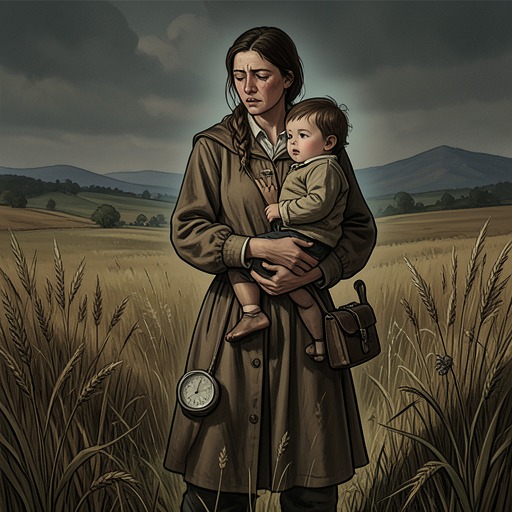
Dorotea also describes her own separation from her soul. As she sat down to die, it urged her to rise and continue living, still seeming to expect a miracle that would cleanse her of her faults. She refused, saying inwardly that the road ended there, and opened her mouth for the soul to leave. She felt a small thread of blood fall into her hands. She believes the soul may now wander the earth, following the living in search of prayers, or may hate her for the mistreatment it endured. Her account makes the afterlife neither a clear escape nor a settled punishment: the dead remain bound to remorse, memory, and the hope of aid from the living.
A Village That Cannot Answer
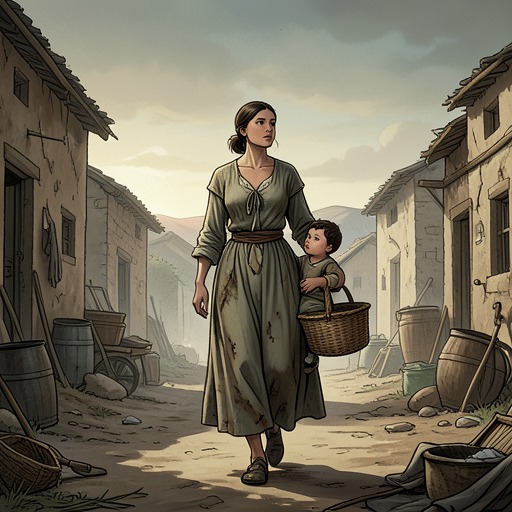
Comala’s spectral population is inseparable from its abandonment. After Susana San Juan dies, Pedro Páramo withdraws, gives up his properties, and orders their contents burned. The land is left to deteriorate, the population dwindles, and residents depart for other places. Some leave expecting to return, entrusting their homes and families to those who remain; in time, many forget Comala altogether. Others stay because they have nowhere else to go or hope Pedro Páramo will die and leave them his property. The village thus loses people through both physical departure and the collapse of expectation.
The later wars of the Cristeros take away some of the few men still there. One speaker says that this was when she began to starve, and that she had not been with anyone since. In this account, the village’s spiritual and material losses accumulate together: diminished population, abandoned land, hunger, and the countless dead who still seek prayers. Pedro Páramo’s grief after Susana’s death is identified as a cause of the abandonment, but the consequences spread far beyond his private loss.
The unpardoned souls give that history a continuing voice. Their whispers recall people and relationships that ordinary village life can no longer hold, while their requests expose how little remains to answer them. Comala is not simply empty: it is crowded with those whose need has outlasted the community’s capacity, and whose voices make abandonment audible.