Comala’s Bells for Susana’s Death Turn into a Celebration
Pedro PáramoComala’s Bells for Susana’s Death Turn into a Celebration marks the moment when a funeral signal loses its meaning in public life. The bells announce Susana San Juan’s death, but their prolonged sound draws visitors, music, and spectacle until Comala is celebrating while Susana is buried almost unnoticed. The contrast leaves mourning divided between the noisy town and the silent Media Luna, and ends with Pedro Páramo turning his grief into a vow of retaliation.
The Bells and the News of a Death
The ringing begins at dawn on December 8, under a gray sky. The great bell sounds first; the others follow. Some residents assume that the bells are calling them to high mass. Doors open behind which early risers have been awake, waiting for the Angelus to mark the end of the night. At first, the sound belongs to a familiar religious schedule. Its duration soon unsettles that expectation: the bells continue beyond the hour people think they should, and more churches join in, including Sangre de Cristo and Cruz Verde, and perhaps the Santuario.
By noon the ringing has not stopped. Night falls, but the bells continue together, growing louder until their separate voices make one resonant lament. The sound alters ordinary communication: people have to shout to make themselves heard. Residents ask what has happened, and the answer is passed between them—that Doña Susana has died, that the dead woman was Pedro Páramo’s wife. The news comes not as a private announcement but as a recognition pieced together amid the din.
Mourning Becomes a Festival
After three days, people are deafened by the continuing peal; conversation has become difficult, and some bells have cracked, producing a dull, jar-like sound. Yet the ringing’s physical exhaustion does not bring the crowd’s visit to an end. People arrive from Contla and places farther away, drawn by the unceasing sound. A circus appears, with tightrope dancers and rides; musicians come too. Visitors first seem merely curious about the commotion, then mingle with one another, and serenades follow. The gathering gradually becomes a festival, filling Comala with the bustle and noise of a village feast.
When the bells finally stop, the celebration does not. No one succeeds in making the visitors understand that these are days of mourning, or in persuading them to leave; more people arrive instead. The reversal is not that the death is forgotten—the visitors have come because the bells make it audible—but that the public response cannot be made to serve the grief the bells were meant to mark. Their sound gathers a crowd, but it cannot direct that crowd’s feelings or behavior. A funeral signal has produced an occasion for sociability and entertainment.
The Two Places of Mourning
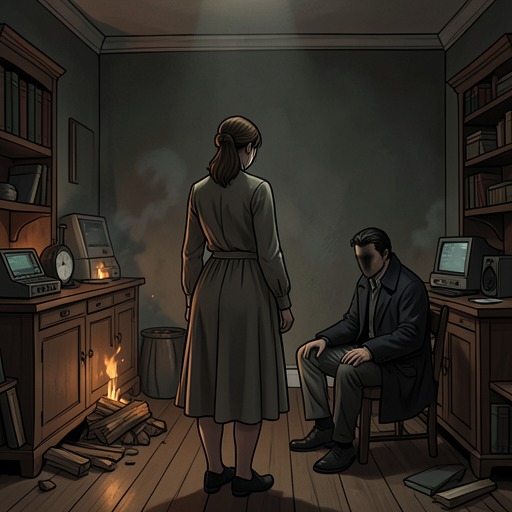
The account sets the crowded town against the estate. At Media Luna, people move barefoot and speak quietly. Susana is buried there, but few in Comala take notice: while her funeral proceeds, the town has cockfights, music, drunken shouts, and lottery-ticket sellers. The village’s light reaches the estate like a halo in the gray sky, a visible connection that does not overcome the distance between the two places. Comala is bright with activity; Media Luna is isolated in grief.
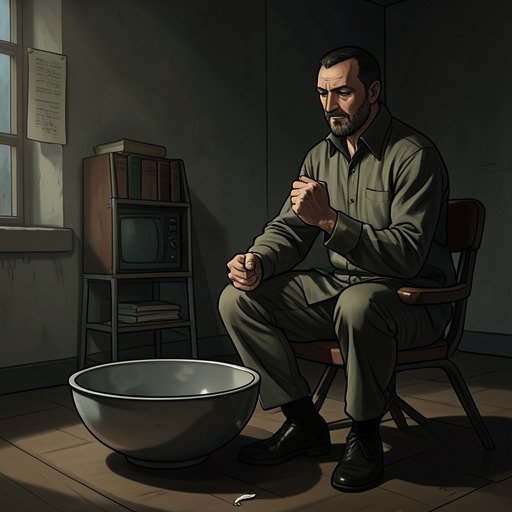
This division makes the funeral’s public and private dimensions sharply unequal. The bells can carry news across the region and attract people from far away, but their reach does not ensure that the dead woman receives attention where she is laid to rest. The funeral at the estate is quiet enough to be nearly eclipsed by the festivities. Pedro says nothing and does not leave his room. His withdrawal is set against the crowd’s exuberance, not as another public ritual but as its opposite: the estate keeps the mourning that the town has failed to sustain.
Ritual, Power, and Retaliation
The episode’s treatment of funeral ritual resonates with the earlier burial of Miguel Páramo. At that service, Father Rentería turns away from the body and refuses the requested blessing, condemning Miguel as a bad man who died without absolution; despite that refusal, he ultimately sprinkles the body with holy water. Pedro, kneeling beside the priest, asks him to set aside the alleged murder of his brother, the assault on his niece Ana, and Miguel’s other offenses, and offers gold for the church. The ceremony thus places religious judgment beside material dependence and a father’s plea. The bells for Susana create a different failure of mourning: here, ritual does not yield to a patron’s request but is overwhelmed by the crowd it summons.
Father Rentería’s private reckoning elsewhere in the narrative gives that religious setting another dimension. He recognizes that fear of offending those who support him has compromised his ministry, while the poor’s prayers cannot provide his livelihood. His recollection of María Dyada pleading for her sister Eduviges also exposes the painful gap between religious judgment of suicide and the suffering that preceded it. These scenes do not explain the crowd’s conduct at Susana’s funeral, but they show a world in which rites of absolution and mourning are entangled with poverty, authority, and unequal power.
For Pedro, the town’s celebration becomes the immediate background to a decision with lasting consequences. In the gray days after Susana’s burial, he remains in his room and swears revenge on Comala; he says he will fold his arms and let the town starve, and he carries out that threat. The sequence turns a failed communal funeral into a rupture between the estate and the town. Bells that first make Susana’s death public end by accompanying a celebration from which her burial is absent, while Pedro converts that absence into collective punishment.