Fatherhood and Broken Parent-Child Bonds
Pedro PáramoFatherhood and Broken Parent-Child Bonds form one of the novel’s central patterns: biological paternity repeatedly fails to provide recognition, protection, or belonging. Juan Preciado travels to Comala because his dying mother, Dolores Preciado, told him that Pedro Páramo was his father and made him promise to seek him out. But Pedro’s many acts of fathering do not add up to a dependable family. Instead, children and parents remain separated by neglect, power, death, and uncertain memory.
Paternity Without Care
On her deathbed, Dolores asks Juan to go to his father, who lives in Comala. She imagines that Pedro will be glad to know him, but also tells Juan not to demand anything beyond what Pedro owes them. Her appeal makes the broken bond explicit: the father’s debt is not simply money or property, but the years of forgetting in which he left mother and son. Juan promises because Dolores is dying and he is willing to promise her anything; he keeps that promise even as he struggles to detach his hands from her dead hands. His journey begins as an act of filial loyalty toward a mother, not as evidence of an established relationship with his father.
The gap between paternity and care recurs in the account of Pedro’s other children. Father Rentería remembers women confessing that they had slept with Pedro, borne his child, or yielded a daughter to him. He waits for Pedro to confess his own wrongdoing, but Pedro never does. The priest recognizes his own complicity, thinking that he placed the instrument of power in Pedro’s hands. This account presents Pedro’s fatherhood as part of a wider imbalance: women bring the consequences of his actions to the confessional, while he remains outside the reckoning.
Recognition and Its Limits
Pedro does sometimes acknowledge a child as his. When a newborn is brought to him, he calls for Damiana Cisneros to take charge and declares the child his son. Yet the scene gives recognition as a command, not a picture of continuing tenderness: Pedro entrusts the infant to someone else, then opens a bottle and drinks to the deceased woman and Damiana. His acknowledgment establishes the child’s status, but the care described is delegated.
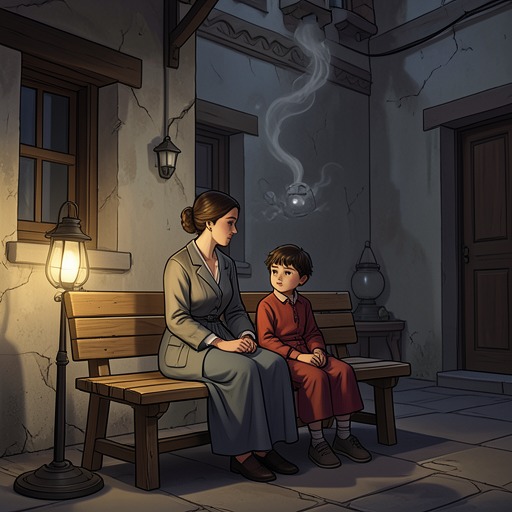
Juan encounters another son of Pedro on the road to Comala. The two walk so close that their shoulders nearly touch, and the stranger tells Juan that he, too, is Pedro Páramo’s son. Their brief companionship gives Juan confirmation that his uncertain paternity is part of a larger pattern. It does not reunite either son with their father. The journey itself descends from the heights into stifling heat, carrying the brothers toward a village where family origins do not promise a homecoming.
Pedro’s son Miguel offers a different measure of the same failure. After Miguel’s death, Father Rentería recalls Pedro’s rise and the harm he permitted himself to commit through his son. The priest’s memory links the boy’s acknowledged place in Pedro’s family to the father’s own unconfessed power; recognition does not undo the damage associated with that inheritance. The novel thus distinguishes naming a child as one’s own from accepting the moral responsibilities that fatherhood entails.
Children Left to Longing
Juan’s search ends not in a meeting with Pedro but in death. Dorotea challenges his account of dying for lack of air: she says she found him on the plaza, already stiff, after Donis had described him as pretending to be dead. She and Donis dragged him into the shade and buried him. Juan’s hope of seeing his father has therefore become inseparable from his posthumous condition. The son reaches Comala because of a promise, but the father remains absent from the encounter that gives the journey its purpose.
In the grave, Dorotea describes her own longing for a child. She once believed she had borne a son because she felt his softness, his eyelids, and the beat of his heart; she carried the imagined infant wrapped in her shawl and believed she had lost him. Only much later, in a vision of Heaven, did she learn that she had never had a son. She had been given a mother’s heart, she says, but no womb to keep a child in. The disclosure turns maternal desire into a painful false memory: the feeling was real to her, but it could not establish the child’s existence.
Dorotea says that the belief in her son arose from a dream she had trusted throughout her life. Her eventual discovery came after age and hardship had left her bent and unable to walk. When the village emptied and the charity she depended on disappeared with its inhabitants, she sat waiting for death. Now buried in Juan’s grave, she finds rest between his arms. Their closeness offers a stark afterlife counterpart to the family bonds both had lacked: not a recovered parent and child, but two abandoned people sharing a grave and companionship.
Fatherhood as Power and Possession
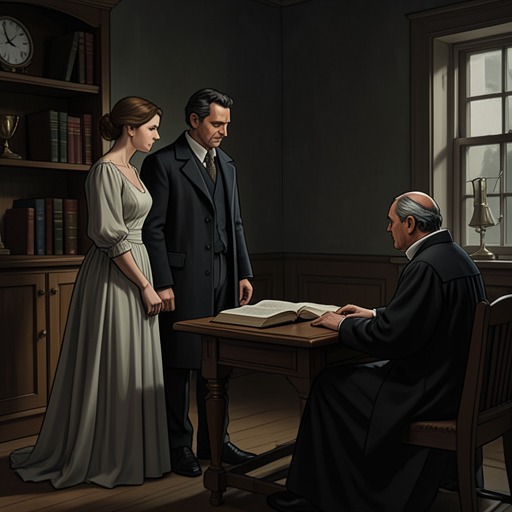
The conflict between parental authority and a child’s own identity appears in the relationship between Bartolomé San Juan and Susana San Juan. Bartolomé tells his daughter that Pedro wants her, not the mines at La Andrómeda, and recalls Pedro’s claim that they had known each other as children and bathed together in the river. Bartolomé says he would have beaten her with a belt if he had known. His declaration that she is his daughter, and his alone, asserts possession rather than offering protection from the man who desires her. Susana answers that the claim is not certain, opening a fissure in the identity her father states so firmly.
Across these relationships, parenthood is repeatedly asserted but rarely made secure through mutual care. Dolores’s final request binds Juan to a father who has forgotten him; Pedro claims children while leaving their care and consequences to others; and Bartolomé’s insistence on his daughter’s identity cannot settle Susana’s uncertainty or protect her from Pedro’s designs. Dorotea’s imagined son carries the pattern into the realm of memory, where longing can preserve a bond that never existed. The novel’s broken families are therefore not simply absences of kinship: they are relationships shaped by debts, claims, and hopes that recognition alone cannot repair.