Hope and Illusion
Pedro PáramoHope and Illusion is both a motive for action and a costly misreading of reality in the lives of Juan Preciado and Dorotea. For Juan, hope turns an absent father into the center of an imagined world and draws him to Comala; for Dorotea, a conviction that she had a son governs a long life of searching. Their stories make hope neither a reliable promise nor a simple comfort: it can keep a person moving, but the object it offers may prove unreachable or unreal.
Hope as a Reason to Leave
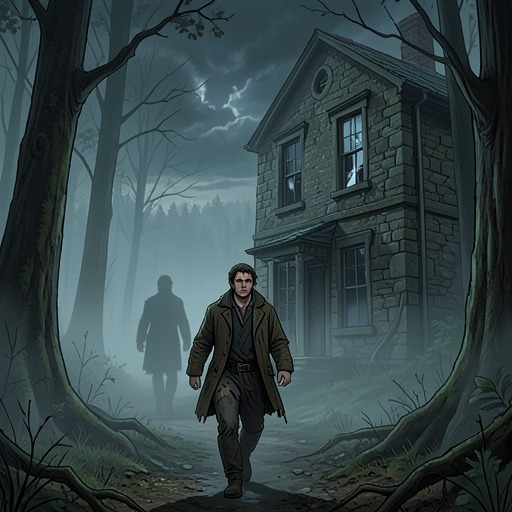
Juan’s journey begins with his mother, Dolores Preciado, and the grievance she leaves him. She urges him not to ask Pedro Páramo for anything beyond what is owed, and to make him pay for abandoning them. Juan promises to do so, but later admits that he had not meant to keep that promise. Only when he began filling himself with dreams and allowing illusions to grow did he build an entire world around Pedro Páramo, his mother’s husband. Hope thus changes the purpose of the journey: what might have been a claim for restitution becomes a pilgrimage toward the father Juan has imagined.
The journey takes place in the burning August heat, along a road whose direction changes with the traveler: it rises for those leaving and descends for those arriving. That reversal gives physical form to the uncertainty of Juan’s hope. He is arriving in search of a beginning, but the route offers no clear ascent toward fulfillment. The landscape’s movement depends on where a person stands, just as the promise of Comala depends on the memories and expectations Juan brings to it.
Comala and the Collapse of Expectation
Dolores had promised that her memories would make her voice seem near in Comala. At first, Juan interprets the village’s silence as something he has not yet learned to hear through; he supposes that voices remain there, heavy in the air. But the place he encounters does not match the living village of his mother’s recollections. He imagines telling her that she sent him to the wrong address, to an abandoned village, to look for someone who is no longer there. The gap between her remembered Comala and his present arrival exposes the weakness of hope founded on another person’s past.
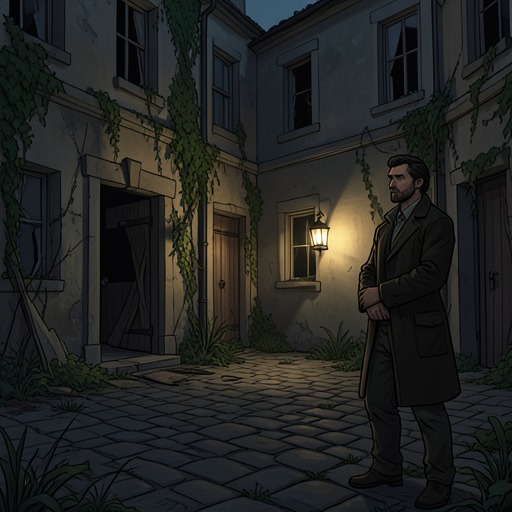
Juan nonetheless reaches a house near the bridge, guided by the sound of the river. When he tries to knock, his hand moves through empty air, as though the wind has opened the door for him; a woman inside invites him in. This uncertain threshold does not restore the world he expected. It leads instead into encounters shaped by voices and absences, where arrival cannot be separated from loss. The contrast is sharpened when Juan explains that he came to see Pedro Páramo, who was supposedly his father, and that illusions guided him. His hope has brought him to Comala, but the journey itself does not establish the reunion he sought.
Dorotea’s Illusion of a Son
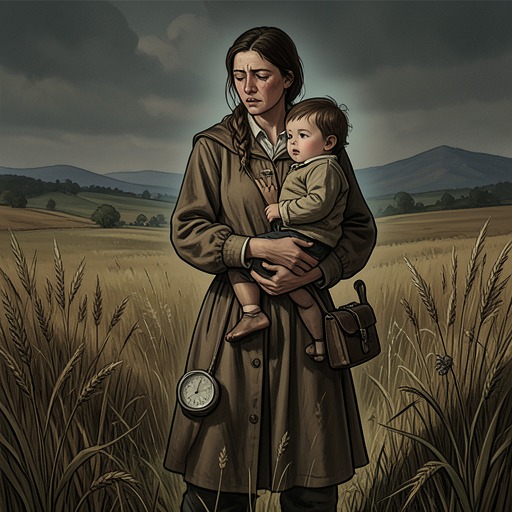
Dorotea gives the concept a second, more intimate form. She tells Juan that illusions made her live longer than she should have, and describes her supposed son as another illusion. For years she believed she had held a child in her arms: she remembered his softness, his eyelids, and the beat of his heart. She carried him wrapped in her shawl, then suddenly lost him. The force of this remembered physical detail explains why the belief persisted; to Dorotea, it had the weight of bodily experience, not a passing wish.
Her account divides the belief into two dreams. In the first, the blessed dream, she had a son. In the second, the accursed one, she went to Heaven to look for him among the angels, whose faces all seemed alike. A saint showed her a small shell-like object as proof that she had been given a mother’s heart but not a mother’s womb. The revelation retrospectively turns her lifelong search into a response to a mistaken belief. Her sad, sidelong gaze had looked behind other people, suspecting that someone had hidden her child; the search gave direction to her life while keeping its central loss unresolved.
Hope, Denial, and the Afterlife
Dorotea’s reflections extend hope beyond the search for a child. She explains that, while alive, the prospect of Heaven had been the reason to keep putting one foot in front of the other. Father Rentería’s assurance that she would never know or even see Heaven closed that prospect because of her sins. Once that door was shut and Hell seemed the only alternative, the future that had sustained her ceased to offer consolation. She calls her present location Heaven, not as a reward she has attained, but as the only meaning the word can retain for her now.
She also describes parting from her soul at death. It had burdened her with remorse, bittered what little she ate, and filled her nights with anxious thoughts and images of the damned. As she lay dying, it urged her to rise and keep bearing life, as though a miracle might still cleanse her faults. She refused to continue, and felt the small thread of blood binding the soul to her heart fall into her hands. The episode reverses the familiar promise that hope points toward a better future: for Dorotea, hope had become an exhausting demand to endure, and death ended its hold.
Juan’s and Dorotea’s experiences therefore give the concept two related but distinct outcomes. His illusion sets him in motion toward a father and a village that do not answer the expectation he carried there; hers keeps her searching for a child she never had. The novel makes hope powerful precisely because it can organize a life before its truth is known. When its promise fails, what remains is not simply disappointment, but the recognition that dreams have shaped the path, the memories, and the terms by which each person understands loss.