Juan Preciado and Dolores Preciado: Mother and Son
Pedro PáramoJuan Preciado and Dolores Preciado: Mother and Son is a relationship carried across separation and death. Dolores gives Juan the destination and grievance that set his journey toward Comala in motion; after her death, her remembered voice continues to shape how he experiences the village and the father he has come to seek.
A Deathbed Charge
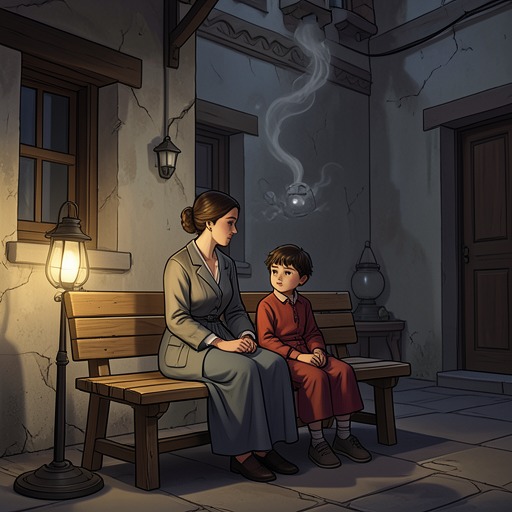
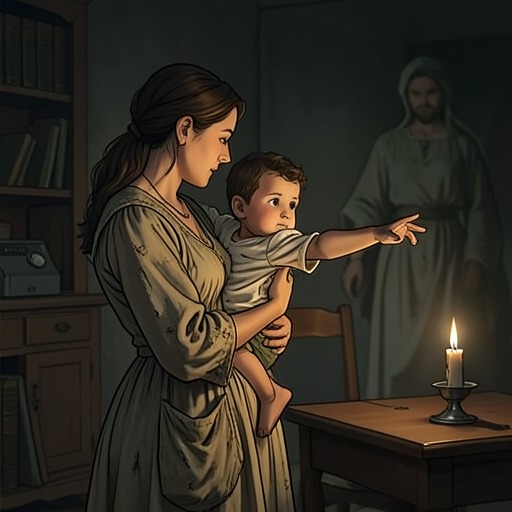
Dolores tells Juan that his father, Pedro Páramo, lives in Comala. She asks her son to go and see him after she is dead, presenting the meeting as something Pedro will welcome. Juan promises while holding her hands as she is dying; he later recalls that he was ready to promise her anything and that he had to prise his hands from her dead hands before he could leave.
Her instructions are not simply a request for reunion. She tells Juan not to ask Pedro for anything beyond what is owed to them: what Pedro owed her and never gave. She frames his abandonment of mother and son as an act of forgetting, and asks Juan to make Pedro pay dearly for it. In this charge, maternal care and grievance are bound together: Dolores sends her son toward his father, but not with a vision of uncomplicated reconciliation.
Promise, Reluctance, and Hope
Juan admits that he did not expect to keep his promise, at least not until recently. The change comes when he begins filling himself with dreams and allowing illusions to grow. Around the man called Pedro Páramo, his mother’s husband, Juan builds a whole world of hope; that hope becomes the reason he finally travels to Comala.
The difference between Dolores’s demand and Juan’s expectation gives their bond its central tension. She directs him toward an unpaid debt and the injury of being forgotten; he imagines the possibility represented by a father he has never described as part of his life. His journey therefore carries both her unresolved claim and his own belatedly cultivated hope, though the evidence does not establish that the two expectations can be reconciled.
A Voice That Travels With Him
In Comala, Juan recalls Dolores telling him that he would hear her better there, that the voice of her memories would be nearer than the voice of her death, if death had ever had a voice. He marks her in that recollection as his mother, the living one. Her presence reaches him not through a new encounter but through remembered speech, which remains close as he tries to make sense of the village’s voices and silence.
The relationship thus persists in a changed form: Dolores is dead, yet her words guide Juan’s arrival and accompany his perception of Comala. The journey that began with his hands joined to hers ends in a landscape where memory itself seems to speak. Her last charge gives the journey its purpose, while her remembered voice makes the bond an active part of Juan’s experience after her death.